
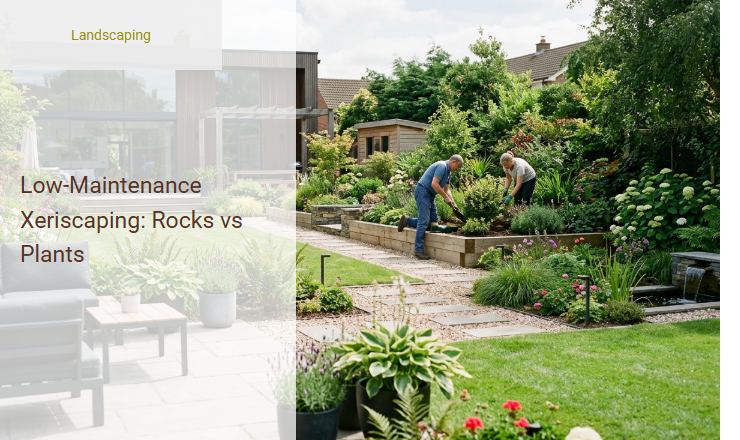
Homeowners often find themselves trapped in a grueling cycle of weeding, watering, and mowing just to keep a traditional turfgrass lawn alive. As municipal water restrictions tighten and summer temperatures soar, maintaining this thirsty landscape is becoming both ecologically irresponsible and financially draining. Transitioning to xeriscaping promises the ultimate return: a dramatic reduction in utility bills and the recovery of your free weekends.
However, professional-grade design requires recognizing that "low-maintenance" does not mean "zero-maintenance." Choosing between a hardscape-heavy design using river rock and pea gravel, or a living landscape anchored by drought-tolerant species like agave and lavender, involves distinct trade-offs in heat retention and weed prevention.
In this guide, we will compare rocks versus plants across cost, installation complexity, and long-term care to help you design a sustainable, high-performing yard that suits your lifestyle.
Introduction to Low-Maintenance Xeriscaping
As water scarcity becomes an increasing concern across many regions, homeowners are transitioning away from thirsty turf lawns toward more sustainable alternatives. Xeriscaping, the practice of designing landscapes to reduce or eliminate the need for supplemental water, has emerged as the premier solution for modern yards. At its core, this water-wise philosophy challenges us to work with nature rather than against it, utilizing resources efficiently without sacrificing curb appeal. However, within the xeriscaping community, a compelling debate has emerged: should your landscape rely primarily on rock-centric designs or plant-centric designs? Finding the perfect balance between these two approaches is the key to creating a beautiful, functional, and climate-resilient outdoor space.
The Case for Rocks: Ultimate Low-Maintenance Hardscaping
Incorporating inorganic materials like gravel, river rocks, and massive boulders offers an immediate, structured aesthetic that requires very little upkeep. Hardscape-focused designs provide a reliable foundation that remains visually consistent throughout the seasons.
- Zero water requirements: Unlike even the most drought-tolerant flora, rocks do not require a single drop of water to maintain their appearance.
- Incredible durability: Stone materials do not succumb to pests, disease, extreme frost, or intense heatwaves, lasting indefinitely.
- Immediate visual structure: Boulders and gravel pathways define clean lines and geometric interest the moment they are installed, with no waiting period for growth.
The Hidden Downsides of Rock-Heavy Landscapes
While an all-stone yard sounds incredibly convenient, it comes with distinct drawbacks that can negatively impact your property. One of the most significant challenges is extreme heat retention. Rocks absorb thermal energy during the day and radiate it back into the atmosphere, creating a localized heat island effect around your home. Furthermore, rock-dominated landscapes often result in a lack of biological life, offering no habitat or sustenance for birds, bees, and beneficial insects. Over time, windblown soil settles between the rocks and weed barriers, leading to highly persistent weeding difficulties as weeds root directly into the fabric, making them incredibly difficult to pull.
The Case for Plants: Living, Breathing Drought-Tolerant Gardens
Choosing a living landscape filled with drought-tolerant vegetation brings vitality, seasonal color, and natural movement to your property. Plants actively cool the surrounding environment through transpiration, countering the harsh heat generated by hard surfaces.
- Succulents and Cacti store water in their fleshy leaves and stems, offering striking architectural shapes and remarkable resilience.
- Native Grasses are adapted to local soil and rainfall patterns, providing soft textures that dance in the breeze.
- Drought-Tolerant Flowering Perennials introduce vibrant colors while attracting essential pollinators to your yard.
The Realities of Plant Maintenance in Xeriscaping
While low-water gardens require far less attention than traditional turf lawns, they are not entirely maintenance-free. To keep your garden healthy and visually appealing, you must commit to seasonal pruning to remove dead wood and encourage fresh growth. Additionally, a crucial step that many homeowners overlook is initial watering during the establishment phase; even the most drought-resistant plants require regular moisture for the first one to two seasons to develop deep, resilient root systems. Finally, occasional weeding is necessary to prevent invasive weeds from competing with your established plants for precious nutrients and groundwater.
Cost Comparison: Upfront Investment vs. Long-Term Value
| Landscape Element | Initial Installation Cost | Long-Term Maintenance Cost | Lifespan & Replacement Needs |
|---|---|---|---|
| Rock-Centric (Gravel & Boulders) | Moderate to High (due to material weight and delivery fees) | Very Low (periodic weed control and pressure washing) | Virtually permanent; may need occasional top-offs over decades |
| Plant-Centric (Drought-Tolerant Flora) | Low to Moderate (plants are cheaper upfront but require soil prep) | Low to Moderate (minimal seasonal watering and mulch replacement) | Perennials live for years; some species require replacement after a decade |
Environmental Impact: Soil Health and Local Biodiversity
The choice of ground cover has profound ecological consequences. Rock mulches reflect sunlight and trap heat, which bakes the soil beneath and depletes soil moisture. Conversely, organic mulches derived from plant matter slowly decompose, feeding the soil microbiome and keeping the ground cool. Furthermore, a living garden provides critical food and shelter for birds, butterflies, and native bees, fostering a healthy urban ecosystem that sterile rock beds simply cannot support.
The Hybrid Approach: Merging Rocks and Plants for Synergy
Creating Dry Creek Beds with Pocket Plantings
One of the most effective ways to merge these two styles is by constructing a dry creek bed using smooth river rocks. By weaving native grasses and flowering perennials along the edges, you mimic natural riparian zones. This setup guides rainwater runoff directly to the root zones of your plants while keeping the overall aesthetic highly structured.
Using Large Boulders as Anchors for Succulent Gardens
Instead of a flat field of gravel, place several large, sculptural boulders as focal points in your yard. Cluster drought-tolerant succulents like agave and echeveria around the base of the stones. The rocks provide localized shade and condensation for the plants' roots, creating a microclimate that helps them thrive during hot summer afternoons.
Practical Steps to Transition Your Yard
- Kill your existing turf lawn using the sheet mulching method, covering the grass with cardboard and a thick layer of compost to naturally enrich the soil.
- Map out your landscape design, designating zones for heavy stone features, pathways, and specific plant groupings based on sun exposure.
- Install structural elements first, including large boulders, dry creek beds, and retaining walls, to establish the framework of your yard.
- Excavate planting holes, amend the soil with organic matter if necessary, and install your drought-tolerant plants.
- Apply your chosen ground cover, using organic wood mulch around plant root zones and gravel or decorative river rock for pathways and open zones.
- Set up a drip irrigation system to deliver deep, targeted water to new plants during their critical establishment phase.
Making the Decision: Which is Right for You?
Choosing between a rock-heavy design and a lush, plant-centric landscape depends entirely on your personal goals, local environment, and how much time you wish to spend outdoors. If your primary objective is absolute minimum maintenance and a modern, architectural look, a stone-forward design is highly effective. However, if you prefer a cooler yard, vibrant seasonal colors, and a sanctuary for local wildlife, investing in native plants is the ideal path. Combining both elements yields the most resilient and beautiful results, ensuring your yard remains sustainable for years to come. Assess your local microclimate and start planning your personal water-wise oasis today!
| Feature | Rocks (Abiotic) | Plants (Biotic) |
|---|---|---|
| Primary Function | Provides structural skeleton, soil retention, and microclimate creation. | Adds color, texture, ecological biodiversity, and softens harsh edges. |
| Maintenance | Near-zero; requires occasional weeding or debris removal. | Moderate; requires watering, pruning, dividing, and seasonal cleanup. |
| Lifespan | Permanent; highly resistant to weather extremes. | Variable; dynamic seasonal changes with potential need for replacement. |
| Weight & Logistics | Heavy, high initial labor/machinery cost for placement. | Lightweight, easy manual installation and simple relocation. |
| Soil Interaction | Prevents erosion, traps moisture underneath, and anchors the soil. | Absorbs nutrients/water, aerates soil via roots, and prevents topsoil runoff. |
Leave a comment