
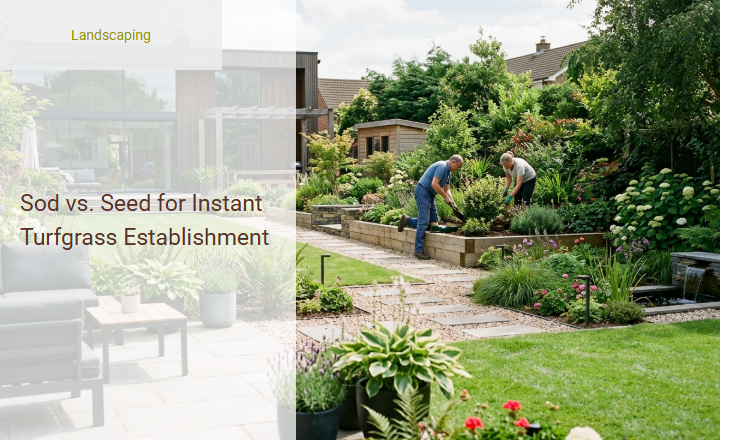
Homeowners and property managers often face the frustrating, muddy reality of a patchy, eroded landscape while waiting for a pristine lawn to emerge. Achieving a rapid, healthy turfgrass establishment can feel like an uphill battle against unpredictable weather, invasive weeds, and erosion.
Before choosing a path forward, evaluating your site's specific soil chemistry and grading is essential. Aligning these foundational elements grants you the immediate aesthetic appeal and erosion control of a vibrant yard, significantly boosting your property's curb value. However, instant green space requires realistic expectations; even premium Kentucky Bluegrass sod or certified Tall Fescue seed demands diligent, post-installation irrigation to guarantee root integration.
In this guide, we will analyze the critical differences between sodding and seeding. We will compare installation costs, labor intensity, establishment timelines, and long-term viability to help you make the most informed decision for your landscape.
Introduction: The Quest for the Perfect Green Lawn
Achieving a lush, vibrant green yard is a cornerstone of homeownership, yet the path to establishing that perfect turfgrass lawn often presents a difficult choice. Homeowners stand at a crossroads, debating whether to invest in professional sodding or to embark on the traditional route of planting grass seed. The decision hinges on balancing the desire for instant aesthetic value against the constraints of budget and long-term viability. A beautiful lawn enhances curb appeal and provides a functional outdoor living space, making this choice a critical first step in landscape design.
What is Sodding? The Instant Lawn Solution
Sodding is the process of transplanting mature, pre-grown grass directly onto prepared soil. This commercial turfgrass is cultivated by professional growers on specialized farms, where it is nurtured until it develops a dense root system. Once mature, the grass and a thin layer of soil beneath it are harvested using specialized machinery that slices the turf into rolls or pallets. These rolls are then transported to the job site and carefully laid down, providing an instant, fully-formed lawn within a single day. This method bypasses the vulnerable germination phase completely, offering immediate gratification and beauty.
Understanding Seeding: The Traditional Approach
Growing a lawn from seed is the traditional, time-honored method of turf establishment. This approach requires hands-on involvement, careful planning, and a significant amount of patience as nature takes its course.
- Prepare the soil by clearing debris, tilling, and amending it with organic matter to create a healthy seedbed.
- Spread the grass seed evenly across the prepared ground using a drop or broadcast spreader.
- Lightly rake the area to ensure proper seed-to-soil contact, which is essential for successful germination.
- Apply a starter fertilizer and a light layer of mulch or straw to protect the seeds from wind and hungry birds.
- Maintain a strict, daily watering schedule to keep the soil consistently moist until the grass sprouts and matures.
Establishment Timeline: Instant Gratification vs. Patient Growth
The most dramatic difference between these two methods is the timeline required to achieve a functional, resilient lawn. While sod delivers immediate visual satisfaction, grass seed requires months of careful monitoring before it can withstand regular foot traffic.
| Feature | Sodding | Seeding |
|---|---|---|
| Initial Appearance | Instant green carpet | Bare soil and straw |
| Root Establishment | 2 to 3 weeks | 6 to 10 weeks |
| Light Foot Traffic | Allowed after 2 weeks | Allowed after 8 to 12 weeks |
| Full Usability | 4 to 6 weeks | 6 months to 1 year |
Cost Analysis: Upfront Investment vs. Long-Term Value
Financial considerations play a major role in deciding how to establish a new lawn. Soding requires a significant upfront investment because you are purchasing mature turfgrass that has already been cared for by professionals for over a year, alongside the high labor costs associated with harvesting, transporting, and laying the heavy rolls.
Planting grass seed is highly cost-effective upfront, requiring only the purchase of seed bags and starter fertilizers. However, this lower entry cost is offset by the ongoing expenses of intense watering, weed control, overseeding bare patches, and the long-term labor required to nurture the fragile sprouts into a healthy, dense lawn over many months.
Weed Suppression and Initial Turf Quality
The density of your new turf plays a critical role in preventing unwanted weed infestations. Sod acts as an immediate physical barrier because its thick, pre-grown root system and tightly packed grass blades leave no room for airborne weed seeds to reach the soil and germinate. On the other hand, a newly seeded lawn starts as bare soil, which is highly vulnerable to weed competition. As you water the soil to encourage grass growth, dormant weed seeds in the ground also receive optimal conditions to sprout, often requiring selective herbicides or tedious hand-pulling to protect the young, fragile grass blades.
Erosion Control and Soil Stabilization
Terrain geography can dictate which turf establishment method is viable. On sloped areas or yards prone to heavy runoff, soil erosion is a major concern. Sod provides immediate stability because its thick root mat holds the topsoil firmly in place the moment it is laid down, absorbing heavy rainfall and preventing runoff. Conversely, planting seeds on a slope is a risky endeavor. Heavy rains can easily wash away the loose soil and seed mixture, resulting in patchy growth, deep ruts, and wasted resources that require complete re-seeding and expensive grading repairs.
Post-Installation Care and Watering Requirements
Watering is the single most critical factor in determining the success of both sod and seed, but the application methods and frequencies differ significantly. Incorrect irrigation during the initial weeks can lead to root failure in sod or complete dehydration in seeds.
- Sod requires deep, heavy watering once or twice a day to ensure the moisture penetrates through the sod layer and deep into the underlying soil, encouraging the roots to knit downward.
- Grass seed demands light, frequent misting up to three or four times daily to keep the top inch of soil consistently damp without creating puddles that can wash the seeds away.
- After three weeks, sod watering can be reduced to deep, infrequent sessions, whereas seeded lawns must maintain gentle, consistent moisture until the root systems are fully established several months later.
Site Conditions and Grass Variety Choices
Your local environment, shade levels, and soil profile dictate which grass types will thrive in your yard. Seeding offers a major advantage in this regard, providing access to a vast selection of grass species and custom seed blends designed to tolerate deep shade, poor soil, high traffic, or specific climatic extremes. Sod farms, by contrast, typically grow only a few popular, high-demand grass varieties suitable for mass regional distribution. If your landscape features unique microclimates or dense canopy shade, finding a pre-grown sod variety that can survive there can be a difficult and costly challenge.
Conclusion: Making the Right Choice for Your Landscape
Selecting between sod and seed comes down to balancing your budget, patience, and landscape conditions. If you want an immediate transformation, effective weed prevention, and quick usability, investing in sod is the optimal route. If you are working with a tight budget, have unique shade conditions, and possess the patience to nurture a lawn over several months, seeding offers a highly rewarding path that allows you to cultivate a lawn from scratch. Assessing your personal timeline and landscape goals will lead you to the perfect green turfgrass for your home.
| Comparison Factor | Sod | Seed |
|---|---|---|
| Initial Cost | High (expensive materials and labor) | Low (inexpensive materials) |
| Establishment Speed | Instant lawn; rooted and usable in 2–3 weeks | Slow; requires 10–12 weeks to establish |
| Labor & Installation | Intensive; heavy lifting and precise laying | Easy; simple spreading and light raking |
| Weed Competition | Very low; thick grass mat crowds out weeds | High; bare soil invites weed germination |
| Planting Window | Flexible; anytime during the growing season | Strict; limited to early autumn or spring |
| Species Variety | Limited to a few regional farm choices | Extensive; wide range of custom blends |
| Initial Watering | Heavy, deep daily watering for 2 weeks | Frequent, light misting (2-4 times daily) |
| Soil Erosion Control | Immediate; stabilizes soil on slopes | Poor; vulnerable to washout from rain |
Leave a comment