
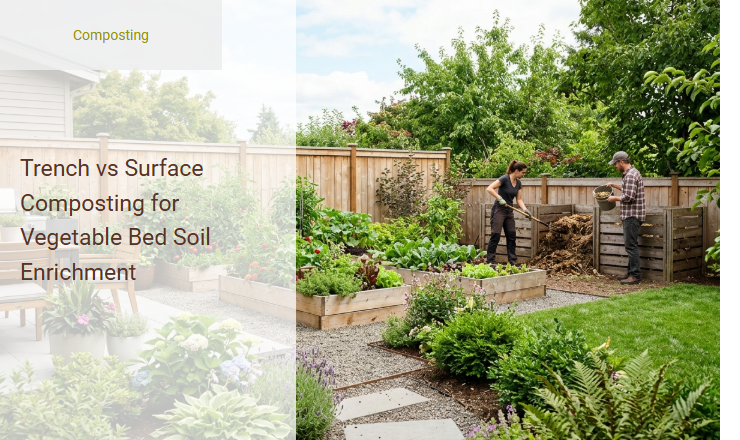
Many vegetable gardeners face the frustrating reality of depleted soil, watching their crops underperform season after season despite applying expensive organic fertilizers. Before rushing to purchase quick-fix chemical amendments, it is crucial to recognize that sustainable soil fertility relies on consistent, long-term biological activation. Mastering targeted organic decomposition grants you the ultimate reward: vibrant, nutrient-dense yields and superior soil structure with minimal financial investment.
However, achieving these results stipulates aligning your chosen composting method with your specific garden layout, physical labor limits, and local climate. For example, burying nitrogen-rich kitchen scraps directly into the soil feeds deep-rooting, heavy feeders like tomatoes, whereas surface-applying carbon-rich leaf mulch is ideal for shallow-rooted salad greens. This guide evaluates the mechanics, practical trade-offs, and nutrient-release profiles of trench versus surface composting, providing a clear framework to help you select the most effective soil enrichment strategy for your vegetable beds.
Introduction: The Battle for Vegetable Bed Soil Supreme
Growing a bounty of vibrant, nutrient-dense vegetables requires more than just water and sunlight; it demands a thriving, living soil system. In the realm of organic vegetable gardening, two distinct philosophies dominate the quest for soil fertility: trench composting and surface composting. This underground versus above-ground debate divides passionate growers who seek the most efficient way to recycle organic waste.
One method hides organic matter deep in the dark recesses of the earth, while the other mimics the natural decay cycles found on forest floors. Choosing the right path determines how your crops access essential nutrients and transforms the biological architecture of your garden beds. By understanding the distinct mechanics of both approaches, you can build unmatched soil structure and maximize your vegetable harvest.
Going Deep: The Mechanics of Trench Composting
Trench composting is a time-tested, direct method of underground recycling that bypasses the need for a traditional compost bin. By burying raw organic materials directly where plants will grow, you create localized subterranean nutrient reserves. This process systematically enriches the soil without disrupting the garden surface.
- Dig a trench approximately twelve inches deep and twelve inches wide along your planting row.
- Fill the bottom six inches of the trench with raw kitchen scraps, garden trimmings, or coffee grounds.
- Backfill the remaining space with the excavated soil, packing it lightly to seal the organic matter.
Within three to six months, soil organisms completely break down the buried waste, turning it into rich, dark humus. This discreet fertilization method leaves the garden surface looking pristine while nourishing the soil food web out of sight.
Staying on Top: The Science of Surface Composting
Surface composting, often referred to as sheet composting or mulch-composting, mirrors the organic decomposition cycles observed in wild ecosystems. Instead of burying resources, gardeners spread organic materials directly across the soil surface. This layer acts as a protective barrier while slowly decomposing.
- Mimics natural forest floors where leaves, twigs, and organic debris decay gradually from the top down.
- Provides immediate soil protection from harsh solar radiation, heavy rains, and soil erosion.
- Encourages aerobic decomposition driven by abundant atmospheric oxygen and surface arthropods.
As these materials break down, they slowly release essential compounds into the topsoil. This continuous surface cycle builds excellent soil crumb structure, suppresses weeds, and maintains consistent moisture levels in the active root zone.
Nutrient Delivery: Microbes vs. Earthworms
The Underground Microbe Network
In trench composting, nutrients are processed in an anaerobic-to-aerobic transition zone deep within the soil profile. Subterranean bacteria and deep-soil microbes break down the buried matter directly at root level. This localized action prevents nutrient run-off and places vital compounds exactly where deep roots can absorb them instantly once they reach the zone.
The Surface Earthworm Highway
Conversely, surface composting relies heavily on surface-dwelling earthworms and insect decomposers. As rain falls, it leaches water-soluble nutrients from the top layer down into the root zone. Earthworms migrate upward to feed on the decaying matter, pulling organic bits down into their burrows and leaving behind highly fertile worm castings that enrich the surrounding soil.
Labor and Time: Setup Effort vs. Decomposition Speed
| Composting Method | Physical Labor Required | Decomposition Speed | Nutrient Availability Timeline |
|---|---|---|---|
| Trench Composting | High (Requires deep digging) | Slow (Reduced oxygen underground) | Delayed (Available in 3 to 6 months) |
| Surface Composting | Low (Simple layer spreading) | Fast to Moderate (Aerobic breakdown) | Immediate and continuous release |
Managing Pests, Odors, and Garden Aesthetics
Maintaining a clean, odor-free garden is a priority for every backyard grower. Trench composting excels in this area because the deep layer of covering soil acts as a natural biofilter, trapping odors and keeping pests like rodents and flies away from fresh kitchen scraps.
Surface composting requires a more strategic approach to prevent odors and scavenging. To keep the garden looking neat, gardeners must carefully layer green nitrogen-rich materials with dry brown mulch, ensuring that fresh food scraps are never left exposed to the open air.
Ideal Matches: Best Crops for Trench Composting
Deep-Rooted Nightshades
Plants that send roots deep into the earth thrive when planted directly over or adjacent to compost trenches. The moisture-retaining pockets of organic matter deep in the soil act as a reservoir during dry periods.
Heavy Feeders
These crops benefit from the concentrated pockets of moisture and nutrients:
- Tomatoes
- Squash and Pumpkins
- Peppers
- Melons
Surface Stars: Vegetables That Thrive on Top-Dressing
Shallow-Rooted Feeders
Crops with root systems concentrated in the upper inches of soil prefer the gentle, steady moisture and nutrient release of surface mulching. A thick blanket of organic matter protects their sensitive root zones from drying out.
Top-Dressing Favorites
- Lettuce and Spinach
- Broccoli and Cabbage
- Radishes
- Onions
The Synergistic Garden: Combining Both Methods
Maximize your garden's potential by implementing a hybrid approach that leverages the strengths of both composting styles. By designing a system around your crop rotation schedule, you can keep your soil continuously fed and structured.
During the autumn transition, you can trench-compost kitchen scraps in fallow beds or pathways where next year's heavy-feeding crops will live. Concurrently, you can apply active surface top-dressings to active winter crops or perennial beds, ensuring uninterrupted soil regeneration across all seasons.
Final Verdict: Choosing the Best Method for Your Soil
Deciding between these two composting paradigms depends on your soil's physical state, your physical capacity for digging, and the specific plants you wish to cultivate. Heavy clay soils often benefit from the physical aeration of trenching, whereas sandy soils improve rapidly under the protective blanket of surface mulch.
The choice between building soil from the bottom up or the top down is not binary; the most successful organic gardens often balance both to create a robust, self-sustaining ecosystem.
| Feature | Trench Beds (Sunken) | Surface Beds (Flat/Raised) |
|---|---|---|
| Water Retention | High. Collects runoff, minimizes evaporation, protects root zone from wind. | Low to moderate. Drains rapidly, requires more frequent irrigation. |
| Soil Temperature | Cooler. Insulated by surrounding earth; slower to warm up in spring. | Warmer. Absorbs ambient heat quickly; accelerates early spring growth. |
| Drainage & Aeration | Poor. High risk of waterlogging in clay soil; prone to compaction. | Excellent. Gravity-fed drainage prevents root rot; superior aeration. |
| Setup Cost & Labor | High physical labor (excavation); virtually zero material costs. | Low physical labor; high material costs for borders and imported soil. |
| Ideal Climate | Hot, dry, arid, and windy regions. | Cold, wet, humid, and high-rainfall regions. |
Leave a comment