
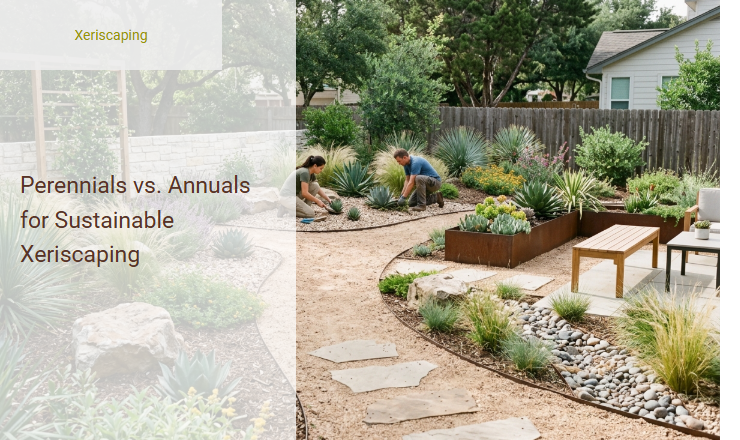
For homeowners in drought-prone regions, maintaining a vibrant landscape often feels like an expensive, uphill battle against scorching heat and soaring utility bills. Before selecting your plants, however, it is crucial to understand how local soil biology and microclimates dictate moisture retention. Navigating these foundational elements correctly grants your landscape year-round ecological resilience while significantly lowering your resource consumption.
Note: Sustainable xeriscaping does not imply a zero-water or zero-maintenance yard; rather, it requires intentional planning during the critical root-establishment phase. For instance, pairing deep-rooted perennials like the Purple Coneflower (Echinacea) with drought-hardy annuals like Cosmos creates a self-sustaining balance of structural permanence and vibrant seasonal color.
In this guide, we will examine the distinct roles of perennials and annuals, evaluating them based on water efficiency, soil health, and long-term cost to help you design an optimized, climate-resilient sanctuary.
Introduction to Sustainable Xeriscaping
In an era of shifting climates and declining freshwater resources, sustainable xeriscaping has emerged as a premier approach to modern landscape design. Xeriscaping is a methodical approach to gardening that reduces or eliminates the need for supplemental irrigation. By embracing this practice, homeowners can create stunning, biologically rich outdoor spaces that thrive in arid conditions while conserving thousands of gallons of water annually. Water-conscious gardening is no longer just an environmental preference; it is a vital necessity for preserving our local ecosystems.
As designers and gardeners transition to low-water landscapes, a fundamental debate arises: should the garden rely primarily on perennial plants, or do annual plants hold the key to seasonal brilliance? Striking the perfect balance between these two life cycles is essential for achieving a high-impact, drought-resistant landscape that remains vibrant throughout the seasons.
The Role of Annual Plants in Dry Landscapes
Annual plants are species that complete their entire life cycle-from germination to seed production-within a single growing season. In dry climates, these quick-growing plants rely on a strategy of rapid progression. They quickly capitalize on brief rainy periods, producing a sudden, temporary burst of color that transforms dusty landscapes into vivid spectacles before they fade away with the heat of late summer.
Because their lifespan is brief, many drought-tolerant annuals have evolved unique adaptations to cope with dry conditions. Many species produce highly resilient seeds that can lie dormant in dry soil for years, waiting for the perfect moisture conditions to sprout. Others feature fuzzy or waxy leaves that help reduce transpiration during their short, highly productive lives.
The Power of Perennials for Long-Term Resilience
In contrast to annuals, perennial plants are the enduring residents of the garden. These specimens survive year after year, dying back during cold or dry seasons and re-emerging with renewed vigor when favorable conditions return. Establishing deep, intricate root systems allows perennials to anchor themselves firmly within the local environment, making them highly resilient to prolonged dry spells and environmental stressors.
These long-lived plants serve as the structural backbone of any successful xeriscape. Shrubs, ornamental grasses, and sturdy flowering perennials define the garden's form, texture, and height throughout the year. Once established, they require minimal intervention, providing a reliable green framework that remains steadfast even during severe droughts.
Water Efficiency: Deep Roots vs. Shallow Lifespans
Contrasting Root Architectures and Hydration Needs
The primary difference in water efficiency between these two plant categories lies beneath the soil surface. Perennials invest their early energy into developing extensive root systems that can penetrate deep into the subterranean soil layers, tapping into moisture reserves that remain inaccessible to shallower root systems.
"A mature perennial root system acts as a natural water-retrieval network, minimizing the need for supplemental watering even in the peak of summer."
Annuals, due to their rapid development, possess relatively shallow root networks. Because they cannot access deep groundwater, they require strategic, targeted watering during their active blooming periods to prevent wilting. While they require less total water over the course of a multi-year cycle because they do not persist through winter, their immediate demands during hot periods can be quite intense.
Soil Health and Erosion Prevention
The continuous growth cycle of perennials plays a critical role in preserving and improving soil structure. Their extensive root networks bind the soil particles together, acting as a natural shield against wind and water erosion. Over time, as old roots decay and new ones form, they deposit organic matter deep into the earth, enhancing the soil's natural water-holding capacity.
Conversely, relying heavily on annuals can lead to frequent soil disruption. The seasonal cycle of planting, digging up dead roots, and replanting can disturb the delicate underground mycorrhizal networks. This constant turnover can leave the topsoil exposed and vulnerable to drying out, making it crucial to minimize tilling in water-wise gardens.
Supporting Local Biodiversity and Pollinators
Creating an Ecological Sanctuary with Varied Bloom Cycles
A thriving, biodiverse garden relies on providing reliable food sources and shelter for local wildlife throughout the year. Native perennials are highly effective at this, offering predictable, long-term habitats and food sources that local insects and birds have co-evolved with over centuries.
- Year-Round Habitat: Dense perennial foliage and standing seed heads provide essential winter nesting sites and cover for beneficial insects and native birds.
- High-Energy Nectar: Fast-growing annuals offer rich, concentrated nectar sources that help migratory pollinators refuel during critical times of the year.
- Continuous Bloom Windows: Mixing both types ensures that when perennials finish blooming, annuals can fill the gaps to prevent food shortages for local bees.
Cost, Labor, and Maintenance Comparisons
When planning a water-wise garden, budgeting for both immediate installation costs and long-term upkeep is a key consideration. While perennials require a higher upfront investment, they save considerable time and money over time. Annuals, while cheaper per individual plant, require recurring investments each spring.
| Factor | Perennial Plants | Annual Plants |
|---|---|---|
| Upfront Cost | Moderate to High | Low |
| Recurring Costs | Negligible (Once established) | High (Seasonal replacement) |
| Labor Demands | Low seasonal pruning | High seasonal planting and clearing |
| Water Cost (Long-Term) | Very Low | Moderate (Requires targeted watering) |
Strategic Integration: Companion Planting for Xeriscapes
Designing the Perfect Balance of Form and Color
To maximize the efficiency of a dry garden, gardeners should use a design strategy that blends both plant types harmoniously. By establishing a permanent layout of woody perennials, you create a reliable microclimate that can shelter delicate plants. Spaces between these established perennials can then be filled with colorful, drought-tolerant annuals to add seasonal interest.
Top Drought-Tolerant Species to Choose From
High-Performance Perennials
- Purple Coneflower (Echinacea purpurea): A highly resilient plant that thrives in USDA zones 3-9, featuring deep roots and nectar-rich blooms.
- Russian Sage (Salvia yangii): Known for its silvery stems and lavender-blue flowers, this species is exceptionally drought-hardy in zones 5-9.
- Blanket Flower (Gaillardia): A brightly colored native option that thrives in poor, sandy soils across zones 3-10.
Resilient Xeriscape Annuals
- Cosmos (Cosmos bipinnatus): Easy to grow from seed, these plants thrive in hot, dry conditions and attract a wide range of pollinators.
- California Poppy (Eschscholzia californica): A classic cool-season annual that produces brilliant orange cups with minimal water.
- Moss Rose (Portulaca grandiflora): Featuring fleshy, succulent leaves, this low-growing option thrives in intense summer heat.
Cultivating a Resilient, Water-Wise Future
Designing a sustainable landscape does not require choosing between long-term durability and seasonal color. By understanding the distinct roles of perennials and annuals, you can create a dynamic, water-wise garden that supports the local ecosystem while conserving precious resources. Embracing this balanced approach allows gardeners to enjoy a beautiful, low-maintenance outdoor space that respects the natural limitations of the local environment.
| Sustainability Metric | Perennials | Annuals |
|---|---|---|
| Lifespan & Labor | Persist for multiple years; low planting frequency and minimal soil disruption. | Complete life cycle in one season; requires annual replanting and replowing. |
| Soil Health & Erosion | Deep, permanent root systems anchor soil, prevent erosion, and foster mycorrhizal networks. | Shallow roots offer weak soil binding; frequent tillage degrades soil structure. |
| Resource Efficiency | High water and nutrient efficiency via extensive root reach; requires fewer external inputs. | High dependence on regular irrigation and synthetic fertilizers for rapid seasonal growth. |
| Carbon Sequestration | Continuous, long-term carbon storage in undisturbed woody biomass and deep soil. | Minimal, temporary carbon storage; carbon is rapidly released during harvest and tilling. |
| Biodiversity Support | Provides stable, year-round habitat and consistent food sources for wildlife and beneficial insects. | Offers transient habitat; seasonal clearing disrupts local ecosystems. |
Leave a comment