
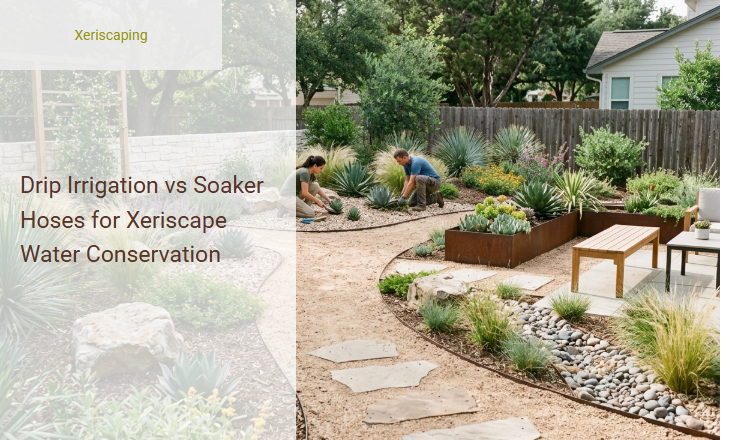
Maintaining a thriving drought-tolerant landscape while strictly adhering to municipal watering restrictions is a constant, frustrating balancing act for eco-conscious homeowners. In arid regions where soil evaporation rates are high, simply choosing low-water plants is only half the battle; the specific method of water delivery ultimately dictates your success.
Selecting the right low-flow system grants you both a flourishing garden and a dramatic reduction in monthly utility costs. However, achieving maximum water conservation is stipulated on matching the irrigation technology to your specific soil hydrology and plant zoning. For instance, deep-rooting native Agave thrives under precise, targeted micro-emitter drip lines, whereas dense wildflower beds benefit more from the slow, weeping action of porous recycled-rubber soaker hoses.
In this guide, we will compare drip irrigation and soaker hoses across water efficiency, installation complexity, and long-term durability to help you choose the ultimate system for your xeriscape.
Introduction to Efficient Watering in Xeriscapes
Xeriscaping has revolutionized modern landscaping by proving that beautiful, vibrant yards do not require massive amounts of water. In arid regions and drought-prone climates, conserving water is not just an environmental choice but a practical necessity. Standard sprinkler systems often fail in these environments, losing vast amounts of water to wind drift and evaporation before it ever reaches the soil. To cultivate a successful, low-water garden, selecting the right irrigation method is absolutely critical for long-term plant health and resource conservation.
Two primary contenders dominate the low-flow irrigation landscape: drip irrigation and soaker hoses. Both systems aim to deliver water directly to the soil, minimizing waste and helping xeriscape plants thrive. However, they operate on completely different mechanics, offer varying levels of efficiency, and demand different levels of commitment in terms of budget and installation. Understanding the differences between these two systems ensures your water-wise garden remains sustainable and cost-effective.
What Is Drip Irrigation?
Drip irrigation is a highly precise watering system engineered to deliver water directly to the base of individual plants. Instead of wetting the entire soil surface, a drip system target-waters the exact root zone where moisture is needed most. This localized delivery is incredibly beneficial for xeriscapes, as it discourages weed growth in the dry, unwatered spaces between target plants.
A functional drip irrigation system relies on several key components working together:
- Mainline Tubing: Durable, UV-resistant polyethylene tubing that runs through the garden bed to transport water.
- Emitters: Small, specialized nozzles inserted into the tubing that release water at slow, regulated rates, measured in gallons per hour.
- Pressure Regulators: Vital devices that lower the high pressure of household water supplies to a safe level, preventing the emitters from blowing out.
- Backflow Preventers: Valves that ensure irrigation water cannot flow backward and contaminate the main drinking water supply.
- Filters: Screen or mesh components that catch debris and sediment, protecting the tiny emitter orifices from clogging.
What Are Soaker Hoses?
Soaker hoses offer a much simpler, low-tech approach to targeted watering. Made from highly porous materials-often recycled vehicle tires or specialized polyurethane-these hoses are designed with thousands of microscopic pores covering their entire surface. When connected to a water source, the entire length of the hose sweats or weeps water at a slow, steady rate, soaking the soil directly beneath and immediately adjacent to the hose line.
In a typical garden layout, soaker hoses are snaked through planting beds, weaving around shrubs, perennials, and ground covers. They are typically laid flat on the ground and then covered with a generous layer of organic mulch. This mulch cover is essential, as it hides the black hoses from sight and protects them from deteriorating under direct sunlight, while simultaneously trapping the seeping moisture in the soil before it can evaporate.
Water Efficiency and Conservation: Head-to-Head
When evaluating irrigation for a xeriscape, water conservation is the primary benchmark. Every drop must count, and minimizing waste from runoff and evaporation is paramount. Let us look at how both systems perform under close scrutiny in arid environments.
Drip Irrigation Efficiency
Drip irrigation represents the pinnacle of watering efficiency. By delivering water through localized emitters directly to the roots, it virtually eliminates evaporation. Water goes exactly where it is programmed to go, leaving surrounding soil dry. This precision minimizes weed growth and eliminates wind drift entirely, keeping water consumption exceptionally low.
"Drip systems achieve up to 90% water efficiency by delivering moisture directly beneath the soil surface, leaving zero room for wind drift or evaporation runoff."
Soaker Hose Efficiency
Soaker hoses are significantly more efficient than traditional overhead sprinklers, but they fall short of the precision offered by drip systems. Because the entire length of the hose weeps water, areas of empty soil between plants are inevitably watered. Additionally, water at the beginning of the hose line is under higher pressure and may seep out faster than water at the very end of the run, leading to uneven distribution.
"While highly effective for dense plantings, soaker hoses lose a portion of their efficiency to soil absorption in unplanted zones and minor evaporation if not deeply buried under mulch."
Installation and Setup Complexity
The physical effort and technical knowledge required to set up these irrigation systems vary dramatically. Homeowners must decide whether they prefer a customized, highly engineered layout or a straightforward, quick setup.
Drip irrigation systems require careful planning, measuring, and assembly. The installation process generally involves several steps:
- Drafting a detailed map of the garden to identify plant locations and water needs.
- Connecting the faucet assembly, including the backflow preventer, filter, and pressure regulator.
- Laying out the main distributor tubing and pinning it securely to the ground.
- Punching holes into the tubing and inserting individual emitters at the base of each plant.
- Capping the ends of the tubing and testing the system for leaks or clogged emitters.
Conversely, soaker hoses are incredibly simple and require no specialized tools or complex design plans. The setup process is highly accessible:
- Unrolling the hose and leaving it in the sun for an hour to make it flexible and easy to maneuver.
- Weaving the hose through the planting beds, maintaining a safe distance from plant crowns.
- Threading the hose end directly onto an outdoor faucet or a standard garden hose.
- Securing the hose with landscape staples and burying it under a layer of mulch.
Initial Cost and Long-Term Value
| Factor | Drip Irrigation Details | Soaker Hose Details |
|---|---|---|
| Upfront Material Cost | Moderate to High initial investment. Requires purchasing tubing, emitters, pressure regulators, and filters. | Low upfront cost. Requires simple purchase of porous hoses and basic hose-end fittings. |
| Installation Labor | High labor requirement. Requires careful layout planning, cutting tubes, and installing individual emitters. | Minimal labor. Plug-and-play system that simply requires laying out the hose and pinning it down. |
| Water Bill Savings | High long-term savings. Maximum efficiency means minimal wasted water, reducing monthly utility bills. | Moderate savings. More efficient than sprinklers, but some water is lost in unplanted zones. |
| System Lifespan | High value over time. Durable materials last many years with basic filtration and seasonal maintenance. | Lower long-term value. Porous rubber degrades under UV rays and clogged pores require frequent replacement. |
Plant and Soil Type Compatibility
A successful xeriscape relies heavily on understanding how water moves through different soil structures and how individual plant species absorb moisture. The layout of your vegetation and the texture of your soil are major deciding factors when selecting an irrigation system.
Matching Plant Layouts
Drip irrigation is ideal for landscapes with spaced-out plants, such as individual xeriscape shrubs, specimen cacti, or ornamental grasses. Delivering water directly to these isolated root zones prevents water waste on bare earth. Soaker hoses, however, excel in densely planted beds, wildflower meadows, or tightly grouped ground covers where a continuous line of moisture is required to keep the entire root zone healthy.
Soil Texture and Water Movement
Soil type greatly influences how water spreads. In heavy clay soils, water moves outward slowly, making the broad seepage of a soaker hose highly effective. In sandy soils, water drains rapidly straight down with very little lateral movement. Sandy soil requires the precise placement of drip emitters directly above the root balls to ensure plants receive adequate hydration before the water drains away.
Maintenance, Durability, and Lifespan
To get the most out of your investment, you must consider the ongoing maintenance requirements and the overall durability of each system under harsh environmental conditions.
Drip systems feature robust, UV-resistant components, but their complexity demands regular oversight:
- Flushing the mainlines annually to clear out accumulated sediment and debris.
- Inspecting and cleaning individual emitters to prevent clogs caused by hard water deposits.
- Draining the lines and removing end caps before winter to prevent freeze damage.
- Checking for physical damage caused by chewing rodents or garden tools.
Soaker hoses are simpler to maintain but have a significantly shorter operational lifespan:
- Regularly checking the entire hose length for cracks, tears, or high-pressure blowouts.
- Ensuring the hose remains fully covered by mulch to prevent rapid UV degradation.
- Flushing out internal mineral scale that can clog the tiny porous pathways over time.
- Storing the hoses indoors during freezing winter months to preserve structural integrity.
Direct Comparison: Pros and Cons
Drip Irrigation Systems
- Pros: Exceptional water efficiency, highly customizable layouts, target delivery to individual plant roots, and reduced weed growth.
- Cons: Higher initial purchasing costs, complex installation process, and vulnerability to emitter clogs.
Porous Soaker Hoses
- Pros: Very low initial financial investment, simple setup with zero tools, and excellent coverage for dense plantings.
- Cons: Reduced watering precision, shorter physical lifespan under UV exposure, and potential for uneven pressure distribution.
Choosing the Best System for Your Xeriscape
Selecting the ideal system comes down to evaluating your garden size, your available budget, and the specific layout of your xeriscape plants. If you are working with a large landscape featuring widely spaced drought-tolerant shrubs, native grasses, and ornamental trees, a drip irrigation system is the superior choice. Its precise target-watering will save considerable water over time, offsetting the higher initial cost and setup time.
On the other hand, if you are managing a small, densely packed garden bed, a series of raised vegetable boxes, or a dense mass of low-water groundcovers, soaker hoses offer an incredibly easy, budget-friendly solution that can be installed in an afternoon. Assessing these key factors ensures you build a sustainable irrigation strategy that keeps your xeriscape healthy, beautiful, and water-wise for seasons to come.
| Oxygenation Metric | Dethatching | Core Aeration |
|---|---|---|
| Primary Mechanism | Removes the physical barrier of dead organic matter at the soil surface. | Punches holes into the soil matrix to relieve physical compaction. |
| Oxygen Penetration Depth | Shallow; improves gas exchange only at the soil-atmosphere interface. | Deep; delivers oxygen 2 to 4 inches directly into the root zone. |
| Target Obstruction | Thatch layer exceeding 0.5 inches that suffocates grass crowns. | Compacted clay or high-traffic soil that restricts pore space. |
| Gas Exchange Efficiency | Moderate; restores natural diffusion rate of the existing soil surface. | High; multiplies surface area to rapidly increase soil respiration. |
| Secondary Oxygen Benefit | Prevents anaerobic conditions caused by waterlogged, rotting thatch. | Stimulates aerobic soil microbes to accelerate nutrient cycling. |
Leave a comment