
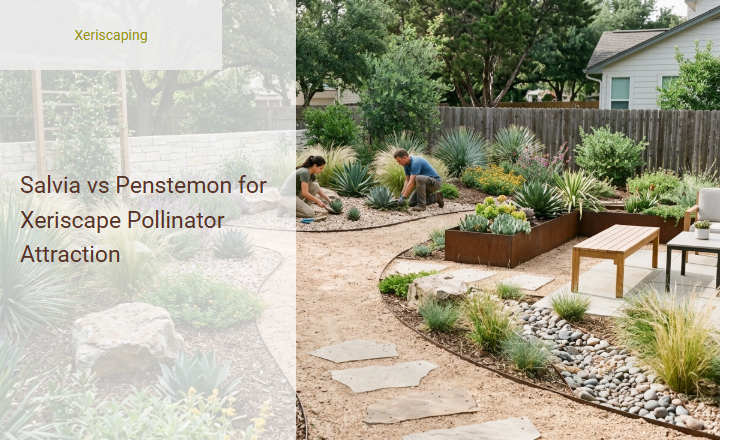
Designing a water-wise landscape often feels like a frustrating compromise between resource conservation and ecological vibrancy, leaving many gardeners struggling to attract diverse wildlife to dry, nutrient-poor soils. Before selecting plants, one must first address the foundational challenges of arid-land soil structure and limited precipitation. Fortunately, integrating targeted drought-tolerant genera grants you a buzzing, biodiverse sanctuary without compromising your municipal water budget.
To achieve this, an important educational stipulation must be noted: long-term success depends on matching specific cultivars, such as the resilient Autumn Sage (Salvia greggii) or the delicate Pineleaf Penstemon (Penstemon pinifolius), to your microclimate's drainage profile. In this comparative guide, we evaluate Salvia and Penstemon across key performance metrics-including bloom duration, soil adaptability, and specific pollinator attraction-to help you select the ideal botanical anchor for your xeriscape.
Introduction: The Xeriscape Pollinator Duel
In the face of shifting climates and dwindling water resources, the modern gardener must look beyond high-maintenance turf grass and thirsty annuals. Embracing a water-wise paradigm does not mean sacrificing color, movement, or biodiversity. Instead, it invites a thrilling rivalry between two powerhouse genera of the dry garden: Salvia (Sages) and Penstemon (Beardtongues). Both botanical families offer exceptional defense against drought while acting as ecological magnets for local fauna.
These resilient flowering plants serve as the backbone of modern xeriscape designs. While Salvia brings long-lasting, aromatic spikes to the table, Penstemon matches its competitor with dramatic, tubular blossoms of unmatched brilliance. Transforming arid expanses into thriving wildlife sanctuaries relies heavily on choosing the right champion from these two legendary plant groups, each vying for the title of the supreme drought-tolerant pollinator magnet.
Botanical Origins and Growth Habits
To understand the growth habits of these garden giants, one must look to their ancestral lands. The genus Salvia is incredibly vast, spanning over 900 species across the Americas, the Mediterranean, and Eastern Asia. Their growth habits vary from low-growing herbaceous perennials to woody, structural shrubs. Most salvias are recognizable by their square stems, opposite leaves, and highly aromatic foliage that deters deer and rabbits while releasing essential oils into the dry air.
In contrast, the genus Penstemon is a distinctly North American treasure, boasting around 250 species native primarily to the mountains, deserts, and plains of the West. Often referred to as beardtongues due to the sterile, tufted stamen that protrudes from their throat, these plants typically form low-growing, evergreen rosettes from which tall, unbranched flowering spikes erupt. This distinct growth habit makes them excellent architectural elements, providing stark vertical accents that contrast beautifully against the mounded forms of salvias.
Water Efficiency and Drought Resilience
Both Salvia and Penstemon are celebrated for their incredible ability to withstand prolonged dry spells, yet their strategies for water management differ. Sages often utilize deep, fibrous root systems and gray-green, textured foliage to reflect harsh sunlight and reduce transpiration. During their establishment year, salvias require regular deep watering to secure their root network, but once mature, many species can thrive on minimal supplemental watering, entering a semi-dormant state during extreme summer heat to conserve energy.
"While both genera excel in low-water environments, Penstemons are often the ultimate purists of drought tolerance, demanding dry conditions during their winter dormancy to prevent crown rot."
Penstemons are uniquely adapted to quick drainage and dry soils, often originating from rocky slopes where water never pools. While they benefit from modest hydration during their initial planting phase, overwatering mature beardtongues is a quick route to decline. Their physiological adaptations allow them to store moisture in their fleshy leaves and woody bases, making them superior choices for absolute xeriscapes where artificial irrigation is entirely absent.
Soil, Sun, and Drainage Requirements
Understanding the environmental preferences of these plants is critical to preventing common issues like root rot and poor flower production.
Optimal Conditions for Sages
Sages are highly adaptable but achieve peak health when their basic needs are met with precision:
- Sunlight: Minimum of 6 to 8 hours of direct sun daily.
- Soil Chemistry: Prefers slightly acidic to neutral soil, though some tolerate mild alkalinity.
- Drainage: Requires moderate to high drainage; heavy clay should be amended with organic matter or grit.
Optimal Conditions for Beardtongues
Beardtongues are less forgiving of wet feet and demand conditions that mimic their native montane or desert homes:
- Sunlight: Absolute full sun; shaded plants grow leggy and fail to bloom robustly.
- Soil Chemistry: Lean, nutrient-poor, neutral to alkaline soils; high fertility causes floppy growth and shortens lifespan.
- Drainage: Sharp, impeccable drainage is mandatory, requiring gravelly, sandy, or rocky soil.
Bloom Cycles and Floral Showcases
The visual impact of these two genera depends heavily on their flowering timelines and individual blossom structures. Sages are celebrated for their extended performance, often blooming in successive waves from late spring through the first hard frost of autumn. Their whorled flowers rise along the stems, continually opening to provide a steady food source. Penstemons, however, deliver an explosive, dramatic showcase in late spring to midsummer, producing dense panicles of bell-shaped blossoms that paint the landscape in saturated, neon hues before setting decorative seed pods.
| Feature | Salvia (Sages) | Penstemon (Beardtongues) |
|---|---|---|
| Primary Bloom Season | Late Spring through Autumn | Late Spring to Midsummer |
| Flower Shape | Two-lipped, tubular, small and clustered | Large, bell-shaped or tubular with open throats |
| Color Palette | Deep blues, purples, reds, pinks, and whites | Electric blues, magentas, purples, pinks, and scarlets |
| Bloom Duration | Very long (multi-month recurrent blooms) | Short to moderate (highly concentrated burst) |
Pollinator Attraction Profile: Bees, Butterflies, and Birds
Both genera are ecological cornerstones, but their distinct floral architectures cater to different suites of native pollinators, ensuring a bustling garden ecosystem.
Salvia: The Bee and Butterfly Magnet
The physical structure of a Salvia flower operates with mechanical precision. Sages feature a two-lipped flower that often includes a specialized lever mechanism. When a native bee lands on the lower lip to reach the nectar deep inside, the plant's stamens are tipped forward, dusting the bee's back with pollen. This makes salvias exceptionally efficient for pollination. Butterflies are also drawn to the clustered landing platforms offered by Salvia spikes, sipping nectar with ease.
Penstemon: The Hummingbird Haven
Penstemons present wide, open-mouthed throat structures that act as neon billboards for flying creatures. Red and hot pink Penstemon species are specifically designed to attract hummingbirds, who easily navigate their long bills into the deep tubes. Because hummingbirds do not require a landing platform, they hover effortlessly while feeding. Concurrently, larger native bees, such as bumblebees, climb entirely inside the spacious bell-shaped blossoms of purple and blue beardtongues, emerging covered in pollen.
Longevity, Hardiness, and Seasonal Maintenance
Managing the life cycles of these plants requires differing levels of gardener intervention to ensure years of robust performance and tidy growth.
- Lifespan: Many Salvia species are long-lived woody perennials that return reliably for a decade or more, whereas many Penstemons are naturally short-lived perennials, lasting three to five years but often self-seeding to perpetuate their presence in the garden.
- Winter Hardiness: Sages range widely from cold-hardy herbaceous types to tender woody species that struggle in sub-zero temperatures. Penstemons generally exhibit superb cold hardiness, with many species adapted to high-altitude mountain environments.
- Pruning and Deadheading: Salvias benefit immensely from mid-season deadheading to encourage repeat blooms, and woody varieties should be cut back by half in late winter. Penstemons require their flowering stalks to be cut to the ground after blooming to redirect energy into their basal rosettes for winter survival.
Top Cultivars for High-Performance Xeriscapes
Selecting the ideal varieties for your specific microclimate is the key to creating a low-maintenance, high-impact landscape.
Superior Salvia Selection
For outstanding performance in dry, sunny borders, consider these highly resilient sages:
Salvia greggii (Autumn Sage): A woody shrub native to Texas and Mexico, popular for its aromatic green leaves and constant display of red, pink, or yellow flowers. It is incredibly drought-tolerant and handles heat with ease.
Salvia nemorosa 'Caradonna' (Meadow Sage): Known for its dark purple stems and intense violet-blue spikes, this cold-hardy selection is a favorite of native bees and fits perfectly into formal xeriscape designs.
Premier Penstemon Selection
For dramatic vertical structure and intense color, add these exceptional beardtongues to your palette:
Penstemon pinifolius (Pineleaf Beardtongue): Featuring needle-like, evergreen foliage resembling a miniature pine, this plant erupts in brilliant scarlet-orange tubes that draw hummingbirds from far and wide.
Penstemon strictus (Rocky Mountain Beardtongue): A highly reliable, long-lived species featuring tall spires of intense, deep blue-purple flowers that thrive in lean, gravelly soils.
Landscape Design Integration and Companion Plants
Designing a visually dynamic xeriscape involves pairing the contrasting forms of Salvia and Penstemon to create depth and texture. The mounded, soft, gray-green foliage of sages makes an excellent background matrix, setting a stable, architectural baseline. In contrast, the rigid, vertical blooming spikes of beardtongues can be planted in drifts through the sages, piercing the canopy to create focal points of intense color during late spring.
By blending the fine-textured leaves of penstemons with the larger, coarser leaves of various salvias, you create structural complexity. This design strategy not only enhances visual aesthetics but also creates diverse micro-habitats for beneficial insects, protecting soil moisture through natural shade and windbreaks.
The Verdict: Choosing Your Xeriscape Champion
Selecting between Salvia and Penstemon depends on the unique conditions of your garden and your aesthetic goals. Sages are the perfect choice if you seek long-term stability, continuous all-season color, and a highly aromatic defense against browsing deer. They are forgiving of diverse soil profiles and provide a constant food supply for bees and butterflies from spring to frost.
Beardtongues are the ideal pick for gardeners working with sandy, rocky, or gravelly soils where drainage is absolute. Their dramatic, jewel-toned flowering spikes offer unmatched architectural beauty and serve as the premier spring buffet for hummingbirds. Integrating both into your design provides the best of both worlds, ensuring a resilient, water-wise sanctuary that celebrates the rich biodiversity of arid landscapes.
| Pollinator Feature | Salvia (Sages) | Penstemon (Beardtongues) |
|---|---|---|
| Target Pollinators | Broad appeal: honeybees, bumblebees, butterflies, and hummingbirds. | Specialized appeal: native bees (mason, leafcutter), bumblebees, and hummingbirds. |
| Pollination Mechanism | Mechanical lever: stamens tip forward to deposit pollen on the insect's back. | Physical barrier: a bearded, sterile stamen forces insects to squeeze past for nectar. |
| Bloom Duration & Value | Long-season resource: continuous or repeat blooms from late spring to frost. | Early-season resource: intense, heavy bloom flush in late spring to mid-summer. |
| Nectar Accessibility | Shallower tubes; accessible to both short-tongued and long-tongued insects. | Deep, narrow tubes; favors long-tongued bees, hummingbirds, and pollen wasps. |
Leave a comment