
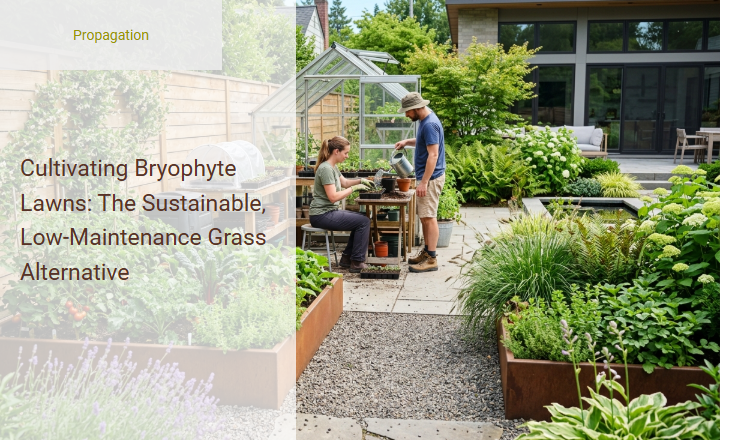
For many property owners, the weekend routine has become a grueling cycle of mowing, fertilizing, and heavy irrigating, yet traditional turfgrass lawns still succumb to brown patches and weeds. This relentless maintenance cycle highlights a deeper issue: our stubborn reliance on resource-intensive monocultures that struggle against local climates.
Cultivating a bryophyte (moss) lawn offers a sophisticated, living alternative that grants homeowners a lush, velvet-green carpet year-round with virtually zero mowing. To succeed, however, one must understand that bryophytes have specific environmental stipulations; they require shade and consistent moisture rather than the blazing sun tolerated by traditional sod. Species such as Hypnum (sheet moss) and Dicranum (mood moss) serve as excellent choices for transforming these damp, low-light problem areas into thriving, bio-diverse sanctuaries.
In this guide, we will analyze the technical steps required to prepare your soil, select the ideal bryophyte species, and establish a resilient, self-sustaining green space.
Read also: Closed Terrarium vs Open Tray for Moss Propagation
Introduction to Bryophyte Lawns
The traditional emerald lawn, long prized as the standard of suburban curb appeal, demands an exhausting cycle of mowing, watering, and chemical treatments. For those seeking a vibrant, low-maintenance alternative, bryophyte lawns offer a captivating solution. These ancient, velvety ground covers create a rich tapestry of deep greens and chartreuses that feel incredibly soft underfoot. Embracing a moss lawn means trading the noisy, high-emission lawnmower for an eco-friendly oasis that thrives in areas where traditional grass struggles to survive.
Understanding Bryophytes: The Ancient Greenery
To successfully cultivate these plants, it helps to understand their unique biology. Bryophytes are among the oldest land plants on Earth, predating vascular vegetation by millions of years. Unlike modern turf grasses, bryophytes are non-vascular, meaning they completely lack true roots, stems, and seeds. Instead of drawing water from deep within the earth, they absorb moisture and essential nutrients directly through their leaves from the air and dew.
Because they lack roots, they utilize tiny hair-like structures called rhizoids to anchor themselves securely to soil, rocks, or decaying wood. This allows them to inhabit challenging spaces where traditional grass cannot find purchase.
Ecological Benefits of Switching to Moss
Replacing standard turf grass with a moss lawn delivers immediate and profound benefits to the local ecosystem. Once established, these resilient ground covers naturally harmonize with their surroundings.
- Zero Chemical Inputs: Moss thrives in nutrient-poor soils and naturally repels most pests, eliminating the need for synthetic fertilizers, herbicides, and pesticides.
- Drastic Water Conservation: While traditional turf requires thousands of gallons of water to stay green during summer, bryophytes can survive dry periods by dormant browning, quickly reviving with the next rain.
- Support for Biodiversity: A bryophyte lawn provides micro-habitats for beneficial insects, small invertebrates, and birds seeking nesting materials, enhancing local biodiversity.
Selecting the Perfect Moss Species for Your Yard
Selecting the right moss requires an understanding of the two primary growth habits of bryophytes. Matching these habits to your yard's specific microclimate ensures a dense, thriving carpet.
Acrocarps vs. Pleurocarps
Acrocarps grow in upright, tight mounds or cushions. They grow slowly and are highly drought-tolerant, making them ideal for spaces with less moisture. Pleurocarps exhibit a creeping, chaotic growth habit, spreading rapidly across the ground like a woven carpet. They form a knit surface that can tolerate light foot traffic much better than upright varieties.
For shaded, moist areas with light foot traffic, species like Thuidium delicatulum (Fern Moss) or Hypnum cupressiforme (Sheet Moss) are exceptional choices. For drier, sunnier patches, acrocarps like Dicranum scoparium (Mood Moss) can provide beautiful, textured contrast.
Preparing the Soil for a Successful Transition
While moss is highly adaptable, proper site preparation is critical to ensure your new bryophytes can establish their anchor points without competition from aggressive weeds.
- Clear away all existing weeds, turf grass, and debris from the designated area using a hand tool or shovel.
- Level the ground gently, smoothing out deep divots while leaving natural contours if desired.
- Test and adjust the soil acidity; most bryophytes prefer an acidic pH between 5.0 and 5.5, which can be achieved by adding elemental sulfur if necessary.
- Lightly compact the soil surface, as moss establishes much better on firm, stable ground than on loose, freshly tilled earth.
Ensuring the soil is clear of organic debris like fallen twigs and leaves prior to planting gives the rhizoids direct contact with the earth, accelerating the establishment process.
Planting Methods: Slurry vs. Transplanting
There are two primary methods for establishing a bryophyte lawn, depending on your budget, timeframe, and the size of the area you wish to cover.
Direct Transplanting
Transplanting is ideal for immediate visual results. You press small, healthy patches of moss directly onto the damp, prepared soil. Ensure you press firmly to eliminate air pockets, securing the edges with biodegradable landscape pins if necessary.
The Slurry Method
For large or irregular surfaces, the slurry method allows for seamless coverage. You blend harvested moss with a binding liquid to create a mixture that can be painted or poured over the ground.
A simple recipe involves mixing shredded moss with water or buttermilk in a blender to create a thick, spreadable paste that easily adheres to the soil.
Nurturing the Lawn During Establishment
The first few weeks after planting are the most critical for your new lawn. Consistent moisture management is the key to encouraging rhizoids to bond with the soil.
Water the area gently several times a day with a fine misting nozzle, keeping the moss damp but not submerged. Hand-pull any stray weed seedlings immediately, as they can easily crowd out the slower-growing moss before it forms a solid carpet. Protect the area from strong winds or curious animals using a light, temporary netting pinned over the surface.
Once the moss firmly resists a gentle tug, you can gradually reduce watering frequency, allowing the plants to transition into their natural, low-maintenance cycle.
Effortless Long-Term Maintenance
An established bryophyte lawn requires remarkably little upkeep compared to traditional grass. You can permanently retire your lawnmower and enjoy a serene green space year-round.
- Leaf Removal: Gently sweep or use a leaf blower on its lowest setting to remove autumn leaves, preventing them from smothering the light-seeking moss underneath.
- Weeding: Occasional hand-weeding is required, though a dense moss carpet naturally suppresses most weed seeds from germinating.
- Dry Spells: During severe droughts, you can let the moss go dormant, or apply a light misting to instantly restore its vibrant green color.
Troubleshooting Common Moss Lawn Challenges
Even low-maintenance lawns can occasionally face environmental stressors. Knowing how to read the signs of distress helps you address issues quickly and naturally.
Browning and Patchiness
If your moss begins to turn brown, it is typically a sign of insufficient moisture or excessive direct sunlight. Increase your misting schedule or introduce temporary shade. Patchy areas can be easily repaired by pressing small plug transplants into the bare spots.
Weed Infiltration
If weeds break through the moss barrier, avoid chemical weed killers, which will damage or kill bryophytes. Stick to manual removal, ensuring you extract the entire root system to prevent regrowth.
Embracing the Future of Sustainable Landscaping
Choosing a bryophyte lawn is a powerful step toward a more ecological, harmonious approach to home landscaping. By working with nature rather than fighting against it, you create a self-sustaining landscape that honors the native environment.
"A moss lawn transforms a high-maintenance chore into a tranquil sanctuary, proving that true curb appeal does not have to come at the expense of our planet's precious resources."
This living green carpet redefines modern aesthetics, offering a quiet, soft, and resilient sanctuary that flourishes in harmony with the local ecosystem for generations to come.
Summary
"Cultivating Bryophyte Lawns: The Sustainable, Low-Maintenance Grass Alternative" explores the rising trend of replacing traditional turf grass with bryophytes, specifically mosses. Traditional lawns demand excessive water, chemical fertilizers, and constant mowing, contributing to environmental degradation. In contrast, bryophyte lawns offer a highly sustainable, evergreen alternative that thrives in shaded, moist environments where standard grass struggles.
These ancient, non-vascular plants require no mowing, minimal watering once established, and absolutely no chemical treatments, significantly reducing a homeowner's ecological footprint. Additionally, moss lawns help prevent soil erosion, absorb carbon dioxide efficiently, and foster local biodiversity by creating habitats for beneficial insects. By outlining practical steps for soil preparation, species selection, and propagation, the article presents bryophyte cultivation as an ecologically responsible, visually stunning, and low-maintenance landscaping solution for the modern, climate-conscious homeowner.
Leave a comment