
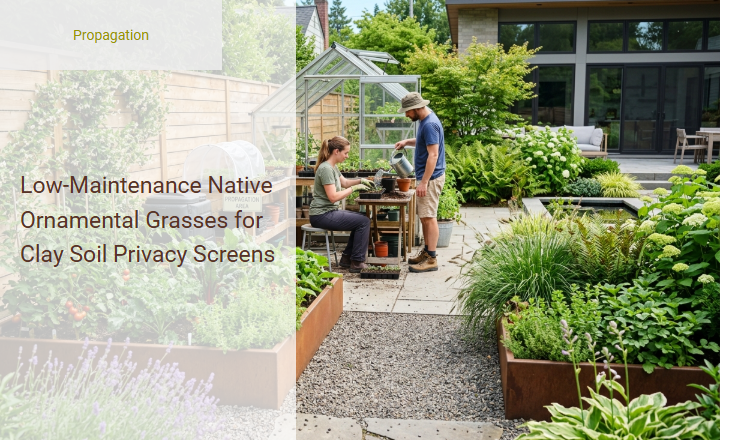
Homeowners dealing with heavy, compacted clay soil often struggle to establish functional privacy borders. Traditional evergreen hedges frequently suffer from root rot in these poorly drained conditions, leaving properties exposed and landscapes looking sparse. Bridging the gap between difficult soil structure and the urgent need for secluded outdoor spaces requires looking beyond conventional, high-maintenance nursery standards.
Utilizing native ornamental grasses grants a self-sustaining, dynamic living wall that thrives where other plants fail, while offering year-round visual interest. However, utilizing these plants successfully relies on an important educational stipulation: while these species are exceptionally resilient once mature, they require proper initial soil prep and patience during their first growing season to thrive in dense clay.
Robust species like Switchgrass (Panicum virgatum) and Indiangrass (Sorghastrum nutans) prove that clay-tolerant choices can be both structurally impressive and virtually hands-off. Below, we will analyze the best native grass species for heavy soils, compare their heights, and outline a step-by-step planting strategy for a lasting privacy screen.
Read also: Seeds vs Division for Ornamental Grasses
Embracing Clay: The Secret to Natural Backyard Privacy
Many homeowners view heavy clay soil as a gardening curse, struggling year after year with waterlogged roots in the spring and brick-like dirt in the summer. Trying to plant traditional privacy hedges like Arborvitae in these conditions often leads to root rot, stunted growth, and expensive replacements. Fortunately, there is a vibrant, resilient alternative that thrives in these exact conditions. Native ornamental grasses offer a gorgeous, low-maintenance living privacy screen that turns your challenging clay soil into a landscaping triumph.
The Ecological and Practical Benefits of Native Grasses
Native ornamental grasses are far superior to non-native alternatives because they have evolved to thrive in local environments over thousands of years. Instead of fighting against your yard's natural conditions, these plants work with the ecosystem to build a stronger backyard habitat.
- Deep Root Systems: Their extensive roots break up compacted clay and improve soil structure over time.
- Drought Tolerance: Once established, these grasses can survive dry spells without supplemental watering.
- Minimal Maintenance: Unlike manicured hedges, they do not require constant pruning, shearing, or chemical fertilizers.
Understanding Clay Soil as an Asset, Not a Liability
While clay soil gets a bad reputation, it is actually incredibly rich in minerals and nutrients. It retains moisture far better than sandy soils, acting as a reservoir during hot summer months. For heavy-duty native grasses, clay provides a solid, heavy anchor that prevents tall stalks from flopping over in strong winds. In looser, overly rich soils, these giants often grow too quickly and fall flat, but in clay, they stand resolute, strong, and perfectly upright.
Switchgrass (Panicum virgatum): The Sturdy Sentinel
Switchgrass is a legendary performer in heavy clay, known for its stiff, upright habit and tolerance of both wet and dry conditions. It maintains a clean, architectural form throughout the growing season, turning a beautiful golden-yellow in the fall.
For those seeking maximum privacy, the cultivar 'Northwind' is the premier choice, growing up to six feet tall with a strictly columnar shape that creates a dense green wall.
Indiangrass (Sorghastrum nutans): Golden Feathers for High Screens
Indiangrass brings both height and elegance to the backyard barrier, often reaching heights of six to eight feet. Its metallic blue-green foliage provides a cool, calming backdrop during the summer heat, shifting to deep orange-bronze in autumn. In late summer, the grass is topped with shimmering golden-bronze plumes that catch the breeze, offering a dynamic and soft visual screen that thrives in tough clay.
Big Bluestem (Andropogon gerardii): The Monarch of the Plains
Big Bluestem is a towering giant that once dominated the American tallgrass prairie, making it exceptionally well-suited for deep-rooted privacy barriers. This grass is famous for its color transitions, starting with a striking blue-green hue in spring, shifting to a rich copper-red in autumn, and holding its structural strength against heavy winter winds and snow.
Eastern Gamagrass (Tripsacum dactyloides): The Bold, Wide-Leafed Barrier
If you want a bold, lush texture that resembles corn plants, Eastern Gamagrass is an outstanding choice. This grass excels at absorbing excess moisture in low-lying clay areas while forming massive, dense clumps.
- Features wide, light-green leaves that create a tropical aesthetic.
- Forms tight, heavy crowns that naturally crowd out weeds.
- Provides excellent low-level screening to block unsightly views near the ground.
Designing Your Living Wall: Spacing and Layering
To create an effective, natural-looking privacy screen, avoid planting your grasses in a single, rigid line. A layered approach looks more organic and provides superior wind protection and biodiversity.
- Space your primary native grasses approximately 3 to 4 feet apart to allow them room to mature into a seamless wall.
- Stagger a second row of shorter, colorful native perennials or shrubs in front of the tall grasses to create depth.
- Incorporate species like winterberry or ninebark to maintain structure and color even after the grasses are cut back in early spring.
Planting for Success in Heavy Clay
Planting in clay is simple if you follow natural principles. When installing bare-root or container-grown native grasses, dig a hole only as deep as the root ball but twice as wide. Avoid adding compost or soil amendments to the planting hole; forcing the roots to grow directly into your native clay encourages them to establish deep, resilient root networks. Mulch the surface with a thin layer of wood chips to retain moisture, and water thoroughly until new growth emerges.
Effortless Care: Minimal Maintenance for Maximum Beauty
The beauty of a native grass privacy screen lies in its incredibly simple maintenance routine. Unlike traditional evergreen hedges that require precise trimming, these grasses only need a single cutback once a year in late winter or early spring before new growth starts. Leaving the dry stalks standing through winter provides essential food and shelter for local birds, while adding beautiful movement and structure to your snowy landscape.
Summary
Creating an effective privacy screen in challenging clay soil is easily achievable using native ornamental grasses. These resilient plants are naturally adapted to dense, poorly drained soils where traditional hedge plants often struggle. Superior choices like Switchgrass (Panicum virgatum), Big Bluestem (Andropogon gerardii), and Indiangrass (Sorghastrum nutans) quickly establish deep root systems that help break up compacted clay and improve soil structure over time.
Growing up to eight feet tall, these grasses provide an elegant, shifting barrier that offers year-round visual interest and wind protection. Because they are native to North America, they require minimal watering, no fertilizers, and very little pruning once established. Choosing native grasses not only creates a sustainable, low-maintenance privacy screen but also supports local ecosystems by providing vital food and shelter for birds and beneficial insects.
Leave a comment