
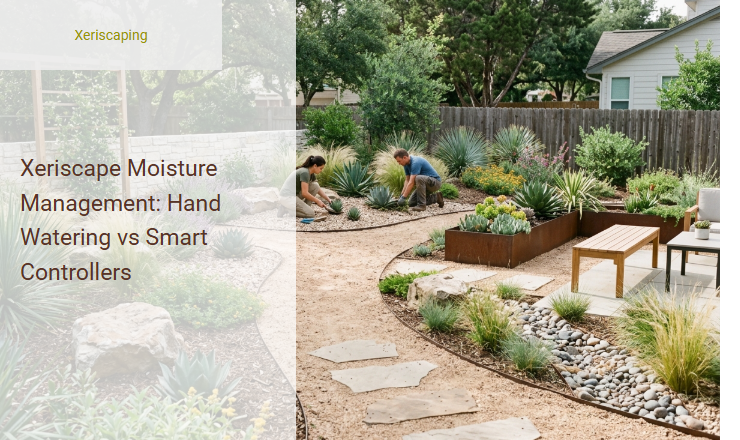
Transitioning to a xeriscape often introduces a frustrating paradox: trying to conserve water while keeping new, drought-tolerant plantings alive. Before deciding how to irrigate, it is essential to understand that arid soils behave differently, requiring precise moisture management to prevent root rot or dehydration. Mastering this balance grants you a flourishing, low-water sanctuary while drastically reducing municipal utility fees.
However, effective moisture management carries a vital stipulation: irrigation technology is only as good as its configuration, and even the most advanced systems require basic soil knowledge to prevent plant loss. For instance, establishing a deep-rooted Agave parryi demands a vastly different watering volume and frequency than nurturing shallow-rooted groundcovers like Myoporum.
To help you navigate this balance, this article evaluates the hands-on precision of manual hand watering against the automated efficiency of smart controllers, outlining the pros, cons, and best practices for each approach.
Introduction to Xeriscape Moisture Management
Xeriscaping is the practice of designing landscapes to reduce or eliminate the need for supplemental water. While choosing native and drought-hardy plants is fundamental, moisture management remains the most critical factor in ensuring these plants thrive rather than just survive. A central debate among eco-conscious gardeners has emerged: is the traditional, tactile approach of hand watering superior, or should we rely on modern smart irrigation controllers?
The Core Challenge: Balancing Water Needs in Dry Landscapes
Even the most resilient desert flora require a period of establishment. When first planted, xeriscape species have shallow, undeveloped root systems that cannot yet access deep groundwater. During these critical initial phases and unexpected dry spells, precise moisture delivery is essential to encourage deep root penetration and build long-term drought resilience.
The Art of Hand Watering: Precision and Connection
The Intimate Connection of Manual Care
Hand watering is not merely a chore; it is an active dialogue with your landscape. By holding the hose or watering can, you establish a physical connection to the soil, observing its absorption rates in real time. This targeted root application ensures water goes exactly where it is needed without waste.
"The best fertilizer is the gardener's shadow." - Ancient Proverb. This rings especially true in dry climates, where observing a drooping leaf or dry patch of soil can prevent plant loss before it begins.
Hand Watering: Advantages and Limitations
- Low Initial Cost: Hand watering requires almost no financial investment beyond a quality hose or watering can.
- High Precision and Control: You can apply water directly to specific roots, avoiding weed-prone areas.
- Time-Consuming: Manual irrigation demands a significant time commitment, especially in larger gardens.
- Risk of Human Error: Under-watering or over-watering due to fatigue or forgetfulness can stress sensitive plants.
Smart Irrigation Controllers: Technology in the Garden
Automating Precision in Drought Conditions
Smart irrigation controllers represent a technological leap in sustainable gardening. Instead of operating on simple timers, these devices utilize real-time weather data, soil moisture sensors, and local evapotranspiration rates to calculate exactly when and how much to water, removing the guesswork from irrigation.
How Smart Controllers Maximize Water Conservation
To prevent water loss from evaporation and runoff, smart controllers implement advanced features like cycle-and-soak scheduling. This technique applies water in short bursts, allowing the dry, compacted soil typical of xeriscapes to absorb moisture completely before the next cycle begins, aligning perfectly with native soil infiltration rates.
Smart Controllers: Pros and Cons
- Unmatched Water Savings: Automated adjustments based on weather prevent unnecessary watering during rainy spells.
- Convenience: Once configured, the system manages watering schedules autonomously, saving hours of manual labor.
- High Initial Cost: Purchasing the controller and professional sensors requires a notable upfront investment.
- Technical Setup and Maintenance: Programming, Wi-Fi connectivity issues, and physical component wear require ongoing troubleshooting.
Head-to-Head: Efficiency, Cost, and Plant Health
| Metric | Hand Watering | Smart Controllers |
|---|---|---|
| Water Efficiency | Moderate (highly targeted but prone to human error) | High (data-driven with minimal waste) |
| Financial Investment | Low (cost of basic tools) | High (equipment, installation, and setup) |
| Plant Vitality | Excellent for individual, close-up monitoring | Consistent and steady moisture distribution |
The Hybrid Strategy: Combining Human Intuition with Tech
A balanced approach often yields the best results. By leveraging the consistency of smart irrigation controllers to handle the base watering needs of established zones, you can free up time to focus hand watering efforts where they matter most. This targeted manual intervention is perfect for newly planted additions that need extra care or specific microclimates that require occasional spot treatments.
Conclusion: Determining the Best Path for Your Xeriscape
Choosing between manual care and automated technology depends heavily on the unique parameters of your garden, your personal budget, and your daily lifestyle. For small suburban plots or container gardens, the precision and intimacy of hand watering are often sufficient and highly rewarding. Conversely, larger yards or busy homeowners will benefit immensely from the efficiency and automation of smart controllers. Deciding on the right path ensures a flourishing, low-water landscape that stands up to the challenges of dry climates.
| Moisture Metric | Hand Watering | Smart Controllers |
|---|---|---|
| Precision & Accuracy | Low. Relies on subjective visual checks; high risk of uneven soil saturation. | High. Uses real-time soil sensors and ET (evapotranspiration) data. |
| Water Waste & Runoff | High. Up to 50% water loss from runoff and deep percolation. | Minimal. Saves 30-50% water by matching application to soil absorption rates. |
| Operational Efficiency | Manual. Highly labor-intensive; requires physical presence and active time. | Automated. 24/7 weather-adjusted scheduling with zero labor required. |
| Response to Weather | Reactive. Adjustments happen only after environmental changes occur. | Predictive. Automatically skips cycles based on local rain forecasts. |
Leave a comment