
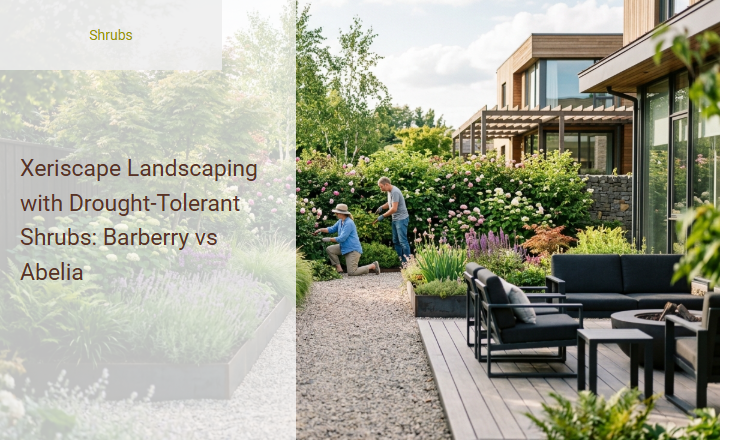
Homeowners facing hotter, drier summers and rising water utility rates often struggle to maintain a vibrant, welcoming landscape without draining both their weekends and their wallets. Before abandoning the idea of a lush yard altogether, it is important to understand that transitioning to a water-wise garden does not mean settling for a barren wasteland of gravel and cacti.
Adopting strategic xeriscaping grants you a stunning, climate-resilient property that thrives with minimal irrigation. However, a crucial educational stipulation remains: even the toughest "drought-tolerant" species require consistent watering during their first one to two seasons to establish the deep root systems necessary for survival.
To achieve this structural resilience, professional designers frequently turn to reliable workhorses like the vibrant, thorny Berberis thunbergii (Barberry) and the gracefully arching, pollinator-friendly Abelia × grandiflora (Abelia). This article will compare these two popular shrubs across key categories-including soil preferences, aesthetic appeal, and maintenance needs-to help you determine which specimen best suits your regional climate and design goals.
Introduction to Xeriscaping: Barberry vs Abelia
As climate patterns shift and water resources become increasingly precious, homeowners are turning to xeriscaping to create beautiful, sustainable outdoor spaces. This low-water landscaping philosophy does not mean settling for a barren desert look; rather, it encourages the use of highly adaptable, resilient plants that thrive with minimal irrigation. Designing a successful low-water garden relies on selecting the right structural plants that can withstand periods of intense heat and dry spells while maintaining their visual appeal year-round.
Among the top choices for drought-tolerant shrubs, Barberry (Berberis) and Abelia stand out as premier candidates. While both offer exceptional drought tolerance once established, they bring vastly different aesthetics, growth habits, and maintenance requirements to the landscape. Choosing between them is crucial, as the right selection determines not only the visual harmony of your yard but also your long-term commitment to pruning, watering, and garden safety.
Understanding Barberry: Features and Drought Tolerance
Vibrant Foliage and Protective Thorns
Barberry is widely recognized for its striking, intensely colored leaves that range from deep burgundy and bright gold to variegated patterns of pink and emerald green. This deciduous or semi-evergreen shrub features sharp spines along its woody stems, making it an excellent natural barrier. The compact, often upright growth habit of Barberry allows it to fit neatly into tight spaces, adding structural depth and intense color contrast to the landscape.
Hardiness and Natural Drought Resistance
Typically hardy in USDA zones 4 through 9, Barberry is an exceptionally rugged plant. Its natural drought resistance stems from its deep, fibrous root system that efficiently extracts moisture from dry soils. Once its root system is fully established, Barberry can survive long periods of dry weather without showing signs of stress, making it a reliable backbone for xeriscapes in challenging climates.
Exploring Abelia: Graceful Blooms and Resilience
Long-Lasting, Fragrant Flowering Habits
Abelia is a highly ornamental shrub celebrated for its exceptionally long blooming season, which typically stretches from late spring until the first autumn frost. It produces clusters of delicate, tubular or bell-shaped flowers in shades of soft white and pale pink. These blossoms are often fragrant, adding a sweet sensory element to the garden. Even after the flowers fall, the colorful sepals remain, extending the plant's visual appeal deep into the winter months.
Elegant Growth Form and Semi-Evergreen Foliage
With its graceful, arching branches and glossy, oval leaves, Abelia offers a soft, natural silhouette. Most varieties are semi-evergreen, retaining their foliage in milder climates while taking on coppery or purplish tints during the colder months. Hardy in USDA zones 5 through 9, Abelia displays remarkable resilience in low-water conditions, adapting well to summer heat and dry spells without losing its elegant form.
Aesthetic Differences: Foliage and Flowers Compared
When deciding between Barberry and Abelia, the visual comparison comes down to bold, architectural color versus soft, continuous floral elegance. Barberry acts as an eye-catching focal point, commanding attention with its saturated reds, golds, and purples that change with the seasons. In contrast, Abelia offers a more delicate, romantic presence with its glossy, multi-toned leaves and continuous showers of soft pink and white bells. While Barberry brings high-contrast structure, Abelia brings movement, texture, and a long-lived floral display.
- Barberry Visual Highlights: Intense foliage colors including deep crimson, chartreuse, and marbled orange; prominent thorns that add physical texture; compact, rounded, or columnar growth habits.
- Abelia Visual Highlights: Arching, weeping branches; glossy foliage that often features white, cream, or gold variegation; persistent, fragrant bell-shaped flowers followed by colorful bronze sepals.
Water Conservation: How Much Do They Really Need?
Both shrubs are celebrated for their water-wise properties, but their actual moisture demands vary during the establishment phase and under severe drought conditions. Barberry is notoriously tough, needing almost no supplemental watering once established, whereas Abelia prefers slightly more consistent moisture to maximize its prolonged blooming cycle, though it remains highly drought-tolerant.
| Establishment & Tolerance Aspect | Barberry (Berberis) | Abelia Genus |
|---|---|---|
| Establishment Phase (Year 1) | Moderate water weekly to build deep roots | Regular watering 1 to 2 times a week |
| Water Needs After Establishment | Minimal; thrives on natural rainfall | Low to moderate; benefits from summer watering |
| Drought Tolerance Level | Excellent; handles extreme dryness well | Very good; retains blooms best with minimal irrigation |
| Signs of Overwatering | Root rot, yellowing leaves, leaf drop | Soggy soil stress, chlorosis, root rot |
Soil, Sun, and Site Requirements
To unlock the full potential of these drought-tolerant shrubs, careful site selection is essential. Barberry performs best when planted in full sun, where its leaves can develop their most vibrant coloration; shade can cause the rich purple and gold leaves to fade to a dull green. It is highly adaptable to various soil types, including poor, rocky, or clay soils, provided there is well-draining soil to prevent waterlogged roots.
Abelia is slightly more versatile regarding light, flourishing in full sun to partial shade. While it tolerates afternoon shade, planting it in full sun encourages the most abundant blooms and brightest variegated foliage. Abelia thrives in fertile, organically rich, and well-draining soil with a slightly acidic to neutral pH. Proper drainage is a critical requirement for both species, as neither will tolerate sitting in stagnant, soggy ground.
Pruning and Maintenance Demands
Barberry Maintenance and Pruning
Barberry has a slow-to-moderate growth rate and generally retains its neat, compact shape with minimal intervention. However, its sharp thorns require extra caution and heavy-duty protective gloves during maintenance.
- Prune in late winter or early spring before new growth emerges to maintain shape.
- Wear thick leather gloves and long sleeves to protect against sharp spines.
- Remove dead, damaged, or crossing branches from the center to improve air circulation.
Abelia Maintenance and Pruning
Abelia features a faster growth rate and a naturally sprawling, arching habit. It requires selective pruning to prevent it from becoming overly wild, though its lack of thorns makes handling the plant much easier.
- Prune in late winter or early spring, as flowers bloom on new wood.
- Thin out older, woody stems near the base to encourage vigorous new flowering shoots.
- Lightly trim arching branches throughout the season to maintain a softer, tidier boundary.
Wildlife Interaction: Pollinators and Pest Resistance
A resilient xeriscaped garden should support local ecosystems. Both Barberry and Abelia excel at this, though they play different ecological roles. Barberry's dense, thorny growth offers excellent nesting sites and protective cover for small songbirds, while its spring yellow flowers provide early food sources. Furthermore, its sharp spines make it highly deer resistant, keeping hungry wildlife from stripping your garden bare.
Abelia is a powerhouse for pollinator attraction. Its fragrant, bell-shaped flowers produce sweet nectar that serves as a magnet for bees, butterflies, and hummingbirds all summer and autumn long. Because it blooms when many other plants have faded, it provides a vital late-season food supply. Like Barberry, Abelia is generally overlooked by deer and is highly resistant to most common garden pests, ensuring a low-stress, wildlife-friendly landscape.
Designing Your Xeriscape: Placement and Companions
Successful xeriscaping relies on placing plants where their natural habits can shine. Thanks to its sharp thorns, Barberry is ideal for defensive plantings, security barriers under windows, or as structural accent points where bold, year-round color is needed. Abelia is much better suited for high-traffic zones, soft garden borders, foundation plantings, and mass plantings where its arching stems can drape gracefully over walkways without scratching passersby.
- Barberry Companions: Pair with drought-tolerant ornamental grasses (like Blue Fescue), Purple Coneflower (Echinacea), and Russian Sage to balance the sharp form of Barberry with soft textures and cool-toned flowers.
- Abelia Companions: Combine with structural plants like Agave, clean-lined Salvia varieties, and low-growing ground covers like creeping thyme or sedum to highlight Abelia's airy, romantic growth pattern.
The Final Verdict: Barberry vs Abelia for Your Garden
Choosing between Barberry and Abelia comes down to prioritizing your aesthetic goals, site conditions, and maintenance preferences. If your primary objective is bold, year-round foliage color, excellent cold hardiness, and a natural security barrier that requires minimal water and attention, then Barberry is the ideal choice for your dry landscape. Its rugged nature and rich hues make it a dramatic, low-stress addition to high-sun areas.
If you prefer a softer, elegant garden aesthetic featuring continuous floral fragrance, high pollinator activity, and thorn-free branches that are safe for walkways, then Abelia is the perfect selection for your xeriscape. By matching your garden's physical environment and your personal design vision to the unique strengths of each shrub, you can create a thriving, water-wise sanctuary that remains beautiful through every season.
| Drought Metric | Barberry (Berberis spp.) | Abelia (Abelia spp.) |
|---|---|---|
| Tolerance Level | High; exceptional survival in arid conditions once established. | Moderate; survives dry periods but prefers regular moisture. |
| Soil Moisture Profile | Thrives in dry, poor, well-drained soils; highly intolerant of wet feet. | Prefers moist, organic-rich, well-drained soils; tolerates occasional dry spells. |
| Performance Under Stress | Maintains foliage density and vibrant color with minimal to no supplemental water. | Displays leaf wilt and reduced flower production during prolonged dry periods. |
Leave a comment