
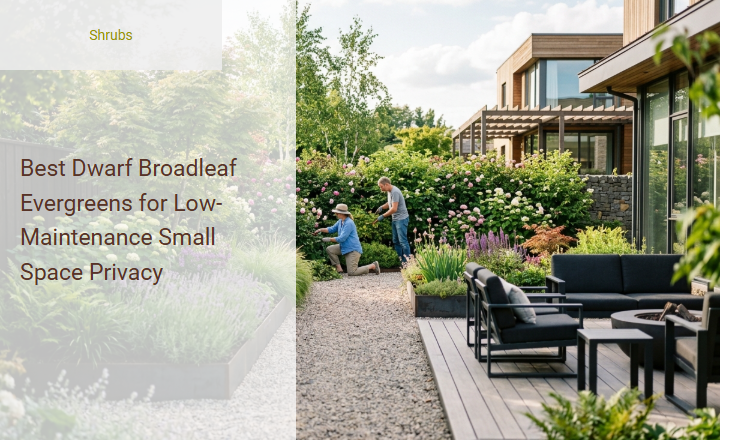
Homeowners with compact yards often struggle to establish backyard privacy without sacrificing precious outdoor living space to sprawling, high-maintenance hedges. While traditional perimeter plantings offer excellent screening, their rapid, aggressive growth quickly overwhelms limited footprints, demanding constant pruning and upkeep.
Fortunately, utilizing compact cultivars grants you year-round structural beauty and intimate screening without the burden of endless shearing. However, successful integration requires understanding that "dwarf" indicates a slower growth rate rather than a completely static size; proper site selection and soil preparation remain critical. Proven options like Buxus microphylla 'Little Missy' and dwarf Inkberry Hollies demonstrate how compact shrubs can deliver dense, reliable foliage in tight quarters.
In this guide, we will evaluate the premier dwarf broadleaf evergreens for small-space privacy, detailing their growth habits, sun requirements, and care profiles to help you design a beautiful, low-maintenance sanctuary.
Read also: Aucuba vs Fatsia for Deep Shade
The Appeal of Small-Space Evergreen Privacy
Urban living offers vibrant culture and convenience, but it often comes at the expense of personal space and privacy. Traditional fencing can feel cold and restrictive in compact yards, while standard trees quickly outgrow their welcome. This is where dwarf broadleaf evergreens step in as the perfect low-maintenance solution, providing a natural, elegant way to screen out neighbors. These compact plants deliver dense foliage and lush texture, acting as year-round visual barriers that keep your outdoor sanctuary secluded and peaceful without requiring constant pruning or taking up valuable square footage.
Why Choose Broadleaf Evergreens Over Conifers
While conifers are a traditional choice for hedging, they often lack the versatility required for tight urban spaces. Conifers can look harsh and monocultural, and many species do not regenerate from old wood, meaning a bad prune can ruin their shape permanently. In contrast, broadleaf evergreens offer a softer, more dynamic presence. They provide rich textures, glossy leaves that reflect light to brighten dark corners, and often feature seasonal highlights like spring blossoms or bright winter berries. Furthermore, their superior pruning tolerance makes them incredibly forgiving and easy to maintain in confined areas.
- Rich Textural Variety: Broadleaf foliage ranges from delicate, small leaves to bold, glossy plates that add depth to small gardens.
- Multi-Seasonal Interest: Unlike static conifers, many broadleaf evergreens produce fragrant flowers, colorful new growth, and vibrant berries.
- Excellent Pruning Recovery: They respond beautifully to shaping and can easily be kept to precise dimensions without leaving bare patches.
Crucial Factors for Small-Scale Selection
Selecting the right dwarf evergreen requires careful planning to ensure the plants thrive and fit their designated space perfectly over time. Because small yards offer little margin for error, understanding the biological traits of each species prevents future crowding and maintenance headaches. Follow this systematic checklist to choose the ideal specimens for your landscape.
- Verify the Ultimate Mature Height: Ensure the plant's maximum natural height aligns with your privacy needs without blocking upper windows or overhead structures.
- Evaluate the Growth Rate: Choose slow-growing cultivars to minimize pruning frequency, though a slightly faster grower may be preferred if immediate screening is required.
- Assess Light and Microclimate Conditions: Match the shrub's sun tolerance (from full sun to deep shade) with the specific light patterns of your urban courtyard or balcony.
Dwarf Boxwood: The Classic Neat Border
'Green Gem' Boxwood
Dwarf boxwood is the quintessential choice for gardeners seeking structure, clean lines, and formal elegance. Varieties such as 'Green Gem' are highly prized for their exceptionally round, compact growth habit and tiny, dark green leaves that maintain their rich color throughout the coldest winters. These slow-growing shrubs require minimal shearing to maintain their neat, spherical form, making them perfect for defining low borders, lining pathways, or serving as a crisp backdrop for softer perennial plantings in tight spaces.
"Place 'Green Gem' boxwoods in symmetrical pairs at entryways or transition points to create an instant sense of structure and lead the eye through a small garden space."
Dwarf Holly: Glossy leaves and Vibrant Berries
Dwarf Holly Cultivars
Dwarf hollies combine striking visual appeal with practical functionality. Cultivars like Ilex cornuta 'Carissa' and Ilex x 'Little Red' feature beautiful, glossy foliage that catches the light, alongside dense growth habits. Beyond their aesthetic value, the slightly spiny leaves of these cultivars offer natural security benefits, deterring unwanted pests and intruders when planted beneath windows or along property lines. Best of all, they are incredibly tough, drought-tolerant once established, and require almost no pruning to keep their compact, rounded shapes.
Japanese Pieris: Colorful Year-Round Interest
'Cavatine' Japanese Pieris
For those who want privacy without sacrificing seasonal color, 'Cavatine' Japanese Pieris is an exceptional choice. This elegant evergreen shrub offers a changing palette throughout the year, starting with fiery bronze-red new foliage in spring that matures into a deep, lustrous green. In late winter and early spring, it is completely covered in cascading clusters of bell-shaped white flowers that resemble lilies-of-the-valley, bringing life and pollinators to your quiet sanctuary while maintaining its privacy-shielding density.
Otto Luyken Laurel: Spreading Compact Shield
'Otto Luyken' Cherry Laurel
The 'Otto Luyken' Cherry Laurel is a powerhouse plant specifically suited for challenging, narrow beds and awkward side yards. It features upward-pointing, dark green leaves with a glossy finish that reflects sunlight beautifully. This cultivar is highly celebrated for its extreme shade tolerance, allowing it to thrive under mature tree canopies or in the deep shadows of tall urban buildings. It establishes itself rapidly, quickly forming a dense, wide-spreading visual shield that requires very little upkeep once settled in the ground.
Strategic Spacing for Dense Living Walls
Creating a seamless living wall in a small space requires striking a balance between immediate privacy and long-term plant health. Planting shrubs too close together leads to air stagnation, disease, and lower foliage drop, while planting them too far apart defeats the purpose of a privacy screen. To achieve a dense, healthy barrier, follow these precise layout and spacing guidelines based on mature plant spread.
- Dwarf Boxwood ('Green Gem'): Space plants 18 to 24 inches apart from center to center to create a tight, continuous low hedge.
- Dwarf Holly ('Carissa'): Plant these 2.5 to 3 feet apart to allow individual light access while ensuring their branches weave together within three seasons.
- 'Otto Luyken' Laurel: Space at 3 to 4 feet intervals to accommodate their wider, spreading growth habit while maintaining solid coverage.
Minimalist Care Guide for Busy Gardeners
The beauty of dwarf broadleaf evergreens lies in their self-sufficiency. Once properly planted, they require very little hands-on care, freeing up your weekends while maintaining a gorgeous backdrop. Implementing a few smart, upfront steps will set your plants up for a lifetime of low-maintenance health.
Soil Preparation: Prior to planting, enrich the native soil with organic compost to improve drainage. Good drainage is vital, as heavy, waterlogged soil can lead to root rot.
Watering Routine: Water deeply and thoroughly once a week during the first growing season. Once their root systems are established, these shrubs are highly resilient and will only require watering during dry spells.
Annual Mulching: Apply a 2-to-3-inch layer of organic bark mulch every spring. Mulch suppresses weeds, regulates soil temperature, and conserves moisture, reducing your watering chore significantly.
Transforming Your Compact Sanctuary
Your outdoor space should be a peaceful retreat, a private escape from the noise and activity of the outside world. Incorporating dwarf broadleaf evergreens into your landscape plan allows you to reclaim your yard, replacing harsh wooden fences with vibrant, living architecture. The combination of easy upkeep, year-round color, and natural seclusion makes these plants an invaluable investment in your home's comfort and beauty. Begin designing your personal green oasis today and experience the serene transformation of a truly private compact sanctuary.
Summary
Finding the perfect balance of privacy and low maintenance in a limited outdoor area can be challenging. Fortunately, dwarf broadleaf evergreens offer an elegant, space-saving solution. Unlike fast-growing conifers that quickly overwhelm small yards, these compact shrubs provide dense, year-round foliage, rich textures, and occasional seasonal blooms without requiring constant pruning.
Excellent choices for tight spaces include dwarf varieties of Boxwood, Inkberry Holly, Japanese Pieris, and Compact Laurels. These resilient plants act as natural, living screens that block wind, noise, and unwanted views while thriving in various soil and light conditions. By selecting these slow-growing, hardy shrubs, homeowners can effortlessly establish a lush, green sanctuary that delivers maximum privacy and year-round beauty with minimal upkeep.
Leave a comment