
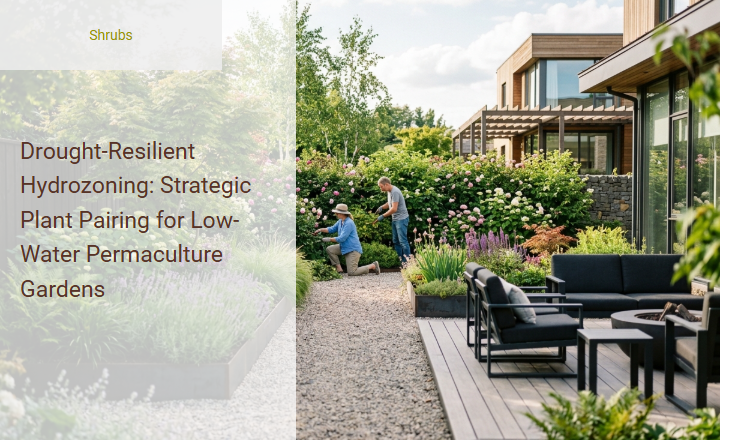
For permaculture designers, watching a painstakingly curated landscape wither under the relentless heat of drought is both disheartening and financially draining. Traditional overhead watering and uniform irrigation schemes often fail to sustain diverse food forests during peak summer dry spells. Before investing in complex, high-maintenance irrigation systems, we must first address how plants naturally partition and share resources within a landscape.
This is where strategic hydrozoning delivers its true value, granting growers a thriving, highly resilient ecosystem that reduces supplemental water consumption by up to 50%. However, success requires a strict stipulation: species must be grouped not by aesthetics, but by matching moisture curves, microclimate needs, and root architectures. For instance, pairing deep-taproot dynamic accumulators like comfrey with shallow-rooted berry shrubs optimizes subsurface water distribution without resource competition.
In this article, we will analyze the core science of hydrozoning, outline highly compatible low-water plant guilds, and provide step-by-step design frameworks to secure your garden's drought resilience.
Read also: Quince vs Forsythia for Early Blooms
Demystifying Hydrozoning in Permaculture Design
Permaculture design revolves around working with nature rather than against it, especially when managing precious resources like water. Hydrozoning is a foundational planning strategy that groups plants together based on their specific water requirements. By organizing your landscape into distinct moisture zones, you eliminate the common mistake of overwatering drought-tolerant species or dehydrating moisture-loving crops.
In arid and semi-arid climates, this spatial arrangement is crucial for maximizing resource efficiency and building ecological resilience. Instead of irrigating an entire garden uniformly, hydrozoning allows designers to concentrate water where it is needed most, minimizing waste and drastically reducing overall water consumption. This mindful zoning turns vulnerable landscapes into lush, self-sustaining ecosystems capable of thriving during prolonged dry spells.
The Blueprint: Mapping Your Garden's Moisture Zones
To implement an effective water-saving landscape, designers map the terrain into distinct spatial zones. This blueprint mirrors permaculture's zone system, placing the high-maintenance, water-intensive plants closest to the home and water sources, while self-sufficient species occupy the periphery.
- Zone 1 (The Oasis): Positioned closest to water outlets, greywater outputs, or rainwater tanks, this zone hosts plants with high-moisture requirements.
- Zone 2 (The Transition Zone): Located slightly further away, containing plants that thrive on moderate, periodic watering.
- Zone 3 (The Arid Zone): Positioned on the outer edges, relying almost exclusively on natural rainfall and minimal supplemental irrigation.
By mapping these areas, you ensure that every drop of water is utilized to its highest potential, creating a logical gradient of hydration across your land.
Soil Structure: The Sponge That Holds the System Together
The efficiency of any hydrozoning system relies heavily on the quality of the soil underneath. Building organic matter is critical for improving water retention, transforming dry dirt into a sponge-like medium that absorbs and holds moisture. Applying thick layers of organic mulch further protects this sponge from the dehydrating effects of wind and intense sun, preventing rapid evaporation. Earthworks like swales-ditches dug on the contour of the land-intercept runoff, slow down water flow, and direct it deep into the subsoil where plant roots can access it long after the rains have stopped.
"To build a resilient landscape, we must first learn to plant the rain, storing water directly within the living soil sponge." - Permaculture Hydrology Principles
The Wet Zone: Strategic Pairings for High-Water Guilds
High-Moisture Plant Associations
The wet zone, or the oasis of your permaculture design, is where water is most abundant. This zone is ideal for plants that require consistent moisture to yield high-quality harvests, such as tender vegetables and berries.
- Leafy Greens and Berries: Placing nutrient-dense spinach and lettuce beneath blackberry or raspberry bushes provides shade for the greens, keeping the soil cool and moist.
- Comfrey and Fruit Bushes: Planting comfrey as a dynamic accumulator near moisture-loving elderberries allows its deep roots to pull up nutrients while its broad leaves act as a living mulch to retain surface water.
- Water-Loving Herbs: Mint and watercress can be integrated along greywater outlets or swale overflows to filter water while producing abundant culinary harvests.
The Moderate Zone: Integrating Fruit Trees and Understory Herbs
Creating the Semi-Arid Food Forest
The moderate zone strikes a balance, utilizing plants that can withstand brief dry spells but flourish with regular deep watering. This zone is perfect for established fruit trees and tough understory companions that form a semi-drought-tolerant food forest guild.
An excellent combination involves pairing stone fruits like peaches or plums with deep-rooted herbs like yarrow and ground-covering oregano. The herbs protect the soil from direct sunlight, reducing evaporation. At the same time, the strong root systems of these understory plants do not aggressively compete with the fruit tree for moisture, creating a harmonious and water-efficient guild.
The Arid Zone: Low-Water Champions and Xerophytic Guilds
Self-Sustaining Dryland Communities
The outermost zone is designed to survive primarily on natural precipitation once established. This xerophytic guild relies on highly adapted plants that have evolved to thrive in nutrient-poor, water-scarce environments.
- Mediterranean Herbs: Rosemary, lavender, and thyme thrive in dry soils and require minimal attention, making them perfect for this zone.
- Nitrogen-Fixing Shrubs: Pairing drought-tolerant nitrogen fixers like autumn olive or Siberian peashrub with native perennials ensures the soil is fed without requiring synthetic inputs.
- Deep-Rooted Natives: Incorporating native species like echinacea or dryland grasses stabilizes the soil and reaches deep aquifers, building a truly self-sustaining ecosystem.
Vertical Layers and Microclimates: Shading for Moisture Retention
Water conservation is not just about soil and roots; it is also about managing the air and sun. By utilizing the vertical layers of a forest garden-from the tall canopy to the creeping groundcover-we can engineer cooler, more humid microclimates. The tall canopy trees act as natural umbrellas, filtering harsh sunlight and blocking drying winds. Below them, climbing vines and dense groundcovers carpet the earth, drastically reducing soil temperature and preventing moisture from evaporating back into the atmosphere.
Root Stratification: Underground Water Sharing Dynamics
While surface-level shading preserves water from above, root stratification manages water from below. Pairing plants with different root architectures prevents direct competition for water and nutrients. Deep-taproot plants reach deep into the subsoil layers, accessing moisture stores that shallow-rooted crops cannot touch. Through a process known as hydraulic lift, these deep-rooted plants pull water upward during the night, releasing some of it into the drier, upper soil layers where shallow-rooted companions can access it.
For instance, pairing a deep-rooted native wildflower or tree with a shallow-rooted vegetable creates a symbiotic relationship. The deep-rooted partner acts as an underground water pump, ensuring the survival of the entire plant community during dry seasons.
Passive and Active Irrigation: Delivering Water by Zone
Achieving peak water efficiency requires a tailored approach to irrigation, matching the specific delivery method to the water demands of each hydrozone. This involves a smart blend of passive earthworks and active watering technologies.
- The Oasis (High Water): Utilize active irrigation systems like automated drip lines and buried clay ollas to deliver slow, targeted hydration directly to root zones without evaporative loss.
- The Transition Zone (Moderate Water): Implement passive water-harvesting systems like swales and rain gardens to capture, store, and slowly release stormwater.
- The Arid Zone (Low Water): Rely on natural rainfall, using passive micro-basins and heavy mulch layers to trap any available moisture directly where the native plants are established.
Cultivating Resilience: The Long-Term Benefits of Strategic Pairing
By organizing plants into specific hydrozones, we transition from intensive, high-maintenance watering routines to self-regulating, drought-resilient systems. This spatial planning allows the garden to withstand extreme heat and dry spells with minimal intervention. The landscape stops relying on constant human input and starts functioning as a cohesive unit where soil, microclimates, and root networks work together to share and preserve moisture.
Designing with water in mind ensures that every resource is utilized efficiently. By embracing hydrozoning and strategic plant pairings, you can transform dry, vulnerable patches of earth into productive, self-sustaining ecosystems that thrive long into the future.
Summary
The article "Drought-Resilient Hydrozoning: Strategic Plant Pairing for Low-Water Permaculture Gardens" provides a comprehensive guide to maximizing water efficiency through the practice of hydrozoning. This sustainable landscaping technique involves grouping plants with similar water, soil, and sunlight requirements into distinct microclimates. By strategically pairing deep-rooted native species with drought-tolerant companion plants, permaculture designers can create self-sustaining ecosystems that drastically reduce the need for supplemental irrigation. The guide details how to structure these zones, moving from high-water "oasis" areas near the home to highly resilient, low-water outer zones. Implementing these strategic pairings not only conserves vital water resources but also enhances soil health, fosters biodiversity, and strengthens ecosystem resilience against climate extremes. Ultimately, this approach offers gardeners a practical, ecological blueprint for maintaining vibrant and productive landscapes even in arid or drought-prone environments.
Leave a comment