
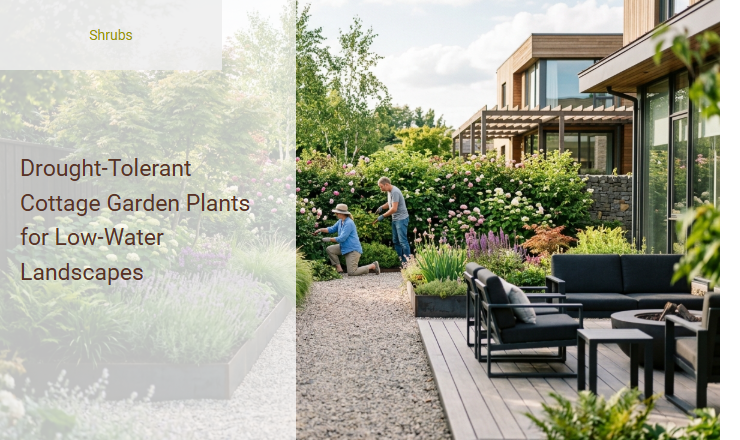
For many homeowners, the dream of a lush, romantic cottage garden quickly fades under the reality of rising water costs and shifting climates. Traditional cottage aesthetics historically rely on thirsty, delicate perennials that require constant moisture to survive. Fortunately, transitioning to a water-wise landscape does not mean sacrificing visual abundance; selecting targeted species grants you a dense, colorful sanctuary that thrives on minimal irrigation.
However, successful xeriscaping requires managing expectations: "drought-tolerant" plants are not self-sustaining immediately. Even highly resilient specimens like aromatic Lavender (Lavandula) and hardy Yarrow (Achillea) require regular watering during their first growing season to establish deep, robust root systems.
In the following sections, we will identify the best low-water cottage plants, discuss soil preparation strategies, and provide a design framework to help you achieve a sustainable, breathtaking landscape.
Read also: Flowering Almond vs Quince for Cottage Gardens
Embracing the Water-Wise Cottage Aesthetic
Cottage gardens have long captured our hearts with their romantic, tumbling blossoms, winding pathways, and effortless abundance. Traditionally associated with damp climates and high-maintenance watering schedules, this beloved style can be wonderfully adapted to low-water landscapes. By carefully selecting resilient plant varieties and working with nature, you can create a lush, sensory-rich sanctuary that thrives on minimal water. This modern interpretation preserves the whimsical, dense planting style of the classic English cottage garden while embracing a sustainable, water-wise ethic that respects our changing environment.
Essential Drought-Tolerant Evergreen Shrubs
Lavender (Lavandula)
With its iconic silvery foliage and fragrant purple spikes, Lavender provides essential structure and year-round interest along garden borders. This hardy evergreen shrub thrives in poor, well-drained soil and intense sun, releasing its soothing essential oils on warm afternoons while demanding very little water once established.
Rosemary (Salvia rosmarinus)
Rosemary is a robust, aromatic evergreen that stands up to heat, wind, and drought with ease. Its needle-like leaves conserve moisture, while its delicate blue flowers provide early nectar for bees, reinforcing the borders of your cottage garden with reliable form and texture.
Vibrant Perennial Favorites for Constant Color
- Yarrow (Achillea millefolium)
- A champion of dry soils, Yarrow produces flat-topped flower clusters in shades of yellow, red, and pink. Its feathery foliage is highly drought-resistant, and its long-lasting blooms are magnets for beneficial insects and native pollinators.
- Coneflower (Echinacea purpurea)
- This tough, native perennial boasts daisy-like flowers with prominent central cones. Coneflowers tolerate heat and dry soil exceptionally well, providing striking vertical accents and nourishing local wildlife throughout the summer months.
Resilient Groundcovers to Carpet the Soil
- Creeping Thyme (Thymus serpyllum): A low-growing, scented herb that forms a dense carpet of tiny leaves, releasing a pleasant herbal fragrance when stepped on and effectively suppressing weed growth.
- Stonecrop (Sedum): A diverse group of succulents that store water in their fleshy leaves, providing colorful star-shaped flowers and cooling the root systems of larger plants.
Self-Seeding Annuals for Whimsical Charm
No cottage garden is complete without a touch of spontaneous, shifting color. Easy-care self-seeding annuals like the vibrant Eschscholzia californica (California Poppy) and the airy, delicate Cosmos bipinnatus (Cosmos) effortlessly weave through permanent plantings. These plants sprout, bloom, and set seed naturally, filling empty pockets with a wild, carefree beauty that adapts perfectly to low-water conditions.
Adding Motion with Ornamental Grasses
"Incorporating ornamental grasses like Blue Fescue and Feather Reed Grass brings a dynamic element of touch and sound to the dry cottage landscape, swaying gracefully in the breeze and catching the golden evening light."
Soil Preparation and Mulching Strategies
- Amplify the organic matter in your planting beds by working in mature compost to improve soil structure and water-holding capacity.
- Ensure adequate drainage, as most drought-tolerant cottage plants will rot if kept in soggy, heavy clay soil during wet winters.
- Apply a thick, three-inch layer of organic mulch, such as bark chips or gravel, to insulate the soil, suppress weed growth, and reduce surface evaporation.
Smart Irrigation for Low-Water Success
Transitioning to a drought-tolerant landscape requires deliberate watering habits during the initial seasons. Rather than frequent, shallow watering which encourages weak, surface-level roots, aim to water deeply and infrequently. This practice coaxes roots to grow downward into cooler, moisture-retentive soil layers.
Designing for Microclimates and Hydrozoning
Achieving a high-performing water-wise garden relies heavily on the principle of hydrozoning. This design technique involves grouping plants together based on their specific water and sun requirements rather than scattering them randomly. By placing plants with higher water needs in natural depressions or near downspouts, and positioning resilient, sun-loving species on exposed slopes, you optimize water usage and design a cohesive layout where every plant thrives naturally.
Seasonal Maintenance for Lasting Beauty
While a drought-tolerant cottage garden demands far fewer resources than a traditional landscape, a structured approach to seasonal upkeep ensures it remains vibrant, tidy, and healthy throughout the changing year.
| Season | Key Task | Description |
|---|---|---|
| Spring | Pruning and Mulch Check | Prune woody evergreen shrubs and replenish mulch layers to prepare for summer heat. |
| Summer | Deadheading | Remove spent blooms of perennials like Yarrow and Coneflower to encourage a second flush of flowers. |
| Autumn | Seed Collecting | Gather seeds from self-seeding annuals and leave seed heads on grasses for winter interest. |
| Winter | Minimal Maintenance | Allow structure plants to rest, avoiding heavy pruning to protect crowns from cold. |
Summary
Creating a lush, romantic cottage garden does not require abundant water resources. This guide explores how to achieve the classic, informal cottage aesthetic using highly resilient, drought-tolerant plants. By selecting water-wise varieties, gardeners can enjoy a vibrant tapestry of colors and textures while significantly reducing water consumption.
Key plant recommendations include hardy perennials such as lavender, Russian sage, yarrow, and various salvia species, which thrive in dry conditions and attract vital pollinators. Additionally, incorporating structural drought-tolerant shrubs and self-seeding annuals ensures year-round interest and continuous blooms. Implementing smart gardening practices, like mulching and deep watering, further enhances the sustainability of these low-water landscapes. Ultimately, this approach proves that water conservation and breathtaking garden design can go hand in hand, offering a sustainable way to maintain a beautiful, thriving outdoor space.
Leave a comment