
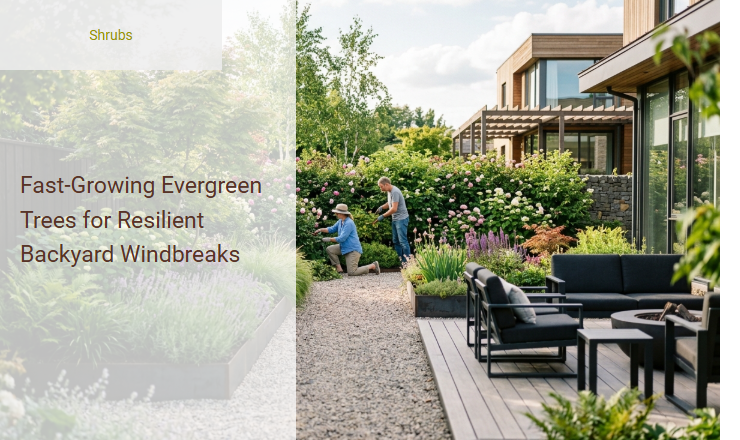
For many homeowners, watching relentless seasonal winds batter their property-eroding valuable topsoil and driving up home heating costs-is a frustrating and recurring struggle. However, addressing this exposure requires more than just a hasty trip to the local nursery; it demands a strategic understanding of how windbreaks interact with your local microclimate.
Investing in a planned windbreak grants you a permanent, living shield that delivers year-round energy savings and immediate structural protection. While rapid privacy is highly desirable, achieving these quick results stipulates a commitment to proper spacing and consistent early-stage irrigation. Robust species such as the Thuja 'Green Giant' and the adaptable Leyland Cypress serve as prime examples of how quickly a resilient, dense canopy can be established.
In this guide, we will evaluate the premier fast-growing evergreen species, detail their specific soil requirements, and outline the critical planting configurations needed to build a lasting backyard defense.
Read also: Arborvitae vs Juniper for Windbreaks
The Power of a Living Windbreak
A harsh, gusting wind can quickly turn an otherwise beautiful backyard into an uncomfortable and unusable space. Planting a natural windbreak provides an elegant, eco-friendly solution that shields your outdoor living areas from bitter drafts. By establishing a living barrier, homeowners can create a calm, peaceful microclimate that feels significantly warmer during the colder months. Beyond physical comfort, these green walls act as natural insulation, reducing home heating costs by up to thirty percent during harsh winters. To secure these benefits quickly, there is an immediate need to plant fast-growing evergreen trees that can establish themselves rapidly and begin protecting your property without delay.
Why Choose Evergreen Trees for Wind Protection?
While deciduous trees have their own aesthetic charm, they lose their leaves in autumn, leaving your property completely exposed to intense winter gusts. Evergreen trees, on the other hand, maintain their dense foliage throughout the entire year, providing continuous protection when you need it most. Here are the key advantages of choosing evergreens for your windbreak:
- Year-Round Winter Density: The persistent needles and thick boughs of evergreens offer an uninterrupted block against freezing seasonal winds.
- Acoustic Dampening and Noise Reduction: A thick wall of evergreens absorbs and deflects unwanted sounds from nearby highways or neighbors, acting as a natural sound barrier.
- Crucial Wildlife Shelter: During freezing weather, these dense canopies offer vital protection and nesting sites for local birds and beneficial wildlife.
Leyland Cypress: The Ultra-Fast Privacy Shield
When you need a tall, dense barrier in the shortest time possible, the Leyland Cypress is an outstanding candidate. This legendary evergreen is celebrated for its exceptional growth rate of three to five feet per year, allowing it to quickly form a solid wall of green. With its neat, pyramidal shape and soft, bluish-green foliage, it adds a polished look to any property boundary.
This resilient tree boasts remarkable soil adaptability, thriving in a wide range of conditions from acidic to alkaline clay. To establish a tight, impenetrable barrier, space your Leyland Cypresses approximately six to eight feet apart in a single row, or slightly wider if you plan to stagger them.
Thuja Green Giant: The Resilient Performer
The Thuja Green Giant arborvitae is widely considered the gold standard for modern windbreaks and privacy screens. This popular evergreen grows at a rapid pace, often gaining up to three feet of height annually. What truly sets the Thuja Green Giant apart is its exceptional resistance to pests and diseases, specifically showing a high level of resistance to deer browsing, which frequently plagues other conifers.
This robust tree exhibits fantastic wind tolerance, standing firm against powerful updrafts and heavy storms while retaining its rich, vibrant green winter foliage. It serves as an incredibly durable and low-maintenance option for homeowners who want maximum protection with minimal hassle.
Eastern Redcedar: Native and Rugged
For properties facing extreme weather or challenging soil conditions, the Eastern Redcedar is a highly dependable choice. As a native North American species, this rugged evergreen has adapted to survive the harshest environments. It easily handles severe drought, poor rocky soils, road salt, and intense, high-wind exposures that would damage weaker trees.
The Eastern Redcedar features dense, scale-like needles that transition to a beautiful, deep plum-bronze color in winter. Selecting this native option means you are planting a highly adaptable, long-lived wind block that actively supports local biodiversity while requiring virtually no supplemental watering once established.
Norway Spruce: Heavy-Duty Wind Block
If your property is subjected to unrelenting, high-velocity winds, the Norway Spruce offers heavy-duty defense. This classic evergreen is built to withstand the elements, featuring a vastly deep and expansive root system that keeps it firmly anchored to the earth. It is exceptionally tolerant of heavy snow loads, preventing the branch breakage that often occurs with weaker species.
The unique, graceful weeping habit of its secondary branches helps to efficiently deflect and filter strong winter gusts rather than resisting them outright. This magnificent, long-lived specimen is ideal for large yards where it can grow to its full, commanding potential.
Designing Your Windbreak: Spacing and Layout
A successful windbreak requires careful planning to maximize its protective capabilities and ensure the long-term health of your trees. Merely planting a single straight line of trees may let wind slip through the gaps. To design a highly functional and resilient barrier, consider these fundamental principles:
- Stagger Multiple Rows: Plant two or three offset rows of trees in a zigzag pattern to create a solid, multi-layered defense system that leaves no gaps for the wind to penetrate.
- Calculate Distance From the Home: Position your windbreak at a distance of approximately two to five times the mature height of the trees from your home to maximize the calm microclimate area.
- Mix Species for Biodiversity: Avoid monocultures by blending different species; this protects your windbreak from being completely wiped out by a single pest or disease.
Soil Preparation and Planting Best Practices
Giving your new evergreens the best start in life is crucial for encouraging rapid growth and strong root development. Skipping initial prep steps can stun young saplings, slowing down your windbreak project by years. Start by performing a soil test to understand the pH level and nutrient profile of your planting site.
When digging, make the hole twice as wide as the root ball but no deeper than its current height, as burying the root flare can lead to rot. Gently loosen the surrounding soil and incorporate organic compost to improve drainage and aeration, giving the roots an ideal medium for rapid establishment.
Watering and Early-Stage Maintenance
The first two growing seasons are the most critical phase in the life of your living windbreak. During this establishment period, the young trees require consistent, deep watering rather than frequent light sprinkles. Deep watering encourages the roots to grow downward, searching for moisture, which builds a highly stable and drought-tolerant root system over time.
Apply a thick three-inch layer of organic mulch around the base of each tree, keeping it away from the trunk, to conserve moisture and regulate soil temperature. Practice minimal early pruning, only removing dead or damaged limbs, to allow the tree to focus its energy on growing tall and strong.
Securing Your Backyard Sanctuary
Investing in a natural, living windbreak is one of the most rewarding improvements you can make for your property. As these fast-growing evergreens mature, they transform your outdoor space into a quiet, peaceful haven protected from harsh environmental elements. The tangible reduction in monthly energy bills combined with the boost in curb appeal provides exceptional long-term value.
With the right species selection, proper layout, and mindful early care, your property will benefit from a robust green shield. You will enjoy a serene backyard sanctuary and lasting peace of mind, knowing your home is shielded by the quiet strength of nature.
Summary
Creating a resilient backyard windbreak is an effective way to protect your property from harsh winds, reduce heating costs, and enhance privacy. Fast-growing evergreen trees are the ideal choice for this purpose, providing year-round dense foliage and rapid establishment. Popular species such as the Thuja Green Giant, Leyland Cypress, and Eastern Red Cedar are highly recommended for their durability, adaptability, and quick growth rates.
To build a successful and lasting windbreak, homeowners should focus on species diversity to prevent pest devastation and ensure proper spacing for healthy root development. Strategically planting a mix of evergreen heights and textures not only improves the barrier's structural resilience against severe storms but also creates a natural, aesthetically pleasing landscape. Selecting the right fast-growing evergreens ensures immediate protection and long-term ecological benefits for your home.
Leave a comment