
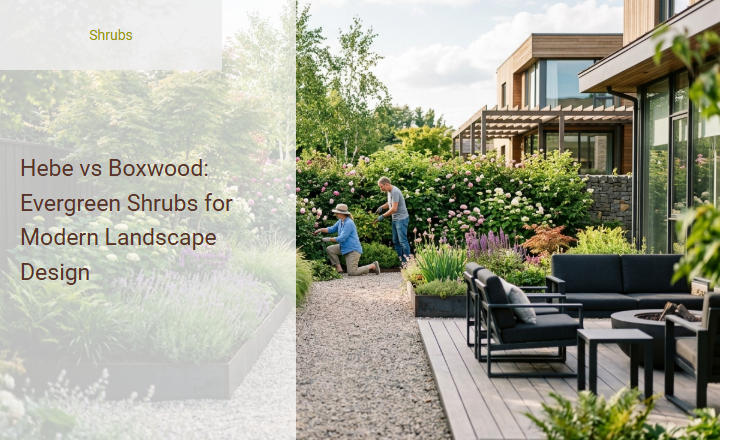
Finding the perfect evergreen that delivers both architectural structure and low-maintenance resilience often feels like an exercise in compromise for modern garden designers. Before selecting a plant, however, one must weigh traditional design heritage against the evolving demands of contemporary climates.
Fortunately, making the right choice grants your landscape effortless, year-round sculptural appeal, provided you account for critical soil drainage and regional frost tolerances. Whether you opt for the classic, crisp lines of Buxus microphylla 'Green Velvet' (Boxwood) or the vibrant, pollinator-friendly texture of Hebe 'Wiri Mist', success lies in matching the shrub to your specific microclimate.
This comparative analysis evaluates Hebe and Boxwood across growth habits, maintenance requirements, and aesthetic versatility, helping you select the ideal botanical anchor for your next contemporary project.
The Battle of the Evergreens: Hebe vs Boxwood
In modern landscaping, the quest for the perfect evergreen shrub often leads to a captivating duel between two botanical heavyweights: Hebe and Boxwood. As homeowners and garden designers seek year-round structure paired with vibrant textures, both genera have surged in popularity. However, they represent fundamentally different design philosophies. While Boxwood champions formal symmetry, rigid geometry, and classic elegance, Hebe brings fluid movement, dynamic textures, and bursts of colorful blooms to contemporary yards.
The Architectural Elegance of Boxwood
Boxwood (Buxus) has long served as the backbone of formal European gardens, celebrated for its incredibly dense, small-leaved foliage and unmatched tolerance for precision shearing. Its tight growth habit allows gardeners to sculpt clean lines, crisp spheres, and intricate parterres that retain their immaculate shape throughout the year. If your landscape vision prioritizes architectural order, clean borders, and timeless structure, this slow-growing classic remains the premier choice.
- Buxus sempervirens 'Suffruticosa' (English Boxwood): Ideal for low-growing, tightly clipped border hedges.
- Buxus microphylla 'Winter Gem': Highly hardy, maintaining its rich green color even in cold winter climates.
- Buxus 'Green Velvet': A versatile hybrid perfect for rounded, natural globes with minimal pruning.
The Dynamic Texture and Color of Hebe
For those seeking a softer, more expressive alternative to rigid shapes, Hebe shrubs offer a spectacular combination of lush foliage and seasonal color. Native primarily to New Zealand, these versatile evergreens feature distinctive opposite-paired leaves arranged in neat four-rowed columns, creating a geometrically satisfying pattern that catches the light. Unlike the strictly green canvas of boxwood, Hebes showcase a striking spectrum of leaf colors, ranging from glaucous blue-grey to variegated cream and deep purple, topped with vibrant, nectar-rich flower spikes in shades of violet, pink, and pure white that bloom from midsummer into autumn.
Visual Contrasts: Clean Lines vs. Soft Textures
The visual dialogue between these two shrubs highlights a key design decision: control versus spontaneity. Boxwood presents a uniform, matte-green texture that absorbs light, creating solid, dependable shadows and sharp definition. In contrast, Hebe offers glossy, reflective leaves and variegated margins that dance in the breeze, introducing a playful sense of motion. When placed side-by-side, the contrast is stark; Boxwood anchors the eye with its unwavering permanence, while Hebe draws the eye across the garden with its changing colors and soft, mounded silhouettes.
Maintenance and Growth Habits
Understanding the growth rates and maintenance needs of each shrub is essential for long-term landscaping success. Both plants have distinct habits that dictate how much time you will spend with your garden shears.
Boxwood Maintenance and Growth
Boxwood is notoriously slow-growing, often putting on only a few inches of growth per year. While this means it requires infrequent pruning-typically just once or twice a year to maintain its shape-it also means establishing a mature hedge requires patience or a larger initial investment. Once established, however, it keeps its shape with minimal effort.
Hebe Maintenance and Growth
Hebes grow at a moderate to fast rate, quickly filling empty spaces in your borders. They require minimal formal pruning; a simple light shear after flowering keeps them bushy and prevents them from becoming leggy. Their natural mounding habit makes them a low-effort choice for busy gardeners who prefer an organic shape.
Climate Resilience and Soil Preferences
Soil quality and climate conditions dictate which shrub will thrive in your garden. Boxwoods are highly adaptable, performing well in partial to full shade and tolerating a wide range of soil types, provided they are well-draining. Hebes, however, are sun-worshippers that excel in coastal environments, shrugging off salt spray and windy conditions with ease, though they demand exceptional drainage to prevent root issues.
"While Boxwood thrives in cooler, shaded zones, Hebes prefer mild winters and warm, sunny spots, withstanding coastal breezes but requiring protection from heavy, prolonged frost."
Designing the Modern Landscape: Minimalist vs. Cottage Styles
Choosing between these shrubs often comes down to the overarching architectural style of your home and garden. Both offer unique strengths depending on the aesthetic you wish to project.
Minimalist and Formal Layouts with Boxwood
Boxwood is the quintessential plant for minimalist designs, where clean lines and negative space define the aesthetic. Use neatly sheared boxwood globes to flank entryways, create crisp low borders along concrete pathways, or plant them in matching geometric containers to emphasize clean, structured modern architecture.
Modern Cottage and Naturalistic Styles with Hebe
Hebe fits beautifully into modern cottage gardens, where a more relaxed, naturalistic vibe is desired. Integrate blooming Hebe varieties into mixed borders alongside ornamental grasses and perennial wildflowers. Their soft mounds break up harsh fence lines and inject organic, colorful movement into the space.
Health and Longevity: Managing Pests and Diseases
Keeping your evergreens healthy requires an understanding of their specific vulnerabilities. Boxwood is susceptible to Boxwood Blight, a fungal disease that causes rapid defoliation, as well as the boxwood leaf miner. Hebe, on the other hand, is vulnerable to severe winter frosts, which can kill tender stems, and root rot if planted in heavy, clay-rich soil that retains water.
Prevention is the best medicine. For Boxwood, ensure adequate spacing for air circulation and avoid overhead watering. For Hebe, plant in sandy or loamy soil and apply winter mulch to insulate the roots. Watch for sudden leaf drop or black lesions on Boxwood stems, and monitor for wilting, yellow leaves on Hebe, which are critical warning signs of distress.
Four-Season Appeal in Modern Yards
An excellent landscape maintains its beauty even during the coldest months of the year, and both shrubs offer exceptional year-round value. Hebe provides a dynamic calendar of color, transitioning from lush spring foliage to a riot of summer blossoms, which often stretch well into autumn, attracting bees and butterflies.
When the flowers fade and the cold sets in, Boxwood steps up to carry the landscape's structure. As soft, powdery snow blankets the garden, the dark green, steadfast spheres of Boxwood emerge as silent, sculptural sentinels, holding the design together when all other plants have withered away.
Making the Choice: Harmony or Contrast?
Your decision does not have to be an exclusive choice between the two. If your goal is crisp structure, year-round order, and classic styling, Boxwood is your champion. If you desire vibrant seasonal color, rapid growth, and a relaxed, pollinator-friendly vibe, Hebe is the ideal candidate. Alternatively, you can successfully combine both: plant a structured hedge of Boxwood as a green backdrop, and place soft, colorful Hebe shrubs in front to create a stunning contrast of texture, color, and form.
Assess your yard's sunlight, drainage, and your personal aesthetic today, and select the perfect evergreen combination to transform your outdoor space into a year-round masterpiece!
| Design Attribute | Hebe | Boxwood (Buxus) |
|---|---|---|
| Visual Aesthetic | Dynamic and textured; features colorful, pollinator-attracting flower spikes (purple, blue, white) and variegated foliage. | Architectural and minimalist; provides uniform, dense, deep green foliage focused on clean geometric structure. |
| Growth & Maintenance | Fast-growing; naturally maintains a loose, rounded shape with minimal pruning required. | Slow-growing; highly tolerant of severe shearing, making it ideal for sharp hedges, topiary, and formal borders. |
| Climate & Resilience | Prefers mild, coastal, and temperate climates (Zones 7-10); highly salt-tolerant but sensitive to hard winter frosts. | Highly cold-hardy (Zones 5-9); adaptable to shade, but vulnerable to Boxwood Blight and leafminer pests. |
Leave a comment