
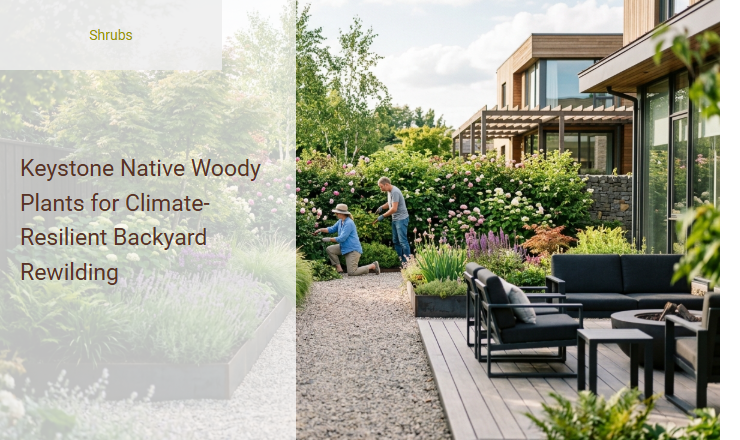
Many homeowners face the daily frustration of watching their carefully curated backyard gardens wither under increasingly unpredictable weather patterns and extreme climate shifts. Before rushing to replant with conventional nursery stock, we must recognize that traditional, high-maintenance landscaping paradigms are failing in this new environmental era.
Transitioning to a rewilded landscape grants your property self-sustaining ecological resilience and vibrant biodiversity. However, successful restoration requires a strategic shift; simply planting any native species is not enough to support a collapsing ecosystem. True recovery relies on "keystone" woody plants-such as native Oaks (Quercus) and Willows (Salix)-which act as biological hubs supporting the vast majority of local wildlife.
In this guide, we will examine the critical ecological role of these keystone species, identify the top resilient woody plants for your climate, and provide a practical framework for integrating them into your backyard sanctuary.
Read also: Chokeberry vs Sumac for Wildlife Habitats
The Power of Keystone Plants in Backyard Rewilding
Backyard rewilding is a transformative approach to conservation that shifts the focus from manicured, sterile lawns to dynamic, self-sustaining ecosystems. At the heart of this ecological movement are keystone native woody plants, which are species that exert an exceptionally large influence on their associated biological communities. Just like the keystone in a stone arch, these trees and shrubs hold the local food web together, preventing it from collapsing.
By introducing these vital botanical powerhouses into residential landscapes, homeowners can actively participate in local ecological restoration. These plants serve as the foundational building blocks for complex habitats, welcoming back native insects, birds, and soil microbes. Rewilding our yards is not just about letting nature run wild; it is about deliberately planting the species that perform the heavy lifting of ecological recovery.
Why Climate Resilience Demands Woody Perennials
As climate patterns become increasingly erratic, our landscapes require plants that can endure extreme weather while stabilizing the local environment. Woody perennials are uniquely equipped to handle these modern challenges, offering a natural defense mechanism against climate destabilization.
Woody plants provide several key ecological services that strengthen backyard resilience:
- Deep root systems that anchor the soil, prevent erosion, and tap into subterranean water reserves during intense droughts.
- Carbon sequestration within their long-lived woody tissues, capturing atmospheric carbon dioxide to help mitigate global warming.
- Microclimate regulation through shade and transpiration, lowering local temperatures and creating cool refuges for wildlife.
- Stormwater mitigation by intercepting heavy rainfall with their dense canopies and encouraging water infiltration into the ground.
Mighty Oaks: The Ultimate Pillars of Biodiversity
Among all native woody plants, none compare to the genus Quercus. Oaks are the undisputed heavyweights of ecological productivity, supporting more life forms than almost any other tree genus in North America. They act as a massive biological engine, fueling the entire terrestrial food web from the ground up.
"Oaks support hundreds of species of caterpillars, which serve as the primary food source for breeding songbirds, while their vast root systems partner with essential mycorrhizal fungi to nourish the soil."
The relationship between oaks and mycorrhizal fungi creates an underground network that shares nutrients and water across the ecosystem. By planting an oak, you are establishing a legacy tree that will sustain generations of birds, beneficial insects, and subterranean organisms.
Prunus Species: Supporting Early Spring Life
When winter recedes, early-emerging pollinators face a critical shortage of food resources. This is when the genus Prunus, which includes native wild cherries and plums, steps in as an invaluable ecological lifesaver. Their early-season blooms provide crucial nectar and pollen when few other resources are available.
As spring transitions to summer, these plants continue their ecological service by producing abundant yields of nutrient-dense fruits. Hungry songbirds rely heavily on these small stone fruits to feed their fledglings. Integrating these resilient woody plants ensures a continuous cycle of nourishment from the first warm days of spring through the heat of summer.
Willows: Water Management and Wildlife Nurseries
For areas prone to seasonal flooding or soggy soils, the genus Salix offers an elegant and powerful natural solution. Willows are exceptionally adapted to wet environments, utilizing their expansive, fibrous root networks to stabilize banks and prevent severe soil erosion along waterways and low-lying garden zones.
Beyond their physical engineering capabilities, willows are highly productive wildlife nurseries. They serve as vital early-season host plants for hundreds of butterfly and moth species. By absorbing excess runoff and providing immediate nourishment to waking pollinators, these plants are indispensable for managing water and boosting backyard biodiversity.
Birch Trees: Pioneer Species for Soil and Structure
The genus Betula contains remarkable pioneer trees that specialize in colonizing disturbed or degraded landscapes. Birches are incredibly hardy, tolerating sharp climate fluctuations and poor soil conditions while actively working to improve their surroundings for future plant generations.
As these trees grow, they gradually enrich the soil with leaf litter that breaks down into nutrient-rich humus. Their distinctive peeling bark provides essential nesting materials for birds and overwintering micro-habitats for beneficial insects. Incorporating birch trees into a home landscape helps establish structural diversity and initiates the natural healing of damaged garden soils.
Shrubs and Understory: Crucial Mid-Layer Keystones
While majestic canopy trees grab much of the attention, the ecological mid-story is just as critical for a balanced backyard ecosystem. Keystone woody shrubs fill this essential structural gap, offering shelter and nutrition at a height that is accessible to a wide variety of wildlife.
Two outstanding genera that act as mid-layer keystones include:
- Vaccinium (Blueberries): These acid-loving shrubs provide spectacular spring flowers for native bees and delicious berries for birds and mammals alike.
- Viburnums: Renowned for their adaptability, viburnums offer dense foliage for nesting, nectar-rich blooms, and late-season berries that linger into the colder months.
By incorporating these species, you establish a multi-tiered habitat that ensures year-round forage and protection for local fauna.
Designing for Resilience: The Multi-Layered Canopy
To build a truly climate-resilient backyard, we must look to natural forests as our design templates. Rather than planting isolated specimens, we can stack plants vertically to create a multi-layered canopy. This architecture maximizes ecological niches, optimizes sunlight absorption, and creates a wind-resistant buffer that protects the entire garden from severe weather.

An effective design integrates tall overstory trees like oaks with medium-sized understory trees like birch or wild cherry, followed by a robust shrub layer of blueberries and viburnums. This structural density slows down heavy winds and retains moisture, creating a self-sheltering microclimate that helps the entire plant community thrive.
Soil Preparation and Planting for Changing Climates
Success in backyard rewilding begins beneath the surface. To help young woody plants survive unpredictable droughts and intense summer heat, we must utilize sustainable planting techniques that preserve soil moisture and foster organic soil biology.
Preparing the ground with these eco-friendly methods will give your native plants the best head start:
- Sheet mulching to suppress invasive weeds and slowly build organic matter without disturbing soil structure.
- Hugelkultur beds to construct moisture-retentive mounds using decaying logs and branches that act like underground sponges.
- Introducing native leaf mold or compost to jumpstart beneficial mycorrhizal networks that assist roots in water absorption during droughts.
Cultivating a Living Legacy of Ecological Hope
Every square foot of lawn converted into a native habitat is a step toward healing our fragmented planet. By choosing to plant keystone native woody species, you are not merely gardening; you are actively participating in a global movement of ecological restoration. These plants will grow, mature, and adapt, creating a resilient refuge that stands strong against the challenges of a changing climate.
Let us choose to plant with purpose and cultivate a living legacy that will sustain local biodiversity for decades to come.
Doug Tallamy once noted that our yards are our best opportunity to co-exist with nature, and by embracing backyard rewilding, we turn that opportunity into a tangible reality.
Summary
"Keystone Native Woody Plants for Climate-Resilient Backyard Rewilding" highlights the critical role that everyday homeowners can play in combating biodiversity loss and climate change. Keystone plants-specifically native woody species like oaks, cherries, and birches-act as ecological anchors, supporting the vast majority of local insect populations, birds, and broader food webs.
By replacing resource-intensive lawns with these robust, native species, individuals can practice backyard rewilding to create highly resilient microclimates. These deeply rooted plants are uniquely adapted to withstand extreme weather, improve soil health, manage stormwater, and sequester carbon. Ultimately, the article argues that transitioning to native woody landscapes is a powerful, accessible grassroots solution that restores vital habitat connectivity, enhances urban biodiversity, and fosters long-term ecological resilience in the face of a changing climate.
Leave a comment