
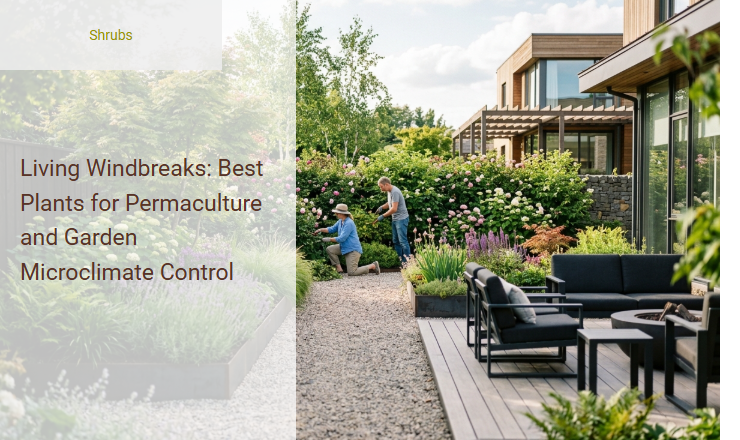
Gardeners and permaculturists often watch their hard work wither under relentless, drying winds that sap soil moisture and physically damage delicate crops. Managing this erosive force requires looking at the landscape through the lens of permaculture design and sector analysis before choosing your plants. Designing a multi-layered living windbreak not only tames these harsh gusts but grants your property a moderated microclimate, enhanced water retention, and increased thermal comfort.
However, successful windbreak design is not a quick fix; it demands a strategic understanding of species interaction and maturity timelines. Utilizing robust, multi-functional species like Siberian Peashrub (Caragana arborescens) or Italian Alder (Alnus cordata) arranged in a staggered, semi-permeable barrier serves as the ultimate proof of this ecological system.
In this article, we will examine the top plant selections for various climates, essential layout strategies, and management practices to help you establish a resilient, productive microclimate shield.
Read also: Siberian Peashrub vs Oleaster for Wind Resistant Hedges
Understanding Living Windbreaks and Microclimates
A living windbreak, or shelterbelt, is a strategic barrier of trees, shrubs, and other vegetation designed to reduce and redirect destructive wind currents. In permaculture, establishing these living walls is essential for altering the local microclimate-the localized atmospheric zone where temperature, humidity, and wind speed differ from the surrounding region. By mitigating harsh gusts, windbreaks prevent soil erosion, reduce mechanical damage to delicate crops, minimize moisture loss from evaporation, and create a protected haven where diverse plant species can thrive.
The Science of Wind Deflection and Shelterbelts
The effectiveness of a living barrier lies in its aerodynamics. Rather than stopping the wind completely-which creates turbulent downdrafts on the leeward side-a good windbreak filters and deflects it upward. This creates a significant "zone of protection" on the downwind side, extending a distance equal to 8 to 10 times the height of the barrier, with minor protection extending up to 20 times its height. The density of the barrier determines its efficiency: a 50% to 60% density is ideal, as it allows some wind to pass through, reducing pressure and preventing the air from spilling violently over the top.
Structuring a Multi-Tiered Permaculture Windbreak
To design an effective, long-lasting barrier, permaculturalists mimic natural forest edges by utilizing a multi-tiered structure. This layered approach ensures that wind cannot find gaps at any height, creating a sloped green wall that lifts incoming wind up and over the cultivation area.
- Overstory (Tall Canopy Trees): The backbone of the windbreak, typically hardy conifers or tall deciduous trees, reaching the highest altitudes to deflect the main force of high-altitude winds.
- Understory (Medium Trees & Tall Shrubs): Fills the mid-level gap, preventing wind from slipping beneath the canopy of the taller trees.
- Shrub Layer: Dense, bushy plants that filter ground-level drafts and provide structural density near the base of the shelterbelt.
- Ground Cover & Herbaceous Layer: Low-growing vegetation that anchors the soil, prevents weed invasion, and protects the windbreak's root systems.
Fast-Growing Evergreens for Year-Round Protection
Evergreens form the permanent structural core of any year-round windbreak. Because they retain their foliage through winter, they provide uninterrupted protection against freezing winter winds and act as excellent acoustic barriers to absorb road and neighborhood noise.
- Thuja (Arborvitae)
- A highly resilient, densely packed evergreen that tolerates close planting, making it perfect for creating a thick, green wall that filters harsh winds.
- Leyland Cypress (Cupressus × leylandii)
- An incredibly fast-growing conifer that can shoot up several feet per year, establishing a tall, protective canopy in a very short timeframe.
- White Pine (Pinus strobus)
- A tall, deep-rooting evergreen that stands strong against heavy gusts while adding soft texture and valuable wildlife habitat to the outer edges of the windbreak.
Deciduous Species for Seasonal Light and Wind Management
While evergreens offer constant protection, integrating deciduous trees allows for dynamic seasonal management. During the spring and summer, their full, leafy canopies block dry, hot winds. In the winter, they shed their leaves, allowing precious sunlight to filter through the bare branches to warm the soil and homes situated on the leeward side.
- Salix alba (White Willow) – Extremely fast-growing and flexible, ideal for damp soils and absorbing high-velocity summer gusts.
- Alnus glutinosa (Common Alder) – A water-tolerant tree that thrives in poor soils, providing excellent summer wind diffusion.
- Acer sugarum (Sugar Maple) – Provides a broad summer canopy for shade and wind reduction, followed by vibrant fall color and winter light penetration.
Integrating Nitrogen-Fixing Shrubs for Soil Health
A smart permaculture windbreak does more than just redirect air; it actively nourishes the surrounding ecosystem. By incorporating nitrogen-fixing shrubs into the middle and lower tiers, you can build soil fertility naturally. Species such as Sea Buckthorn, Autumn Olive, and Siberian Peatree form symbiotic relationships with soil microbes to convert atmospheric nitrogen into a form accessible to neighboring plants, fueling garden growth without synthetic fertilizers.
"By placing nitrogen-fixing support species directly within the windbreak, we create a self-fertilizing system that deposits rich organic matter with every leaf drop and root dieback."
Enhancing Biodiversity with Multi-Functional Barriers
Transforming a simple wind barrier into a diverse wildlife corridor is a hallmark of ecological design. By carefully selecting multi-functional plants, you can invite a wide range of beneficial organisms into your garden. Species like Elderberry and Hawthorn offer beautiful spring blossoms that attract essential pollinators, followed by nutrient-rich berries that feed local birds throughout the autumn and winter months.
These living walls serve as vital sanctuaries, providing nesting sites for insect-eating birds and protective corridors for small mammals traversing the landscape. The resulting biological diversity acts as a natural pest control mechanism, balancing the local food web right at your garden's edge.
Temperature and Moisture Regulation Behind the Barrier
The physical presence of a windbreak dramatically alters the microclimate of the leeward zone. By reducing wind speeds, the barrier slows down the rate of convective heat loss, raising the ambient temperature in the protected zone by up to 2 to 5 degrees Celsius. Additionally, calmer air reduces evapotranspiration rates in plants and prevents the soil from drying out rapidly. This traps humidity close to the ground, creating a warm, moist microclimate where frost-sensitive crops and delicate fruiting plants can thrive in conditions they otherwise could not tolerate.
Planting, Establishment, and Long-Term Maintenance
Establishing a living windbreak requires thoughtful preparation and consistent early care to ensure the trees and shrubs knit together into a cohesive, resilient barrier. Spacing must be close enough to prevent draft gaps but wide enough to allow healthy root growth. Regular irrigation during the first two to three growing seasons is critical for deep root establishment, while seasonal pruning helps maintain the desired density.
- Site Preparation and Spacing: Clear weeds from the planting zone and space large evergreen trees 6 to 10 feet apart, with understory shrubs offset in a staggered zigzag pattern to maximize density.
- Deep Irrigation: Implement drip irrigation or slow-release watering bags to deliver deep, consistent moisture, encouraging roots to grow downward rather than remaining shallow.
- Mulching: Apply a thick layer of organic mulch around the base of the young plants to suppress competing weeds and retain critical soil moisture.
- Pruning for Density: Prune the tips of deciduous species early on to encourage bushy, lateral growth, and remove dead or diseased wood annually to maintain a healthy, air-filtering barrier.
Cultivating Your Resilient Garden Sanctuary
A thoughtfully designed, multi-tiered living windbreak is one of the most profound investments you can make in your land. By understanding the flow of wind and the biology of supportive plant species, you transition from fighting against the elements to dancing with them. What was once a swept, wind-battered plot becomes a lush, highly productive permaculture haven that hums with life, traps vital moisture, and extends your growing season.
By choosing a mix of resilient evergreens, dynamic deciduous species, and soil-enriching nitrogen fixers, you establish more than just a barrier; you grow a self-sustaining ecosystem. Take the time to observe your local wind patterns, select your pioneer plants, and begin planting today. Your future garden oasis begins with the very first tree you place in the path of the wind.
Summary
Living windbreaks are essential elements in permaculture design, engineered to modify local microclimates and protect vulnerable crops. By strategically planting structured layers of trees and shrubs, gardeners can significantly reduce wind speeds, minimize soil erosion, and prevent rapid moisture loss from evaporation. These natural barriers also create sheltered "sun traps," raising ambient temperatures and effectively extending the growing season.
An effective windbreak utilizes a diverse, multi-tiered design. It incorporates tall evergreen conifers for year-round protection, resilient deciduous trees for seasonal light management, and nitrogen-fixing shrubs that enrich the surrounding soil. Beyond climate control, these living buffers support biodiversity by providing crucial wildlife habitats, producing organic mulch, and yielding food or fodder. Integrating a thoughtfully planned windbreak is a sustainable way to build ecological resilience, optimize water conservation, and enhance overall garden productivity.
Leave a comment