
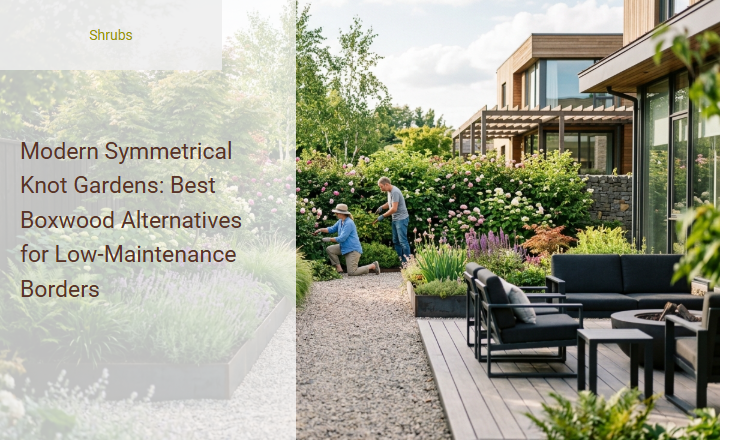
For centuries, the structured elegance of symmetrical knot gardens has defined luxury landscaping, yet modern gardeners increasingly struggle with the devastating realities of boxwood blight and the relentless pruning required to maintain traditional borders. Historically, achieving these crisp, geometric lines demanded high-maintenance English boxwoods, leaving many to wonder if this classic aesthetic is still viable in a modern, busy world.
Fortunately, you can achieve the exact same architectural precision and estate-like charm with a fraction of the upkeep. To succeed, however, one must accept that a successful transition requires matching the specific soil drainage and sunlight of your site, as no single plant fits every microclimate. Utilizing resilient, disease-resistant cultivars like Ilex crenata (Japanese Holly) or dwarf germander provides the perfect visual substitute without the ecological vulnerability.
In this guide, we will analyze the premier low-maintenance boxwood alternatives, evaluating their growth habits, hardiness zones, and design applications to help you cultivate a breathtaking, worry-free knot garden.
Read also: Boxwood vs Myrtus for Knot Gardens
Rediscovering the Symmetrical Knot Garden
Symmetrical knot gardens have returned to favor, bringing geometric elegance and structured harmony to contemporary landscapes. Once reserved for grand estates, these formal layouts are undergoing a modern revival as homeowners seek to ground their outdoor spaces with clean lines and classic patterns. The core of this revival relies on a shift away from high-maintenance English boxwoods toward robust, eco-friendly low-maintenance boxwood alternatives that deliver the same architectural impact without the constant upkeep.
The Boxwood Dilemma: Why Modern Gardens Need Alternatives
Traditional boxwood (Buxus) has long been the gold standard for creating the crisp, low hedges essential to formal garden design. However, maintaining these plants has become increasingly difficult for modern gardeners. Rising temperatures, changing weather patterns, and the sheer amount of time required for frequent pruning have made traditional boxwood gardens a labor-intensive chore. Consequently, designers are turning to hardier evergreen substitutes that require less intervention and boast far greater resilience.
Design Secrets for Low-Maintenance Symmetrical Borders
Creating a successful modern knot garden requires careful planning and a deep understanding of structural form. When replacing traditional boxwood with hardier alternatives, keeping a few fundamental design rules in mind ensures your layout remains sharp and visually striking throughout the changing seasons.
- Precise Spacing: Position your plants close enough to form a seamless ribbon of green, while leaving just enough space to allow healthy air circulation around the root zones.
- Scale and Proportion: Keep the height of your borders proportional to the open spaces they define. Low-growing or easily managed varieties ensure the knot patterns do not overwhelm the surrounding landscape.
- Color Harmony: Select plants with consistent foliage tones to keep the intricate geometric patterns looking cohesive, rather than chaotic, from a distance.
Japanese Holly (Ilex crenata): The Perfect Visual Twin
For those who love the classic aesthetic of boxwood, Japanese Holly (Ilex crenata) offers an almost identical visual profile. With its tiny, oval leaves and dense growth habit, it can easily fool the casual observer while offering superior resistance to common garden pests.
Japanese Holly 'Microphylla'
This cultivar features incredibly small, glossy green leaves that form a tight, compact mound. It tolerates heavy shearing beautifully, making it an exceptional candidate for the sharpest geometric angles in your knot garden.
Japanese Holly 'Sky Pointer'
With its naturally narrow, columnar growth habit, 'Sky Pointer' is ideal for adding vertical accents or creating defined corners within a symmetrical border pattern with very little pruning required.
Dwarf Myrtle (Myrtus communis): A Fragrant and Resilient Choice
Dwarf Myrtle (Myrtus communis 'Compacts') is a stellar choice for warm, sunny regions. Originating from its historical Mediterranean origins, this resilient evergreen thrives in hot, dry climates where traditional boxwood would quickly wither under the sun.
This compact grower features small, pointed, aromatic leaves that release a pleasant herbal scent when brushed against or pruned. During the summer, the deep green foliage is punctuated by delicate, star-like white flowers, adding a layer of sensory delight to your formal garden paths without compromising the neat, structured border shape.
Privet Honeysuckle (Lonicera pileata): Fast-Growing and Adaptable
Privet Honeysuckle (Lonicera pileata) is a tough, spreading evergreen shrub that is highly valued for its adaptability. It grows exceptionally well in a wide variety of soil types-from heavy clay to sandy loam-and displays remarkable shade tolerance, making it perfect for knot gardens that receive filtered afternoon light.
Known for its rapid establishment and fast-growth characteristics, Privet Honeysuckle fills in gaps quickly, allowing you to enjoy a mature, structured border in a fraction of the time. Despite its vigorous nature, it responds beautifully to clipping and can be easily kept in a neat, low-profile form.
Wall Germander (Teucrium chamaedrys): Heritage Charm with Floral Accents
Wall Germander (Teucrium chamaedrys) brings a wonderful sense of heritage charm to the modern knot garden. Historically used in medieval herb gardens, this woody sub-shrub offers dark green, scalloped leaves that release a pleasant, spicy aroma when sheared.
In mid-to-late summer, Wall Germander breaks from the typical all-green evergreen look by producing lovely spikes of pinkish-purple flowers. These blooms attract bees, butterflies, and other beneficial pollinators, turning your structured symmetrical border into a lively, ecological haven.
└── [Inner Loops: Soft Pink Pollinator Blooms]
Dwarf Conifers: Structural Powerhouses for Year-Round Definition
Dwarf conifers provide unmatched architectural stability in the garden. Because they grow slowly and naturally maintain neat, compact habits, they are excellent choices for homeowners who want to minimize their pruning chores while enjoying crisp, evergreen shapes all winter long.
Yew (Taxus baccata 'Repandens')
This low-growing, spreading yew is highly shade-tolerant and features elegant, dark green needles. It can be sheared into incredibly sharp, flat-topped geometric borders that hold their shape for months on end.
Dwarf Arborvitae (Thuja occidentalis)
With its fan-like spray of soft, bright green foliage, Dwarf Arborvitae naturally forms neat globes or cones. It serves as a fantastic structural anchor at the intersections of your symmetrical paths.
Pro Maintenance Tips for Crisp, Clean Lines
Even low-maintenance alternatives need some foundational care to look their best. Implementing a consistent care routine will keep your geometric borders healthy, vibrant, and perfectly defined throughout the year.
- Prepare the Soil: Before planting, amend the soil with high-quality organic compost to ensure excellent drainage, as none of these boxwood alternatives tolerate waterlogged roots.
- Install Drip Irrigation: Use a subsurface drip system to deliver water directly to the root zones, keeping the foliage dry to prevent opportunistic fungal issues.
- Establish a Pruning Schedule: Shear your plants in late spring after the first flush of new growth has hardened off, and perform a light touch-up in early autumn to lock in those sharp lines for the winter.
Cultivating Your Modern Masterpiece
Designing a symmetrical knot garden does not have to mean signing up for endless hours of weeding, spraying, and pruning. By embracing modern, disease-resistant alternatives like Japanese Holly, Dwarf Myrtle, and resilient conifers, you can create a striking, sustainable landscape feature that honors historical design while easily standing the test of time. With the right plant selections and simple structural care, your low-maintenance garden will remain a source of pride and geometric elegance for decades to come.
Summary
This article explores how to design stunning, modern symmetrical knot gardens using resilient boxwood alternatives. While traditional knot gardens rely heavily on classic English boxwood, modern gardeners face significant challenges from devastating pests like boxwood blight and box tree moths. To maintain the crisp, geometric lines of formal borders without the high-maintenance hassle, this guide highlights several excellent, hardy plant substitutes.
Key alternatives discussed include Japanese holly (Ilex crenata), dwarf conifers, yew (Taxus), and even fragrant herbs like rosemary and lavender. These disease-resistant options offer the same dense foliage and tolerance for shearing as traditional boxwoods. By adopting these robust alternatives, gardeners can easily recreate the timeless, structured elegance of historical knot designs while ensuring their landscapes remain healthy, vibrant, and remarkably low-maintenance for years to come.
Leave a comment