
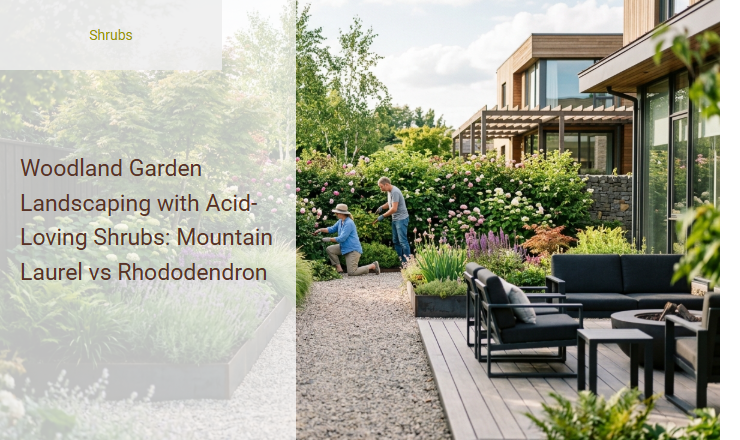
Designing a cohesive woodland garden often feels like a constant battle against dense shade and naturally acidic, nutrient-poor soil, where standard ornamental plants routinely fail to thrive. Before selecting your flora, successful shade landscaping requires understanding how canopy cover and organic leaf litter dictate understory soil chemistry. Embracing these unique conditions with the right specimens grants gardeners a low-maintenance, ecologically rich sanctuary boasting year-round structural beauty.
However, achieving this vibrant look is stipulative on maintaining a precise soil pH between 4.5 and 6.0 alongside consistent moisture retention. Time-tested acid-loving champions like Kalmia latifolia (Mountain Laurel) and Rhododendron catawbiense prove that challenging shade can still yield spectacular seasonal blooms.
This comparative guide will analyze these two iconic ericaceous shrubs, evaluating their growth habits, flowering windows, and specific maintenance needs to help you choose the perfect fit for your woodland design.
Designing the Ultimate Woodland Garden: Mountain Laurel vs. Rhododendron
Woodland gardening offers a magical escape, transforming shaded garden corners into serene, natural sanctuaries. The key to capturing this wild aesthetic lies in selecting plants that thrive beneath a canopy of mature trees. Among the most prized specimens for these environments are acid-loving shrubs, which bring structure, color, and texture to challenging understory spaces.
When it comes to selecting the premier evergreen shrubs for dappled shade, two genera stand out above the rest: Mountain Laurel (Kalmia latifolia) and Rhododendron. Both plants are celebrated for their spectacular spring displays and handsome year-round foliage. However, understanding their unique differences in growth, flowering habits, and landscape performance is crucial for designing a harmonious and thriving woodland garden.
Botanical Profiles: Understanding the Contenders
The Ancestry of Mountain Laurel
Mountain Laurel, botanically known as Kalmia latifolia, is a member of the Ericaceae family. Native to the eastern United States, its wild heritage is deeply rooted in rocky slopes, mountainous regions, and sandy deciduous woodlands. This cold-hardy shrub has evolved to survive in rugged, nutrient-poor soils, lending it a resilient yet highly characterful growth habit in cultivation.
The Diverse World of Rhododendrons
The genus Rhododendron is vast, encompassing thousands of species and hybrids distributed across the Northern Hemisphere, with a heavy concentration in Asia and North America. As Ericaceous relatives, they share a preference for acidic forest floors. Their wild ancestors typically inhabit moist, rich woodland slopes and valleys, which translates to a preference for consistent moisture and rich humus in the home landscape.
Soil Chemistry: The Essential Acidic Foundation
Both Mountain Laurel and Rhododendron belong to the Ericaceae family, which means they share a strict requirement for highly acidic, well-draining soil. Their fine, shallow root systems are incapable of absorbing nutrients efficiently in alkaline soils, making proper bed preparation essential for their survival.
To ensure these shrubs thrive, the soil must meet the following parameters:
- Optimal pH Range: The soil pH must remain strictly between 4.5 and 5.5.
- High Organic Matter: Rich, decomposed organic material mimics the natural forest floor.
- Excellent Drainage: Heavy clay soils must be amended, as standing water leads to root rot.
When preparing your woodland planting bed, incorporate generous amounts of natural amendments. Mixing leaf mold, aged pine needles, or organic peat moss into the topsoil will naturally lower the pH while improving soil structure and drainage.
Light and Exposure: Finding the Perfect Dappled Shade
Replicating the light patterns of a natural forest is vital for both species. Dappled shade, where sunlight filters through a high canopy of trees, offers the ideal balance of light and protection. However, their tolerance levels for different exposures diverge slightly, affecting where you should place them in your garden layout.
"Mountain Laurel demonstrates a remarkable ability to tolerate deeper forest shade while still maintaining its elegant structure, whereas most large-leaf Rhododendrons require filtered morning sun to produce their iconic flower buds."
If planted in too much sun, both shrubs will suffer from scorched leaves and increased water stress. Conversely, deep shade can reduce blooming on Rhododendrons, making morning sun and afternoon protection the ideal formula for maximizing their floral display. Mountain Laurel is far more forgiving of dense shade, though it too flowers most profusely with some filtered light.
Seasonal Spectacular: Bloom Characteristics and Timing
The Geometric Intricacy of Mountain Laurel
Mountain Laurel flowers are renowned for their geometric precision. In late spring, origami-like, pentagonal buds open into delicate, cup-shaped blossoms. Each blossom features unique pockets that hold the stamens under tension, ready to spring forward and coat visiting pollinators in pollen. The color palette ranges from pure white and soft pink to deep bi-colored burgundy rings.
The Showy Splendor of Rhododendron Clusters
Rhododendrons make an undeniable impact with their large, globe-shaped flower clusters known as trusses. These showy clusters erupt in mid-to-late spring, offering an immense color range that includes vibrant purples, hot pinks, fiery reds, yellows, and pristine whites. By strategically planting early, mid, and late-season varieties of both shrubs, you can secure continuous color from mid-spring into early summer.
Year-Round Structure: Evergreen Foliage and Winter Appeal
While flowers provide seasonal drama, the evergreen foliage of these shrubs provides essential structural form during the bleak winter months. In cold climates, their leaves act as natural thermometers, curling downward on freezing days to conserve moisture and opening up as the temperatures rise.
Rhododendrons feature thick, leathery, dark green leaves that create a dense, heavy texture in the garden. In contrast, Mountain Laurel offers slightly smaller, lance-shaped leaves with a glossy finish. As Mountain Laurel matures, it also develops a spectacular, gnarly, twisting branching structure that adds immense sculptural appeal to the winter landscape, standing out beautifully against a backdrop of snow.
Growth Habits and Strategic Landscape Placement
Growth Rates and Dimensions
Understanding the mature dimensions of these shrubs prevents overcrowding. Rhododendrons generally grow faster and can reach massive proportions, with some varieties topping ten to fifteen feet. Mountain Laurels are notoriously slow-growing, typically maintaining a more compact, mounded shape of five to eight feet in home gardens.
Woodland Garden Design Ideas
Use their distinct habits strategically to build depth in your woodland landscape:
- Rhododendrons as Privacy Screens: Use large-leaf varieties to form dense, evergreen borders or soft privacy screens along the edges of your property.
- Mountain Laurels as Focal Points: Place these slow growers where their architectural, twisting branches and intricate blooms can be admired up close, such as near woodland pathways.
- Layered Understory Planting: Place taller Rhododendrons in the background and nestle Mountain Laurels in the mid-ground for a textured, layered forest effect.
Maintenance Guide: Watering, Mulching, and Pruning
Caring for acid-loving shrubs requires a gentle touch that respects their woodland origins. Because both plants have shallow, fibrous root systems that sit close to the soil surface, they are highly sensitive to soil compaction, drought, and improper planting depth.
Follow these essential maintenance practices to keep your shrubs healthy:
- Watering: Provide deep, consistent moisture, especially during dry summer spells. Avoid waterlogging, as their roots need oxygen to breathe.
- Mulching: Apply a three-inch layer of pine bark or leaf mulch to preserve moisture and protect the shallow roots from temperature fluctuations. Keep mulch away from the main stems.
- Pruning: Prune immediately after flowering in late spring. This timing is critical because both shrubs set next year's flower buds during the summer.
Always avoid heavy pruning late in the season, as you will inadvertently cut off next year's flower buds and stimulate tender new growth that is highly vulnerable to early winter frosts.
Pest and Disease Management in Woodland Environments
Identifying Common Woodland Pests
In closed woodland spaces, high humidity and low air circulation can attract pests. Lace bugs are a frequent nuisance, sucking sap from the undersides of leaves and leaving a yellow, stippled pattern on the top surface. Black vine weevils can also target these plants, notch-cutting leaf edges during the night and damaging roots during their larval stage.
Preventing Fungal Diseases and Animal Browsing
Poorly draining soil is the primary cause of Phytophthora root rot, a deadly fungal disease that causes wilting and dieback. Additionally, hungry deer often target Rhododendrons as a winter food source, though they tend to avoid the highly toxic foliage of Mountain Laurel. Protect your investment with these organic strategies:
- Select disease-resistant cultivars when planning your landscape.
- Improve air circulation by spacing plants properly and removing dead wood.
- Use organic neem oil sprays to control active lace bug infestations.
- Apply natural deer repellents or install physical fencing during late autumn.
The Design Verdict: Choosing the Best Shrub for Your Space
Selecting between these two outstanding shrubs comes down to your garden's specific light conditions, space availability, and design goals. While Rhododendrons deliver a massive wall of vibrant color and dense screening, Mountain Laurel offers exquisite, detailed flower structures and a picturesque winter silhouette. Integrating both shrubs allows you to extend the blooming season and enjoy a diverse, texturally rich woodland garden.
Refer to the comparison matrix below to determine which shrub best suits your needs:
| Feature | Mountain Laurel (Kalmia latifolia) | Rhododendron |
|---|---|---|
| Bloom Style | Geometric, cup-shaped buds | Large, showy flower clusters (trusses) |
| Growth Rate | Very slow | Moderate to fast |
| Shade Tolerance | High (tolerates deeper shade) | Moderate (prefers dappled morning sun) |
| Winter Form | Gnarled, twisting sculptural branches | Dense, leathery evergreen mounds |
| Deer Resistance | High (toxic foliage) | Low (frequently browsed) |
| Comparison Feature | Mountain Laurel (Kalmia latifolia) | Rhododendron (Rhododendron spp.) |
|---|---|---|
| Flower Morphology | Hexagonal, cup-shaped buds; geometric fused petals with spring-loaded stamens. | Large, bell- or funnel-shaped flowers held in prominent terminal clusters (trusses). |
| Growth Habit & Structure | Slow-growing; develops gnarly, sculptural, multi-stemmed branches over time. | Moderate to fast-growing; typically forms a dense, rounded, and spreading shrub. |
| Foliage Texture | Narrow, lanceolate, dark green leathery leaves (typically 2–4 inches long). | Broad, oblong, thick evergreen leaves (often 4–8+ inches long) with pale undersides. |
| Shade & Soil Tolerance | High shade tolerance; thrives in dry, rocky, sterile, highly acidic soils. | Prefers filtered canopy shade; requires rich, moist, organic-dense, well-drained acidic soil. |
| Wind & Cold Exposure | Highly wind-resistant; foliage resists winter burn and desiccation. | Susceptible to winter windburn; leaves curl tightly to protect against extreme cold. |
Leave a comment