
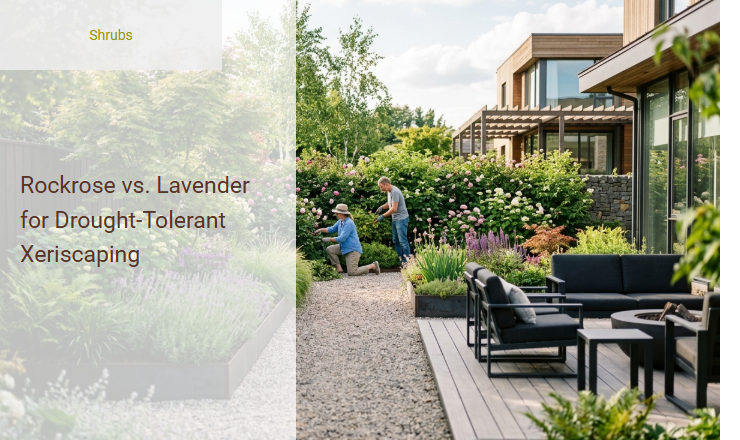
Designing a lush, vibrant landscape while facing strict water restrictions and soaring utility bills is a constant frustration for modern homeowners. While transitioning to xeriscaping offers a sustainable path forward, selecting species that actually thrive-rather than just survive-in nutrient-poor, arid soil requires careful curation.
Fortunately, choosing the right Mediterranean evergreen grants you year-round structural beauty and striking blossoms without draining your municipal water reserves. However, long-term success hinges on one crucial stipulation: both genera demand exceptionally sharp soil drainage, as heavy, wet clay will quickly prove fatal to their root systems. For instance, the resilient Orchid Rockrose (Cistus x purpureus) and classic English Lavender (Lavandula angustifolia) demonstrate how tough, drought-tested plants can still deliver delicate, fragrant aesthetics.
In this analysis, we will compare Rockrose and Lavender across their growth habits, soil preferences, and maintenance requirements to help you select the perfect anchor for your low-water landscape.
The Ultimate Xeriscape Showdown: Rockrose vs. Lavender
As modern homeowners face changing climates and dwindling water supplies, the rise of xeriscaping has transformed how we design our outdoor spaces. No longer is a low-water garden synonymous with barren gravel and dry spikes; instead, it is a lush, vibrant haven filled with resilient flora. Among the premier choices for water-wise landscaping, two Mediterranean powerhouses stand out: the tough, blossoms-clad Rockrose and the timelessly elegant, fragrant Lavender. Both plants offer exceptional beauty with minimal water demands, but they serve distinct roles in the sustainable garden design of today.
Meet the Rockrose: Tough, Vibrant, and Resilient
Hailing from the rocky, sun-baked hillsides of the Mediterranean basin, the Rockrose (Cistus genus) is a rugged, evergreen shrub built for survival. Rockrose thrives in places where other plants falter, easily shrugging off poor soils, salty coastal winds, and intense heat waves. Its secret lies in its sticky, resinous foliage, which naturally prevents moisture loss under the blazing sun. Known for its rapid growth and mounding habit, this plant carpets the ground in green while putting on a dramatic floral show, even in dry climates.
- Cistus × purpureus (Purple Rockrose): Featuring large, orchid-like pinkish-purple flowers with dark red spots at the base of each petal.
- Cistus ladanifer (Crimson-Spot Rockrose): Renowned for its aromatic resin (labdanum) and striking white blossoms with rich crimson centers.
- Cistus × pulverulentus 'Sunset': A compact, spreading groundcover adorned with eye-catching, hot-pink flowers and wavy grayish-green leaves.
Meet Lavender: Fragrant, Classic, and Versatile
Few plants capture the imagination and senses quite like Lavender (Lavandula). A staple of formal herb gardens and cottage landscapes alike, this classic Mediterranean sub-shrub is cherished for its highly aromatic foliage and iconic purple flower spikes. Beyond its visual charm, Lavender is celebrated globally for its therapeutic properties, offering a calming scent that reduces stress and promotes restfulness. Its silvery-green leaves provide excellent year-round structure, making it a versatile addition to borders, pathways, and container arrangements.
"To step into a field of blooming lavender is to experience an immediate wave of tranquility, where the warm breeze carries a scent that heals the mind and delights the spirit."
Battle of the Dry Zones: Water Needs Compared
While both shrubs are highly drought-tolerant, they utilize different adaptation mechanisms to handle dry spells. Lavender relies on its deep taproot and thin, hairy leaves that trap moisture, whereas Rockrose utilizes a shallow but wide-reaching root system paired with resinous leaf coatings. Once fully established, both plants require almost no supplemental irrigation, but the journey to maturity is crucial. Newly planted specimens need regular deep watering once a week for their first year to build a resilient root system. Over-watering remains the primary threat to both, as soggy roots quickly lead to root rot.
Est. Weekly Water Demand (First Season vs. Mature)
Lavender: 1.0 inch/week (First Year) → 0.25 inches/week (Mature)
Rockrose: 1.0 inch/week (First Year) → 0.0 inches/week (Mature)
Dirt and Sun: Soil and Exposure Requirements
Rockrose Soil and Sun Profile
Rockrose demands full, uninterrupted sunlight to produce its signature heavy blooms and keep its dense foliage from thinning. When it comes to the ground beneath, this plant prefers poor, sandy, or rocky soils with a neutral to slightly acidic pH. Rich, heavily organic soils will cause the plant to grow too quickly, leading to weak stems and a shorter overall lifespan.
Lavender Soil and Sun Profile
Lavender also thrives in baking, full-sun conditions but differs slightly in its pH preferences, favoring neutral to alkaline soils. It performs best in nutrient-poor, gravelly textures that mimic its dry native habitats. Heavy clay soils are the mortal enemy of lavender, as they trap moisture around the root crown.
Regardless of which plant you choose, excellent drainage is non-negotiable for their survival. Without quick-draining soil, both species will rapidly succumb to root rot and winter wetness.
A Feast for the Eyes: Blooms and Foliage
The visual contrast between these two species allows designers to play with distinct textures and forms. Rockrose features delicate, paper-like flowers that resemble wild single roses. Although individual blooms last only a single day, the plant produces them in such vast abundance that the entire shrub remains covered in color. This show happens during late spring to early summer, creating a soft, broad-leaved texture with green or gray-green mounded foliage. In contrast, Lavender brings vertical energy to the garden with its tight, upright spikes of blue, purple, or white flowers. Lavender blossoms typically reach their peak during mid-to-late summer, standing proudly above fine, needle-like, silver-grey foliage that adds refined structure to the landscape year-round.
Ecological Impact: Pollinators and Pest Resistance
Both plants are outstanding ecological citizens, transforming dry gardens into bustling wildlife sanctuaries. The pollen-rich flowers of Rockrose are irresistible to native bees and hoverflies, while Lavender is a magnet for bumblebees, honeybees, and butterflies throughout the warm months. Remarkably, this high wildlife appeal does not extend to garden pests. Thanks to the aromatic oils in Lavender and the sticky, bitter resins in Rockrose foliage, both plants are virtually immune to deer and rabbit grazing. They are rarely bothered by common garden insects, making them excellent choices for low-maintenance, chemical-free gardening.
Pruning and Lifespan: Maintenance Demands
Maintenance needs differ significantly between these two choices. Rockrose is a low-effort plant with a moderate lifespan of about 10 to 15 years, requiring minimal pruning because it does not regenerate well from old wood. Lavender is highly rewarding but demands consistent, annual attention to prevent it from becoming woody, leggy, and unproductive after a few seasons. Proper pruning techniques keep both plants dense, healthy, and visually appealing over their lifetimes.
- Pruning Lavender: Prune once a year in late summer after blooming, cutting back the stems by one-third, but always avoiding cutting into the hard, leafless woody base.
- Pruning Rockrose: Pinch back young tips in spring to encourage bushiness, and perform light shaping immediately after the flowering season ends. Avoid heavy pruning of old wood.
- Managing Lifespan: Monitor plants for signs of decline. Replace woody lavender plants every 6 to 8 years, and allow Rockrose to self-seed or take softwood cuttings to sustain your landscape's vigor.
Designing the Landscape: Ideal Garden Placements
Borders and Walkways
Lavender is unmatched when used as a sensory border along walkways, entryways, or formal garden paths, where visitors can brush against the foliage to release its calming perfume. It also acts as an excellent low-growing hedge to define structured garden zones.
Erosion Control and Slopes
Rockrose's sprawling habit and dense, deep-binding root system make it the ideal candidate for stabilization on steep, dry slopes and hillsides. It provides superb erosion control while turning otherwise problematic, hard-to-water banks into oceans of colorful blooms.
Rock Gardens and Coastal Beds
Both plants excel in rock gardens where drainage is naturally enhanced. Use the upright form of Lavender to contrast with the wide, weeping profile of Rockrose, creating an authentic Mediterranean aesthetic that stands up to wind, heat, and poor soils.
The Final Verdict: Choosing the Right Plant for Your Yard
Your choice depends on your specific garden goals, maintenance willingness, and microclimate. If you require a fast-growing, highly resilient groundcover to fill a large area, stabilize a slope, or withstand harsh coastal winds with almost zero intervention, select Rockrose. Its tough-as-nails nature makes it an outstanding utility plant that rewards you with paper-soft blossoms every spring.
Conversely, if you desire a sensory experience, formal garden structure, therapeutic fragrance, and a magnet for bees, opt for Lavender. While it requires disciplined annual pruning, its elegance and aromatic charm are unparalleled. By evaluating your soil drainage, regional climate, and design style, you can select the ideal candidate to elevate your water-wise landscape.
| Xeriscaping Feature | Rockrose (Cistus) | Lavender (Lavandula) |
|---|---|---|
| Water & Drainage | Ultra-low water. Highly resilient; tolerates poor drainage and heavy soils better than lavender. | Low water. Extremely sensitive to humidity and wet roots; requires excellent, sharp drainage. |
| Soil Preferences | Thrives in poor, rocky, sandy, or depleted soils. Tolerates wide pH ranges. | Prefers gritty, low-nutrient, sandy loam. Strongly prefers alkaline to neutral pH. |
| Growth & Size | Fast-growing, spreading woody shrub. Excellent for erosion control on slopes. (3–5 ft average). | Moderate-growing, compact mounding sub-shrub. Best for borders and pathways. (1–3 ft average). |
| Maintenance | Low maintenance. Resents hard pruning; only light pinching of young tips is needed. | Moderate maintenance. Requires annual pruning after bloom to prevent woody, leggy centers. |
| Esthetics & Wildlife | Crepe-paper flowers (white/pink) with short individual lifespans. Resinous, sticky foliage. Deer resistant. | Highly aromatic, silver-green foliage. Long-lasting purple spike flowers. Exceptional pollinator draw. |
Leave a comment