
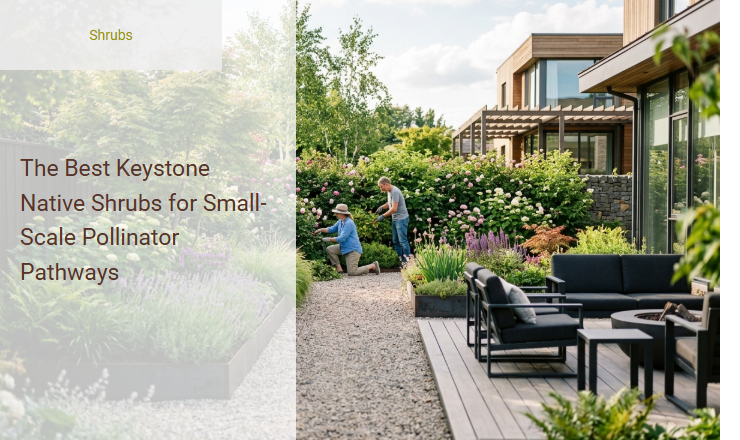
Many homeowners eagerly want to support local biodiversity but feel discouraged by the limited acreage of their suburban yards or urban lots. Traditional conservation often feels out of reach when you are working with a small patio border or a tight property line.
To address this, we must first look at the growing movement of "pollinator pathways"-interconnected corridors of green spaces that allow insects and birds to safely traverse fragmented habitats. By focusing your efforts on this collaborative network, even a tiny garden plot can grant your local ecosystem a massive survival boost, provided you plant high-impact "keystone" species.
However, a critical stipulation remains: not all keystone plants are suited for tight quarters, and choosing the wrong variety can lead to overcrowded, unmanageable yards. Fortunately, compact powerhouses like Viburnum acerifolium (Mapleleaf Viburnum) and dwarf native blueberries prove you can achieve maximum ecological value without sacrificing space.
This article outlines the premier compact keystone shrubs for small landscapes, detail their specific growing requirements, and provide a blueprint for integrating them into your pathway.
Read also: Hydrangea Quercifolia vs Hydrangea Arborescens for Native Gardens
Introduction: Cultivating Life in Small Spaces
As urban development expands, local wildlife populations face severe habitat fragmentation. Creating pollinator pathways-continuous corridors of pesticide-free native plants-offers a vital solution to this environmental crisis. Even within the confines of a suburban yard or a small urban patio, gardeners can make a profound impact. By incorporating keystone native shrubs, which serve as the ecological backbone of small-scale gardening, we can transform isolated green spaces into bustling hubs of biodiversity.
The Power of Keystone Species
In any given ecosystem, certain organisms play a disproportionately large role in maintaining the structure and biodiversity of their ecological community. These are known as keystone species. Without them, local food webs would collapse, and ecosystems would cease to function. In the botanical world, a small, highly select group of native shrubs supports the vast majority of local lepidoptera and specialist bee species, making them essential choices for small gardens.
Designing Compact Pollinator Corridors
Integrating ecological powerhouses into smaller properties requires thoughtful spatial planning. By focusing on multi-season interest and vertical structure, you can maximize both visual appeal and wildlife value in limited spaces.
- Layering shorter shrubs in front of taller varieties creates a tiered, natural edge that offers diverse nesting zones.
- Varying heights by choosing upright, narrow cultivars helps maintain pedestrian pathways while providing critical ecological cover.
- Selecting species with multi-season interest ensures year-round food and habitat resources for local wildlife.
Wild Cherries and Plums (Prunus spp.)
The Ecological Value of Native Prunus
Dwarf or shrubby wild cherries and plums are absolute powerhouses for small-scale gardens. They serve as exceptional host plants, providing vital sustenance to hundreds of butterfly and moth caterpillars during their larval stage. Additionally, their showy, nectar-rich early spring blooms offer critical energy to queen bumblebees and other early-emerging pollinators when few other resources are available.
- High Host Value: Supports over 450 species of butterflies and moths.
- Early Blooms: Provides crucial spring nectar and pollen.
Native Blueberries (Vaccinium spp.)
A Multipurpose Keystone Shrub
Lowbush and highbush blueberries are dual-purpose superstars that deliver immense ecological and aesthetic value. In the spring, their delicate bell-shaped flowers provide nectar for specialist bee species. As summer arrives, they produce delicious fruits highly prized by songbirds and small mammals, followed by brilliant crimson foliage that lights up the autumn landscape.
Pussy Willows (Salix spp.)
Vital Early-Season Resources
Native shrub willows are incredibly important for early-season pollinators, producing protein-rich pollen and sweet nectar when temperatures begin to rise. Compact varieties are highly adaptable and thrive in wet or average soils, making them perfect additions for gardeners looking to support biodiversity during critical early spring transitions.
Native Dogwoods (Cornus spp.)
Year-Round Structural Support
Shrub dogwoods provide exceptional multi-season value to local wildlife while adding outstanding structural interest to small landscapes throughout the winter months.
- Their leaves support dozens of native caterpillar species.
- Their high-fat berries sustain migrating birds in autumn.
- Their vibrant winter twigs offer striking beauty.
Arrowwood and Cranberry Viburnums (Viburnum spp.)
Multi-Season Habitats
Native Viburnums are ideal for small gardens, offering dense nesting cover that protects songbirds from predators. In late spring, they produce abundant white blooms that attract diverse pollinators, which later mature into nutrient-rich autumn berries that fuel migrating wildlife.
Installation and Care for Maximum Ecological Impact
Proper installation and care ensure native shrubs thrive and attract maximum pollinator activity in your backyard habitat.
- Focus on native soil preparation by avoiding chemical fertilizers that disrupt beneficial soil biology.
- Provide deep weekly watering during the first growing season to establish strong, resilient root systems.
- Prune selectively in late winter to preserve flower buds and maintain a dense, natural structural shape.
Connecting the Dots: Your Role in the Pathway
Every small garden bed, patio pot, or suburban border planted with keystone native shrubs plays an active role in knitting back together a fragmented landscape. By choosing these high-impact plants, you transform your personal outdoor space into a vital haven. Your garden is the bridge that connects larger conservation areas, establishing a resilient network that sustains our essential insect populations for generations to come.
Summary
"The Best Keystone Native Shrubs for Small-Scale Pollinator Pathways" highlights how homeowners can maximize ecological impact in limited garden spaces. Keystone plants are native species that support a disproportionately large number of local pollinators, particularly caterpillars and specialist bees. For those establishing "pollinator pathways"-connected corridors of habitat across fragmented suburban or urban landscapes-selecting these high-yield shrubs is critical.
The article showcases top-performing, compact woody plants such as native blueberries (Vaccinium), wild cherries (Prunus), and willows (Salix). These species serve as vital larval hosts and provide rich sources of nectar and pollen. By replacing turfgrass or non-native ornamentals with these keystone shrubs, even small yards can become crucial sanctuaries that sustain local food webs, proving that meaningful biodiversity conservation is achievable on any scale.
Leave a comment