
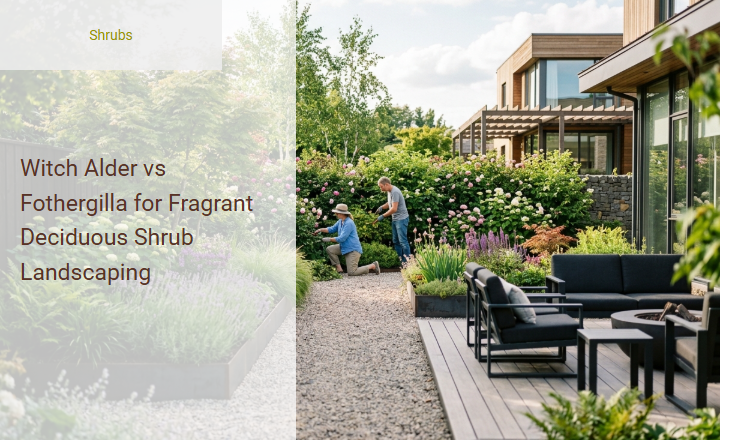
Homeowners and landscapers often struggle to find deciduous shrubs that deliver both striking visual appeal and reliable fragrance without demanding constant maintenance. This challenge is frequently compounded when navigating nurseries, where the exact same plant may be labeled under different names, leading to purchasing confusion.
To resolve this, we must first bridge the gap between common vernacular and botanical nomenclature. Demystifying these terms grants you the confidence to select specimens that yield spectacular honey-scented spring blooms and vibrant autumn foliage. However, successful integration into your garden design stipulates that you carefully match these shrubs to their precise acidic soil and moisture requirements.
For instance, choosing between the compact dwarf Alder (Fothergilla gardenii 'Blue Shadow') and the taller, robust major species (Fothergilla major) will dictate your landscape's scale and structure. In this comparative guide, we will analyze their growth habits, cultivation needs, and aesthetic profiles to help you make an informed landscaping decision.
Demystifying Witch Alder and Fothergilla in Landscape Design
When exploring high-performing plants for the home garden, you may encounter two names that seem distinct but actually belong to the exact same plant genus: Witch Alder and Fothergilla. These terms are used interchangeably to describe a small group of outstanding deciduous shrubs native to the southeastern United States. Renowned for their exceptional ornamental characteristics, these shrubs bring unparalleled value to any residential property. From their highly fragrant spring blooms to their dramatic seasonal transformations, these plants offer true multi-season interest that few other landscape specimens can match.
Whether you are looking to revitalize a shady border or introduce an eye-catching focal point near your patio, understanding the versatility of Fothergilla is the first step toward transforming your outdoor space. Their elegant form and sensory appeal make them a premier choice for modern, eco-friendly garden designs.
Species Breakdown: Dwarf Fothergilla vs. Mountain Witch Alder
To make the best choice for your garden, it is helpful to understand the two primary species used in residential landscaping: Fothergilla gardenii (commonly known as Dwarf Fothergilla) and Fothergilla major (referred to as Mountain Witch Alder). While they share many genetic traits, their origins and natural habitats shape their distinct growth habits.
- Fothergilla gardenii (Dwarf Fothergilla): Native to the coastal plain of the southeastern United States, this species thrives in boggy, moist pine flatwoods and savannahs. It typically forms a low, mounding shrub that spreads slowly by suckering, making it an excellent choice for smaller spaces.
- Fothergilla major (Mountain Witch Alder): Hailing from the dry, rocky woods and mountain ridges of the Appalachian range, this species is naturally robust. It grows much larger and more upright, showing great adaptability to drier woodland environments.
Both species represent the rich botanical heritage of North American native flora, bringing resilient, wild-crafted beauty directly into cultivated suburban landscapes.
The Battle of Fragrance: Honey-Scented Spring Blooms
One of the most captivating traits of this genus is the unforgettable olfactory experience it delivers in mid-to-late spring. Long before many other woody ornamentals begin to wake up, Witch Alder fills the garden with a distinct, sweet aroma that wafts effortlessly through the air.
The fragrance of these unique blooms is often described as a rich blend of sweet honey and warm licorice, a delightful sensory marker that signals the official arrival of spring.
When comparing the olfactory impact of the two main species, subtle differences emerge. The blooms of Fothergilla gardenii tend to have a slightly more concentrated, sweet aroma due to their dense cluster arrangement, making them ideal for planting near walkways or entryways where passersby can appreciate the scent. In contrast, Fothergilla major produces larger flowers that release a lighter, airy fragrance. While less concentrated up close, its sheer volume of blooms ensures that its honey-like scent carries beautifully across larger properties and open backyard areas.
Spring Aesthetics: Bottlebrush Flowers and New Foliage
The visual drama of Witch Alder begins early in the season. Before the leaves even emerge, bare branches produce highly unique, cream-colored, brush-like flowers. These eye-catching blooms lack true petals; instead, their striking visual appeal comes from clusters of long, delicate, white stamens tipped with yellow anthers, giving them a distinct bottlebrush appearance.
This early floral display provides an important early-season food source for native pollinators. As the flower show peaks and begins to fade, the plant initiates its next visual phase. Fresh, blue-green foliage begins to unfurl, creating a beautiful transition. The textured, alder-like leaves showcase a soft, matte finish that provides a cool, calming backdrop for the remainder of the spring and summer months.
Autumn Brilliance: Comparing Fall Foliage Transitions
While the spring blooms are spectacular, the true crowning glory of Witch Alder is its breathtaking autumn transformation. As the weather cools, the blue-green summer foliage begins to shift, culminating in a brilliant kaleidoscope of color. Individual leaves often display a stunning gradient, blending shades of bright yellow, rich orange, and fiery scarlet red simultaneously on a single branch.
When it comes to the intensity of this fall show, both species excel, but they do so in different ways. Fothergilla major often delivers a taller, more dramatic architectural display of color, casting a glowing, fiery presence in the woodland understory. On the other hand, the compact Fothergilla gardenii provides a denser, more concentrated carpet of intense orange and red tones closer to the ground, which can look incredibly striking when massed as a ground cover or low border.
Soil, Sun, and Site Selection Requirements
To achieve the healthiest growth and the most vibrant colors, proper site selection is crucial. Fothergilla species are relatively easy to grow, but they have specific preferences that must be met to ensure they reach their full aesthetic potential.
- Soil Chemistry: These shrubs strictly prefer acidic soils with a pH between 5.0 and 6.0. Incorporating organic matter such as peat moss or composted pine bark can help maintain these acidic conditions.
- Moisture and Drainage: The soil must be highly organic and well-draining. While Dwarf Fothergilla can tolerate occasionally wet soils, neither species will survive in heavy, waterlogged clay.
- Sunlight Exposure: Fothergilla can grow in conditions ranging from full sun to part shade. However, planting them in a location that receives at least six hours of direct sunlight daily will result in the most abundant spring blooms and the most intense, fiery fall foliage.
Sizing and Growth Habit: Fitting the Shrub to Your Space
Selecting the right variety of Witch Alder involves evaluating your available garden space. Because their growth rates are slow to moderate, matching the mature size of the plant to your specific landscape needs prevents future crowding and minimizes maintenance.
| Species Common Name | Average Mature Height | Average Mature Width | Growth Habit & Shape |
|---|---|---|---|
| Dwarf Fothergilla (F. gardenii) | 2 to 3 feet | 2 to 4 feet | Low, mounded, slowly spreading mound |
| Mountain Witch Alder (F. major) | 6 to 10 feet | 5 to 9 feet | Upright, rounded, multi-stemmed shrub |
Use the lower-growing Dwarf Fothergilla for tight foundation plantings, small urban courtyards, or along the front of perennial borders. Reserve the larger, majestic Mountain Witch Alder for expansive woodland gardens, property borders, or as a striking background plant behind smaller perennials.
Maintenance and Hardiness: Low-Care Beauty for Cold Climates
One of the primary reasons landscape designers love Fothergilla is its exceptionally low-maintenance nature. These robust shrubs are incredibly cold-hardy, thriving across USDA Hardiness Zones 4 through 9. Once established, they require very little hands-on care to look their best year after year.
Pruning is rarely necessary, as both species naturally maintain a neat, appealing shape. If you must prune to control size or remove stray branches, it is best to do so immediately after flowering in late spring to avoid cutting off next year's flower buds. Furthermore, these plants boast excellent resistance to most common insect pests and plant diseases, and they are highly deer tolerant, making them a safe and reliable choice for rural or edge-of-woods properties.
Creative Landscaping Ideas: Hedges, Foundations, and Companions
Witch Alder is an incredibly versatile design tool that can solve many common landscaping dilemmas. Its multi-season beauty makes it highly effective when used in various structural and aesthetic roles throughout the yard.
- Structural Hedges: Plant Fothergilla major in a row to create a soft, informal deciduous hedge that offers privacy in summer and a blazing wall of color in autumn.
- Foundation Anchors: Use Fothergilla gardenii around home foundations to soften architectural lines without worrying about the plants blocking windows.
- Naturalized Woodland Gardens: Integrate these native shrubs under a canopy of tall trees to create a natural, layered woodland look.
To maximize the visual impact of your Witch Alder, pair it with companion plants that share similar soil requirements. Excellent companions include acid-loving evergreen shrubs like Azaleas and Rhododendrons, which provide year-round structure. For beautiful texture contrasts in semi-shaded spots, interplant them with shade-loving Hostas, delicate ferns, or colorful Astilbes.
Final Verdict: Which Fothergilla is Right for Your Garden?
Choosing between these two remarkable options comes down to analyzing your specific landscape goals and physical site limitations. Both the dwarf and mountain varieties provide the same outstanding honey-scented spring blooms and spectacular autumn color displays, but their scale and growth habits are tailored to different settings.
To make your final decision, consider this quick checklist. If you have a compact garden, need a neat front-of-border shrub, or want to line a garden path, select Dwarf Fothergilla (Fothergilla gardenii). If you have ample space, require a tall privacy screen, or wish to fill a large gap in a native woodland landscape, opt for the robust Mountain Witch Alder (Fothergilla major). By selecting the plant that matches your spatial reality, you will enjoy a low-maintenance, high-impact landscape feature for decades to come.
| Feature | Dwarf Witch Alder (Fothergilla gardenii) | Large Witch Alder (Fothergilla major) |
|---|---|---|
| 1 to 2-inch terminal bottlebrush spikes. | 2 to 3-inch larger, prominent bottlebrush spikes. | |
| Strong, sweet, nectar-like honey aroma. | Rich, spicy-sweet honey fragrance; carries further in wind. | |
| Early spring (April); flowers bloom before leaves emerge. | Mid-to-late spring (May); flowers bloom alongside emerging foliage. | |
| High density of blooms on a compact, low-growing frame. | Scattered but massive floral displays on tall, upright branches. | |
| Ideal for borders and foundation plantings near walkways for scent. | Best as a fragrant background screen, hedge, or woodland specimen. |
Leave a comment