
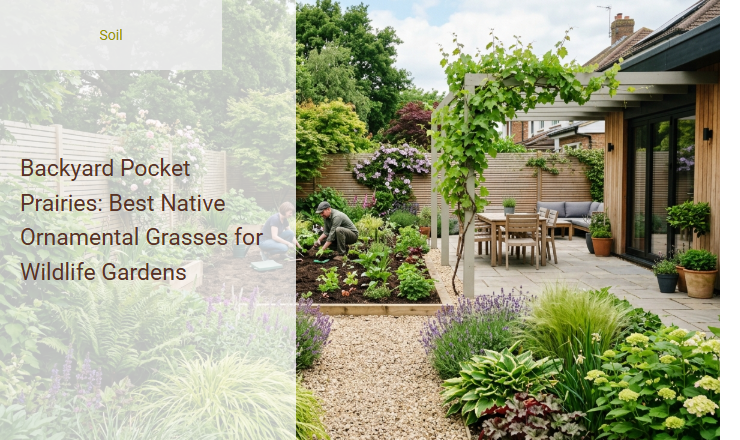
Many suburban homeowners struggle to attract meaningful wildlife to their yards, frustrated by the high water demands and low ecological value of conventional turfgrass and exotic ornamentals. Yet, converting an entire property into a sweeping wild meadow is rarely feasible in compact residential zones.
The solution lies in the "pocket prairie"-a small-scale, intentional micro-habitat. By prioritizing native ornamental grasses, you grant local bird and insect populations vital winter shelter and forage while drastically reducing your outdoor water footprint. To succeed, gardeners must understand that native grasses prioritize deep root establishment in their first season, meaning patience is required before realizing full visual impact.
However, once established, species like Little Bluestem (Schizachyrium scoparium) and Purple Lovegrass (Eragrostis spectabilis) provide unmatched structural beauty and wildlife support. In this guide, we will analyze the best native grass species for small-scale plantings, their specific habitat contributions, and how to design them for year-round interest.
Read also: Heavy Clay vs Sandy Soil for Native Grasses
Introduction to Pocket Prairies
As urban sprawl continues to replace natural landscapes, homeowners have a unique opportunity to reclaim biodiversity in their own backyards. By converting even the smallest suburban lawns into pocket prairies, we can establish vibrant, self-sustaining ecosystems. These miniature grasslands mimic the ancient prairie biomes that once covered vast expanses of the continent. The foundation of any successful restoration relies heavily on native ornamental grasses, which provide structural integrity and year-round vitality to these compact ecological havens.
Ecological Benefits of Native Grasses
Native ornamental grasses are not merely decorative; they serve as the biological backbone of a thriving wildlife garden, offering indispensable environmental benefits to local fauna.
- Shelter: Dense foliage protects small mammals, reptiles, and beneficial insects from harsh weather and predators.
- Nesting Materials: Dried blades and stems are harvested by native birds to build secure nests in spring.
- Larval Host Support: Many native skipper butterflies depend on these grasses as host plants for their caterpillars.
- Seed Sources: Heavy seed heads provide high-energy nutrition for foraging birds during the cold winter months.
Designing Your Miniature Prairie
Creating a visually appealing backyard prairie requires thoughtful planning around height, texture, and seasonal shifts. Grouping plants with contrasting textures-such as fine-leaved grasses next to broad-leaved wildflowers-creates visual depth. Layering taller species in the back and shorter ones in the front ensures every plant receives adequate sunlight while showcasing the dynamic colors that transition beautifully from summer greens to autumn coppers and winter bronze.
Little Bluestem (Schizachyrium scoparium)
Little Bluestem is a standout performer in any sunny, dry spot, beloved for its striking blue-green summer foliage. As autumn approaches, the plant transforms into a warm copper-orange hue that glows brilliantly in the late-day sun. Ecologically, it serves as a crucial larval host for several species of skipper butterflies and provides sturdy structure through winter snows.

Switchgrass (Panicum virgatum)
Switchgrass is celebrated for its tall, strictly upright growth habit and airy, cloud-like seed heads. It is incredibly adaptable, performing exceptionally well in wet soils where other prairie grasses might struggle. In winter, these delicate seed heads remain upright, offering a critical food source for foraging songbirds during the harshest weather.
"Switchgrass provides a vital winter lifeline for local bird populations, offering both high-energy seeds and dense cover when resources are most scarce."
Indiangrass (Sorghastrum nutans)
With its stately height and magnificent presence, Indiangrass serves as a dramatic backdrop for shorter wildflowers. In late summer, it produces stunning, metallic-golden, feather-like seed heads that shimmer in the breeze. Birds frequently use the coarse foliage and golden, feather-like seed heads as nesting material to line their spring nests.
Purple Lovegrass (Eragrostis spectabilis)
For those challenging sandy or gravelly soils, Eragrostis spectabilis, commonly known as Purple Lovegrass, is an exceptional low-growing, drought-tolerant option. In late summer, it produces a spectacular, misty cloud of reddish-purple blooms that float just above the foliage, serving as an eye-catching groundcover.
Side-oats Grama (Bouteloua curtipendula)
Side-oats Grama is easily distinguished by its unique oat-like seeds that hang gracefully from just one side of its arching stems. Highly valuable to native bees for its pollen, its compact size makes it perfect for smaller borders or dry slopes where space is limited.
Installation and Maintenance Guidelines
- Prepare the soil by removing aggressive turf weeds without deeply tilling, keeping native weed seeds buried.
- Plant native grass plugs in early spring, spacing them according to their mature width.
- Water deeply once a week during the first growing season to establish a deep, resilient root system.
- Cut the dead foliage back to a few inches above the ground in late winter or early spring before new growth emerges.
Creating a Haven for Local Biodiversity
Every square foot of lawn converted into a pocket prairie contributes to a larger, connected web of urban biodiversity. By introducing native grasses, you invite essential pollinators, birds, and beneficial insects back into the suburban landscape. Begin your pocket prairie journey today and watch your garden come alive with native vitality.
Summary
The article "Backyard Pocket Prairies: Best Native Ornamental Grasses for Wildlife Gardens" guides homeowners on transforming small outdoor spaces into vibrant, ecologically beneficial sanctuaries. By establishing pocket prairies, gardeners can support local biodiversity using native ornamental grasses. Unlike non-native varieties, native grasses like Little Bluestem, Switchgrass, Sideoats Grama, and Indiangrass provide essential food and habitat for birds, pollinators, and beneficial insects.
These resilient, low-maintenance plants offer year-round aesthetic appeal, transitioning from lush summer greens to rich autumn hues and structural winter interest. Beyond their visual charm, they serve as host plants for caterpillars, supply nutritious seeds for foraging birds, and offer critical nesting materials and winter shelter. Incorporating native grasses into backyard landscapes helps improve soil health, conserve water, and restore vital local ecosystems, proving that even a small pocket prairie can make a significant environmental impact.
Leave a comment