
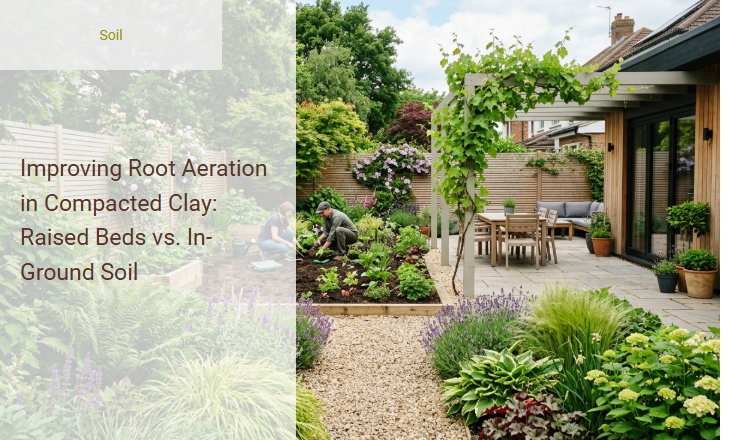
Gardening in heavy clay can feel like a losing battle, as dense, compacted soil suffocates root systems and stalls plant development. Before implementing a remedy, we must recognize that plant health hinges on soil structure-specifically, the balance of micro- and macro-pores required for critical gas exchange. Mastering this physical environment grants your crops the foundation for explosive root development and optimal nutrient uptake.
However, achieving these results carries the stipulation that clay itself is not inherently poor soil; it is chemically fertile but requires strategic structural management. For instance, deep taproots like carrots require loose pathways to prevent stunted deformation, while heavy-feeding tomatoes demand rapid drainage to avoid root rot. This guide evaluates the immediate aeration benefits of raised beds against the long-term sustainability of in-ground soil conditioning, helping you determine the most efficient system for your landscape.
The Clay Soil Dilemma: Understanding the Drainage Barrier
Beneath the surface of a struggling garden often lies a dense, unyielding obstacle: compacted clay soil. This heavy growing medium acts as a physical barrier, trapping excess moisture while completely blocking the flow of life-giving oxygen. When clay particles pack tightly together, they create a suffocating environment where plant roots gasp for air, frequently leading to root rot and stunted growth. To overcome this challenge, gardeners find themselves at a crossroads. The choice often comes down to a fundamental debate: do you invest the physical effort into in-ground soil remediation to heal the earth from within, or do you bypass the issue entirely by constructing raised beds filled with an idealized, imported soil mixture?
Why Root Aeration Matters for Plant Health
The Biological Necessity of Oxygen
Plants do not merely breathe through their leaves; their roots require a constant supply of subterranean oxygen to perform cellular respiration. This biological process generates the energy necessary for roots to actively absorb water and essential minerals from the surrounding earth. In waterlogged, heavily compacted clay, air pockets are replaced by standing water, leaving roots to drown in an anaerobic environment. Without adequate aeration, nutrient uptake ceases, leading to chlorosis, systemic weakness, and eventual plant decay.
The Mechanics of Compacted Clay
How Clay Particles Compress
To understand why clay behaves this way, one must examine its microscopic structure. Unlike coarse sand or medium-sized silt, clay is composed of tiny, flat, plate-like particles that carry a negative electrical charge, causing them to cling tightly together. Over time, various environmental factors exacerbate this natural tendency:
- Heavy foot traffic and machinery press the flat plates together, eliminating vital macro-pores.
- Repeated wet-and-dry cycles cause the clay to swell and shrink, forming a solid, concrete-like block.
- A lack of organic matter prevents the formation of stable soil aggregates, sealing out vital air pockets.
In-Ground Amending: Healing the Soil from Within
Reclaiming your native soil requires a strategic, long-term approach that physically alters the structure of the earth. By introducing specific elements, you can transform a dense clay barrier into a thriving, crumbly loam. This process relies on organic matter, mechanical disruption, and biological assistance to restore natural drainage channels.
- Incorporate Compost: Spread a thick layer of well-rotted organic matter and gently work it into the top several inches of clay to encourage microbial activity.
- Utilize Aeration Tools: Use a broadfork or garden fork to fracture the compacted subsoil without flipping the soil layers, preserving beneficial fungal networks.
- Plant Taproot Cover Crops: Sow deep-rooting species like Daikon radishes or alfalfa, which naturally drill through compacted layers and leave channels for air and water when they decompose.
Pros and Cons of In-Ground Aeration
Weighing the Realities of In-Ground Remediation
Conditioning native clay is a highly rewarding but demanding endeavor. On the positive side, it is incredibly cost-effective, utilizing local resources and inexpensive organic inputs to build deep, fertile soil profiles that improve year after year. However, the physical labor required is substantial, and results are rarely instantaneous, often taking several seasons to manifest fully.
"Working with the earth beneath our feet fosters a resilient ecosystem, but it demands patience and physical endurance from the gardener."
Raised Beds: Bypassing the Clay Obstacle
For those seeking an immediate escape from the frustrations of heavy clay, raised bed gardening offers an elegant detour. By constructing growing frames directly on top of the compacted ground, you effectively bypass the problematic native soil altogether. This method allows you to import a customized, lightweight growing medium designed specifically for optimal water retention and rapid drainage. Because these beds are never stepped on, the imported soil remains loose, crumbly, and perfectly aerated, ensuring that delicate root systems can expand freely and absorb nutrients from day one.
Pros and Cons of Raised Bed Systems
The Trade-Offs of Elevated Growing
Building above ground level provides unmatched control over your gardening environment, but it comes with distinct practical trade-offs. While the drainage advantages are unparalleled, the initial financial investment for lumber, metal, or stone enclosures can be quite high. Additionally, filling these containers with premium soil mixes adds to the upfront expense.
Head-to-Head: Aeration Efficiency Comparison
| Soil System Type | Oxygen Exchange Rate | Water Drainage Capacity | Root Penetration Depth |
|---|---|---|---|
| Deeply Amended Native Clay | Moderate (Improves over seasons) | Slow to Moderate | Deep (No artificial boundaries) |
| Standard Raised Bed Soil Mix | High (Consistently aerated) | Rapid (Excellent gravity drainage) | Limited (Confined to bed height) |
Best Practices for Transitioning Your Garden
Transitioning a clay-dominant yard into a thriving growing space requires careful execution, regardless of the method you choose. Implementing the right strategies early on will prevent future drainage issues and ensure healthy root development.
- Test your drainage: Dig a test hole and fill it with water to determine the baseline absorption rate of your native clay.
- Loosen the subsoil interface: If building raised beds, lightly scratch or fork the underlying clay layer to prevent creating a hardpan barrier that traps water at the bottom of the bed.
- Apply thick organic mulch: Protect exposed soil from heavy rainfall with straw, leaves, or wood chips to prevent surface crusting and preserve aeration.
- Avoid working wet soil: Never till or dig clay when it is wet, as this destroys soil structure and worsens compaction.
Choosing the Right Path for Your Landscape
Your final decision depends on a balance of your budget, physical ability, and the specific crops you wish to cultivate. If you have the physical stamina and a limited budget, working directly with the earth to restore your native soil is a deeply satisfying and sustainable choice that benefits your local ecology. On the other hand, if you require immediate results, struggle with physical labor, or wish to grow sensitive root vegetables, investing in raised beds offers a controlled, highly productive solution. By aligning your gardening methods with your personal resources, you can transform a stubborn clay landscape into a flourishing sanctuary where plants thrive.
Every garden is unique, and both pathways lead to a healthier, more vibrant landscape.
| Comparison Feature | Raised Beds | In-Ground (Clay Soil) |
|---|---|---|
| Drainage & Aeration | Excellent. Gravity-drained, porous structure prevents waterlogging. | Poor. Dense particles trap water, suffocating roots. |
| Soil Compaction | Minimal. No foot traffic keeps imported soil loose and fluffy. | High. Easily compacts when wet, forming a rock-hard crust when dry. |
| Spring Warming | Fast. Elevates soil warms quickly, allowing earlier planting. | Slow. Wet clay retains cold temperatures, delaying the season. |
| Root Penetration | Effortless. Unrestricted deep root growth in loose mix. | Difficult. Hardpan layers block deep root establishment. |
| Water Retention | Low to Moderate. Dries out faster; requires more frequent watering. | High. Retains moisture long-term, reducing watering frequency. |
| Initial Cost & Setup | High. Requires framing materials and bulk soil purchase. | Low. Requires only physical labor and organic amendments. |
Leave a comment