
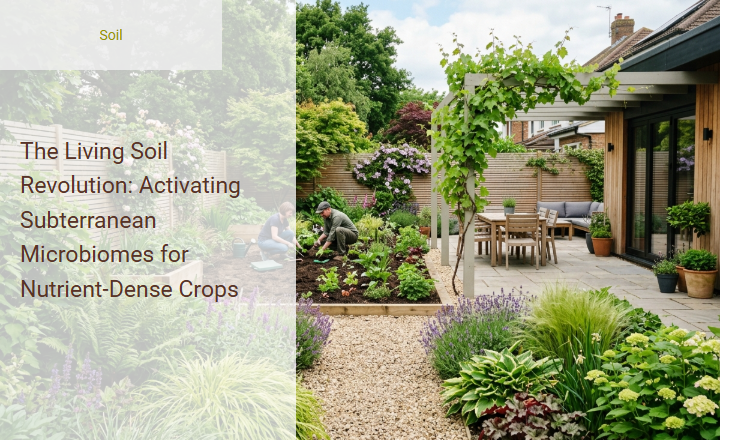
Modern growers face a frustrating paradox: despite escalating fertilizer applications, crop nutrient density and long-term soil resilience continue to decline. For decades, traditional agricultural models relied strictly on synthetic NPK inputs to force yield, largely ignoring the complex biological matrix beneath the surface. Transitioning to a living soil model grants growers a powerful advantage, unlocking hidden crop genetics and yielding premium, nutrient-dense produce that commands higher market value.
This transition requires an educational shift: biological soil management is not an overnight chemical fix, but a cumulative ecological investment. By actively cultivating beneficial organisms-such as mycorrhizal fungi to expand root surface area and nitrogen-fixing bacteria to mobilize locked nutrients-farmers can rebuild soil structure from the ground up.
In this article, we will examine the science of subterranean microbiomes, outline actionable steps for microbial activation, and demonstrate how restoring soil biology translates directly to crop quality and farm profitability.
Read also: Vermicompost vs Traditional Compost for Microbe Diversity
Introduction: The Hidden World Beneath Our Feet
For decades, conventional agriculture has treated soil as an inert holding medium for synthetic chemicals. However, a profound shift is occurring. We are beginning to understand that the earth beneath our feet is a dynamic, living organism. The emerging living soil revolution shifts our focus from basic chemical inputs to the complex biological systems that sustain life.
At the center of this movement are subterranean microbiomes, the unsung heroes of agriculture. Billions of bacteria, fungi, protozoa, and nematodes form intricate food webs that naturally cycle nutrients, protect crops from pests, and build resilient structures. Prioritizing soil biology over chemistry is not just an ecological preference; it is the vital pathway to securing the future of our global food supply.
The Rhizosphere: The Underground Marketplace
The thin zone of soil directly surrounding a plant's roots is known as the rhizosphere. Rather than being a passive space, this region acts as a highly active underground marketplace where plants and microbes engage in constant trade. Plants act as the primary producers, converting sunlight into carbon-rich sugars through photosynthesis and pumping these exudates out through their roots.
In exchange for these carbon energy packets, diverse soil microbes perform tasks that plants cannot execute alone. Microorganisms solubilize locked minerals, gather trace elements, and channel water from distant soil pores back to the root system. This ancient, elegant symbiosis demonstrates that plant health is deeply dependent on the biological community thriving at its root tips.
The Cost of Chemical Dependency: Sterilizing the Soil
Modern industrial agriculture relies on heavy chemical intervention, which severely disrupts the natural soil ecosystem and creates a cycle of dependency.
The Disruptive Impact of Synthetic Fertilizers
High-dose synthetic fertilizers provide easily accessible nutrients directly to plants, bypassing the natural microbial pathway. As a result, plants stop releasing carbon exudates into the rhizosphere, starving the local microbial populations and rendering the soil structurally lifeless.
Pesticides and Intensive Tillage
Chemical pesticides designed to target pathogens often cause collateral damage, wiping out beneficial fungi and bacteria. When combined with intensive tillage, which physically tears apart fragile fungal networks, the entire soil food web collapses.
"A soil depleted of its biological diversity is not soil at all; it is merely dirt, entirely dependent on human intervention to produce even the most basic yield."
Mycorrhizal Fungi: The Web of Life
Among the most critical organisms in the soil food web are mycorrhizal fungi. These specialized organisms physically bond with plant roots, extending vast networks of microscopic threads called hyphae deep into the surrounding earth. This fungal highway expands the effective root surface area by up to a thousand times, allowing plants to access water and essential minerals, particularly phosphorus, that would otherwise remain out of reach.
Beyond nutrient transport, these fungi secrete a sticky, carbon-rich glycoprotein called glomalin. This substance acts as a natural binding agent, gluing micro-aggregates of soil together to build a stable, porous structure that improves water retention and resists erosion.

Bacterial Allies: Synthesizing Plant Nutrition
While fungi build structural networks, specialized bacteria operate as biological factories. Plant growth-promoting rhizobacteria (PGPR) reside in the rhizosphere and actively synthesize nutrients to fuel plant growth.
These bacterial partners perform several essential functions:
- Nitrogen Fixation: Converting atmospheric nitrogen into bioavailable forms that plants can readily absorb.
- Mineral Solubilization: Secreting organic acids that dissolve bound minerals like phosphorus and iron.
- Induced Systemic Resistance (ISR): Triggering the plant's internal defense mechanisms to better fend off pests and diseases.
Regenerative Agriculture: Strategies for Microbial Restoration
Restoring damaged agricultural land requires a deliberate transition toward management practices that feed and protect the soil microbiome.
Cover Cropping
Keeping living roots in the ground year-round ensures a continuous supply of carbon exudates to sustain active microbial populations through every season.
Diverse Crop Rotations
Monocultures support narrow groups of microbes. Planting a diverse range of crops encourages a more balanced, resilient, and biodiverse underground ecosystem.
Minimal Soil Disturbance (No-Till)
Avoiding tillage preserves the complex physical architecture of the soil, keeping fungal networks intact and maintaining natural water pathways.
The core lesson of these practices is simple: to feed the world, we must first feed the soil.
Activating the Soil: Compost, Biochar, and Microbial Inoculants
Restoring life to depleted soils often requires active inoculation. High-quality thermal compost introduces millions of diverse microbes, while compost teas provide a liquid concentrate of active biological life to inoculate leaves and root zones. Additionally, incorporating biochar-a highly porous form of charcoal-creates permanent physical shelters where beneficial microbes can multiply, safe from predators and drought.
Assessing Soil Vitality: Beyond N-P-K Testing
Traditional chemical soil tests measure the total volume of specific nutrients like Nitrogen (N), Phosphorus (P), and Potassium (K). However, these tests fail to show whether those nutrients are actually biologically active and available to the plant. Modern soil science focuses on measuring biological vitality to understand the true capacity of the ecosystem.
| Testing Parameter | Traditional Chemical Test (N-P-K) | Modern Biological Assessment |
|---|---|---|
| Primary Focus | Total chemical quantities present | Biological activity and soil respiration |
| Water Management | Not measured directly | Aggregate stability and infiltration rate |
| Nutrient Availability | Estimated based on chemical extraction | Measured through microbial biomass carbon |
The Nutritional Payoff: From Living Soil to Human Health
The benefits of a thriving soil microbiome extend far beyond the farm gate. When plants grow in biologically active soil, they develop robust defense mechanisms and access a full spectrum of trace minerals. This direct nutritional link means that crops harvested from living soils contain higher concentrations of essential vitamins, minerals, and protective phytonutrients.
Plants supported by diverse microbial networks synthesize richer amounts of polyphenols, flavonoids, and other antioxidants. By focusing on the health of the underground ecosystem, we directly enhance the nutrient density of the food on our plates, linking agricultural practices to public health outcomes.
Conclusion: Sowing the Seeds of a Regenerative Future
The living soil revolution represents a necessary paradigm shift in how humanity feeds itself. By moving away from a model of chemical suppression and embracing a model of biological cooperation, we can restore degraded landscapes, build drought resilience, and grow highly nutritious food. The path forward requires cooperation from farmers, consumers, and policymakers alike to protect and nurture the living soil as our most precious global asset.
Summary
"The Living Soil Revolution: Activating Subterranean Microbiomes for Nutrient-Dense Crops" explores the transformative shift in modern agriculture from chemical-dependent practices to nurturing subterranean ecosystems. The article highlights how a diverse soil microbiome-comprising beneficial fungi, bacteria, and protozoa-serves as the engine for natural nutrient cycling. By fostering these subterranean networks through regenerative practices like cover cropping and minimal tillage, farmers can unlock essential minerals, making them bioavailable to plants without synthetic inputs.
This biological activation not only enhances the flavor and nutritional profile of crops but also improves soil structure, water retention, and carbon sequestration. Ultimately, the piece argues that restoring subterranean life is vital for cultivating climate-resilient agriculture and addressing global nutritional deficiencies, proving that human health begins in the soil.
Leave a comment