
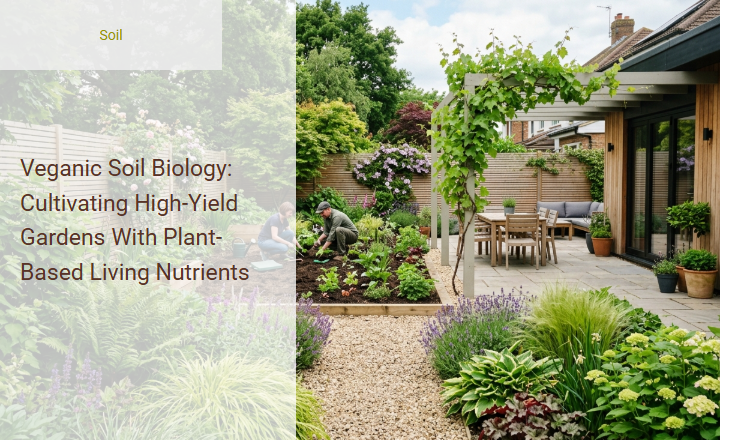
Many organic cultivators struggle to achieve competitive, high-yield harvests without relying on animal-based byproducts like blood meal or poultry manure, which frequently introduce heavy metals, synthetic hormones, and pathogens into the soil. Transitioning to a purely plant-based system requires looking beyond traditional organic methods to the rhizosphere itself. This veganic approach grants growers unprecedented purity and systemic resilience, unlocking clean, highly bioavailable nutrients for superior crop vitality.
However, cultivating this environment stipulates a foundational understanding: high yields are not forced through synthetic additives, but are instead facilitated by nurturing a living soil web over time. Utilizing plant-derived inputs-such as nutrient-rich alfalfa meal, fermented botanical extracts, and diverse mycorrhizal inoculants-actively stimulates indigenous microbes to build a self-sustaining ecosystem.
In the following sections, we will break down the science of veganic soil biology, demonstrate how to brew active botanical teas, and provide a structured framework for maximizing your garden's genetic potential naturally.
Read also: Alfalfa Meal vs Kelp Meal for Veganic Gardening
Introduction to Veganic Soil Biology: Gardening Without Animal Byproducts
Veganic soil biology represents the frontier of sustainable agriculture, combining vegan ethics with organic horticultural science. By eliminating animal-derived inputs such as blood meal, bone meal, and factory-farmed manures, veganic cultivation relies entirely on plant-based resources and beneficial microorganisms. This revolutionary methodology bypasses the heavy metals, residual antibiotics, and pathogens often found in animal-based organic fertilizers.
Transitioning to a veganic approach does not mean sacrificing productivity. In fact, cultivating a highly active, plant-driven soil microbiome fosters a resilient growing environment that yields clean, vibrant, and exceptionally nutrient-dense crops. By focusing directly on the symbiotic relationship between plant roots and indigenous soil microbes, growers can achieve maximum yields while upholding a compassionate, ethical standard that respects all living beings.
The Plant-to-Plant Cycle: Nature's Closed-Loop System
At the heart of veganic gardening lies the plant-to-plant cycle, a self-sustaining ecological loop modeled directly after wild ecosystems. In a natural forest, magnificent trees and lush undergrowth thrive continuously without the introduction of domesticated animal waste. Instead, fallen leaves, decaying wood, and wild herbaceous plants naturally decompose on the forest floor, slowly releasing complex organic compounds back into the earth to feed the next generation of plant life.
Gardeners can replicate this elegant, cruelty-free cycle by returning organic plant matter directly to their garden beds. Utilizing native green wastes, plant-derived mulches, and terrestrial vegetation ensures that the nutrient loop remains unbroken. This method avoids the environmental degradation and carbon footprints associated with commercial livestock feedlots, keeping your cultivation practices deeply aligned with the restorative rhythms of the natural world.
Mapping the Veganic Soil Food Web: The Microscopic Workforce
The true engine of a veganic garden is the microscopic workforce inhabiting the rhizosphere. Without animal-derived catalysts, plants rely on a diverse community of soil organisms to process complex organic matter into bio-available elements.
The Key Soil Microbes
- Mycorrhizal Fungi: These specialized fungi form vast underground networks that physically attach to plant roots, effectively multiplying their surface area to scavenge for water and locked-up phosphorus.
- Beneficial Bacteria: Acting as microscopic chemists, these bacteria decompose simple organic compounds and fix atmospheric nitrogen directly into forms that plant roots can readily absorb.
- Protozoa: These single-celled organisms graze on bacteria, releasing excess nitrogen in the immediate root zone as a highly bio-available plant nutrient.
- Beneficial Nematodes: These microscopic roundworms control soil pests while cycling crucial plant nutrients through the soil matrix.
Together, these organisms form a highly structured, self-regulating ecosystem. By feeding these microscopic allies with clean, plant-based sugars and organic residues, growers establish a perpetual nutrient delivery system that operates harmoniously beneath the soil surface.
Essential Plant-Based Nutrients: Nature's Bio-Accumulators
Nature has engineered specific plants to act as dynamic accumulators, drawing up deep mineral reserves from the subsoil and storing them in their leafy tissues. Harnessing these plant-based fertilizers allows veganic gardeners to target specific crop needs without resorting to synthetic chemical inputs or slaughterhouse byproducts.
| Plant Material | Primary N-P-K Value | Key Minerals Provided | Targeted Crop Benefits |
|---|---|---|---|
| Alfalfa Meal | 3 - 1 - 2 | Triacontanol (growth hormone), Calcium | Accelerates root development and vigorous vegetative growth. |
| Kelp Meal | 1 - 0.2 - 2 | Potassium, Iodine, Trace Minerals, Auxins | Enhances systemic stress tolerance and boosts cell wall strength. |
| Comfrey (Bocking 14) | 1.8 - 0.5 - 5.3 | Potassium, Calcium, Silica | Stimulates prolific flowering and high-quality fruit production. |
| Stinging Nettle | 3 - 1 - 2 | Iron, Magnesium, Sulfur | Prevents chlorosis and stimulates robust chlorophyll synthesis. |
| Neem Cake | 5 - 1 - 1.2 | Nitrogen, Sulfur, Limonoids | Nourishes the soil while providing systemic pest resistance. |
Crafting the Perfect Veganic Compost Base
Building a high-quality veganic compost pile is the cornerstone of sustainable soil health. Unlike traditional composting which relies on animal manures to kickstart the thermal process, a veganic compost pile utilizes a precise balance of green (nitrogen-rich) and brown (carbon-rich) plant materials to fuel thermophilic, aerobic decomposition.
- Establish the Base Layer: Begin with a coarse layer of woody brown materials, such as chipped branches or dry straw, to encourage optimal airflow at the bottom of the pile.
- Layer Greens and Browns: Alternate layers of nitrogen-rich green materials (fresh grass clippings, kitchen vegetable scraps, comfrey leaves) with carbon-rich brown materials (shredded autumn leaves, clean cardboard, straw) in a 1:3 ratio by volume.
- Introduce Bio-Accumulators: Scatter layers of stinging nettle, yarrow, or a light dusting of kelp meal throughout the pile to enrich the microbial diversity and mineral content.
- Monitor Moisture and Aeration: Keep the pile as damp as a wrung-out sponge and turn it every 7 to 14 days to ensure aerobic conditions are maintained, preventing the buildup of anaerobic pathogens.
The resulting compost is sweet-smelling, rich in humic acids, and entirely free from the weed seeds, heavy metals, and chemical residues often introduced through animal manure imports.
Liquid Gold: Fermented Plant Juices and Microbial Teas
To deliver rapid-acting nutrition and introduce concentrated waves of beneficial biology to the root zone, gardeners can utilize specialized liquid extractions. These preparations bypass the slower breakdown times of dry amendments, offering an immediate energetic boost to plants.
Actively Aerated Compost Teas (AACT)
AACT is brewed by suspending high-quality veganic compost in non-chlorinated water and bubbling oxygen through it for 24 to 48 hours. Adding a tiny amount of humic acid or kelp meal feeds the microbes, allowing the beneficial fungi and bacteria to multiply into billions of active organisms ready to colonize plant roots and foliage.
Fermented Plant Juices (FPJ)
FPJ is a core practice of natural farming, created by fermenting young, nutrient-dense green plants with brown sugar to extract the plant's sap and beneficial microbes via osmotic pressure.
"Fermented plant juices capture the vital hormonal and nutritional essence of rapidly growing tips, offering plants an easily absorbable, biological elixir that enhances photosynthesis and systemic resilience."
Cover Cropping and Living Mulches: Regenerating Soil from Within
Rather than leaving garden beds bare and vulnerable to erosion, veganic growers use cover crops to protect and actively build soil structure. These living mulches act as biological pumps, continuously feeding solar energy down into the subterranean microbiome through root exudates.
- Nitrogen-Fixing Legumes: Crops like crimson clover and hairy vetch form partnerships with rhizobia bacteria to pull nitrogen gas from the atmosphere and deposit it directly into the soil.
- Biomass Producers: Winter rye and sudangrass produce massive amounts of organic carbon both above and below ground, loosening compacted clay soils with their expansive root systems.
- Living Mulches: Low-growing species such as white clover can be interplanted with cash crops to regulate soil temperatures, suppress opportunistic weeds, and retain moisture.
When these cover crops are terminated and crimped or shallowly incorporated back into the topsoil, they decompose to form a nutrient-rich humus layer that feeds the subsequent plantings.
Navigating Veganic Soil Testing and pH Management
Achieving outstanding yields requires a clear understanding of your soil's chemistry. Regular soil testing provides a roadmap of your nutrient reserves, showing exactly which plant-based or mineral-based amendments are required. Veganic gardeners read these tests with a focus on biological availability rather than simple chemical overloading.
When deficiencies are identified, they can be corrected with clean mineral inputs. For example, sulfur can be used to lower pH, while agricultural lime or greensand can help raise it and add trace elements. To address nutrient lockout, focus on increasing the soil's organic matter through veganic compost, as a rich microbiome acts as a natural buffer, smoothing out pH fluctuations and ensuring minerals remain soluble and accessible to root systems.
Advanced Techniques for Maximizing Garden Yields
Moving beyond basic cultivation requires integrating advanced ecological design principles. By orchestrating a diverse garden ecosystem, growers can maximize both space and solar capture efficiency.
Synergistic Cultivation Strategies
- Polyculture and Companion Planting: Grouping mutually supportive plants, such as the classic corn, beans, and squash guild, optimizes physical space, deters pests, and balances nutrient extraction.
- Inoculant Timing: Applying mycorrhizal spores directly to seeds or root systems during transplanting ensures the fungal association is established at the earliest, most critical growth phase.
- Folair Application Windows: Spraying diluted fermented plant juices during early morning or late evening hours, when leaf stomata are open, maximizes nutrient absorption and biological coverage.
By treating the garden as a complete, self-regulating organism, you reduce external input requirements while increasing total harvest output per square foot.
The Sustainable Horizon: Cultivating a Greener Future
Embracing veganic soil biology is more than a gardening technique; it is an active contribution to global ecological restoration. By removing animal-derived fertilizers from our food production systems, we reduce our reliance on industrial animal agriculture, lowering greenhouse gas emissions and preserving pristine aquatic ecosystems from toxic runoff.
This plant-driven, closed-loop approach empowers growers to cultivate abundance with a clear conscience. Designing gardens that work in tandem with nature's inherent wisdom allows us to build healthy soils, foster incredible biodiversity, and secure a vibrant, cruelty-free future for generations to come.
Summary
"Veganic Soil Biology: Cultivating High-Yield Gardens With Plant-Based Living Nutrients" explores the innovative practice of veganic gardening, which merges vegan principles with organic horticulture. The article highlights how cultivators can achieve exceptional, high-yield harvests entirely without animal-derived inputs like manure, bone meal, or blood meal. Instead, this sustainable methodology focuses on nurturing a thriving, living soil food web using plant-based composts, green manures, cover crops, and microbial inoculants.
By fostering beneficial soil biology-such as mycorrhizal fungi and diverse bacterial communities-gardeners can naturally unlock essential nutrients. This eco-friendly approach not only boosts plant immunity and crop yields but also ensures a clean, residue-free harvest. Ultimately, veganic cultivation offers a highly efficient alternative to traditional organic farming, proving that vibrant, nutrient-dense gardens can flourish solely on the power of plant-based nutrition and robust soil microbiology.
Leave a comment