
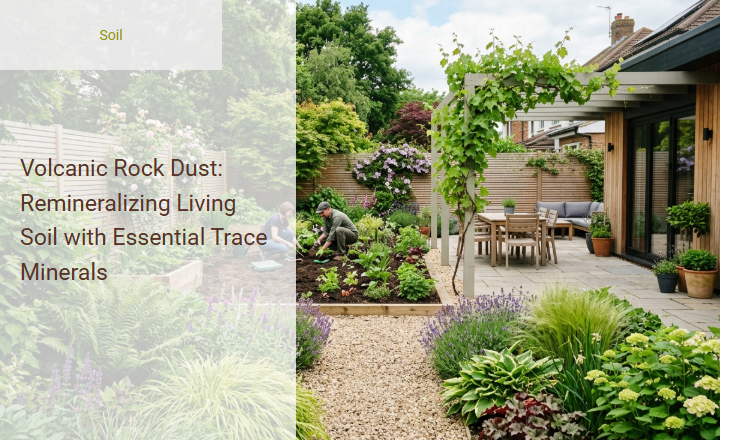
Many dedicated growers watch their carefully managed living soils lose vitality over successive harvests, resulting in lackluster plant health and diminished yields despite consistent organic watering. This frustrating decline occurs because standard organic matter alone cannot replenish the specific micronutrients exhausted by intensive plant growth.
Remineralizing with volcanic rock dust grants plants the biological key to unlocking their full genetic potential. However, it is vital to establish that rock dust functions as a slow-release, long-term soil investment rather than a rapid, synthetic NPK fertilizer. Introducing volcanic deposits like basalt or azomite delivers crucial trace minerals-such as silica, iron, and magnesium-that physically fortify plant tissue and catalyze essential metabolic processes.
In this guide, we will analyze the cellular science of volcanic rock dust, examine its synergistic relationship with the soil food web, and provide practical application strategies to permanently restore your soil's natural fertility.
Read also: Rock Dust vs Azomite for Trace Minerals
Introduction to Soil Depletion and the Power of Remineralization
Over the last century, modern agricultural practices have prioritized high yields and rapid growth at the expense of our earth's longevity. By relying heavily on synthetic chemical fertilizers, industrial farming has caused severe soil depletion, stripping the earth of vital trace elements that plants need to synthesize complex nutrients. As these crucial minerals vanish from our farmlands, our food crops become less nutritious, leaving human populations deficient in essential dietary elements.
Fortunately, nature provides a simple, highly effective remedy to reverse this cycle. The practice of remineralization using volcanic rock dust restores the natural geological balance of agricultural land. By introducing finely ground volcanic basalt back into the ecosystem, growers can replenish depleted soil systems, revive beneficial microbial populations, and produce crops packed with the life-giving nutrition nature intended.
What is Volcanic Rock Dust?
Volcanic rock dust, most commonly sourced from basalt, is a natural, mineral-rich powder created by crushing volcanic rock. Formed from cooled lava that once welled up from deep within the Earth's mantle, basalt contains an incredibly broad spectrum of elements. Unlike highly soluble synthetic fertilizers that wash away with the first rain, this dense volcanic material functions as a slow-release mineral amendment, gradually releasing its dense nutritional profile over years as it interacts with the soil environment.
The Science of Rock Weathering and Mineral Bioavailability
Plants cannot directly consume solid rock. Instead, they rely on a complex biogeochemical process known as mineral weathering to break down rock dust into bioavailable forms. When volcanic rock dust is added to living soil, it undergoes physical and chemical breakdown driven by soil moisture, fluctuating temperatures, and organic acids produced by plant roots.
This process is heavily accelerated by microbial bioweathering. Beneficial soil bacteria and mycorrhizal fungi secrete specialized organic compounds, such as chelators, which bind to insoluble minerals and dissolve them into ionic forms. Through this symbiotic relationship, plants receive a steady, self-regulating supply of micronutrients exactly when they need them, avoiding the toxic nutrient spikes associated with synthetic chemical inputs.
Essential Trace Minerals Packaged by Nature
Volcanic rock dust acts as a comprehensive multivitamin for the earth. Some of the most critical elements contained within high-quality basalt include:
- Silica: Strengthens plant cell walls, leading to sturdier stalks, improved upright growth, and enhanced physical resistance against pests and environmental stress.
- Iron: Plays a vital role in chlorophyll synthesis, helping plants maximize photosynthesis and maintain deep green, healthy foliage.
- Magnesium: Serves as the central atom in the chlorophyll molecule, making it absolutely essential for energy production and carbohydrate metabolism.
- Calcium: Promotes healthy root development, cell division, and efficient nutrient uptake throughout the plant's life cycle.
Boosting the Soil Food Web and Microbial Communities
Healthy soil is not just a growing medium; it is a thriving, living ecosystem. Volcanic rock dust provides a physical sanctuary for the micro-organisms that drive this system. The porous structure of finely ground basalt offers ideal micro-habitats where beneficial bacteria and mycorrhizal fungi can colonize, reproduce, and establish protective networks around plant root systems. Earthworms are also drawn to mineral-rich soils, consuming the dust and converting it into highly fertile worm castings.
"Minerals and microbes share a deep, ancestral relationship. Without the catalytic power of trace minerals, microbial enzymes cannot function, and without microbes, these minerals remain locked within the stone."
Direct Benefits of Remineralization on Plant Health
Incorporating volcanic rock dust into your cultivation strategy delivers noticeable improvements in plant vigor and crop yield.
Pest, Disease, and Drought Resistance
When plants absorb abundant levels of soluble silica and trace minerals, they build thicker cell walls and tougher outer skins. This natural physical barrier makes it significantly harder for sucking insects and fungal pathogens to penetrate plant tissue. Additionally, a robust mineral balance improves osmotic regulation, helping plants retain moisture and withstand prolonged periods of drought or extreme heat.
Enhanced Flavor, Aroma, and Nutritional Density
The complex flavors and aromatic profiles of fruits, vegetables, and herbs are governed by secondary metabolites and essential oils. Trace minerals serve as the fundamental building blocks for these complex compounds. By supplying a complete spectrum of micronutrients, rock dust dramatically improves the taste, aroma, and overall nutritional value of edible crops.
Volcanic Rock Dust vs. Synthetic Fertilizers
Traditional chemical fertilizers offer quick, highly concentrated doses of primary nutrients (NPK), but they fail to support long-term soil health. The table below illustrates the key differences between these two management approaches:
| Feature | Volcanic Rock Dust | Synthetic Fertilizers |
|---|---|---|
| Nutrient Profile | Broad-spectrum trace minerals & micronutrients | Highly concentrated macro-nutrients (NPK only) |
| Release Rate | Slow, steady, and self-regulating | Rapid release, leading to potential nutrient leaching |
| Soil Biology Impact | Feeds and houses beneficial microbes and fungi | Can harm soil life and disrupt natural pH balance |
| Long-Term Value | Permanently builds and regenerates topsoil structure | Requires continuous, expensive reapplication |
How to Apply Volcanic Rock Dust in Your Garden
Adding basalt rock dust to your gardening routine is straightforward and highly forgiving, as it will not burn plant roots even if applied in generous quantities.
- Potting Soil Mixtures: Thoroughly mix 1 to 2 cups of volcanic rock dust per cubic foot of potting soil before planting to establish a strong mineral base.
- Raised Garden Beds: Broadcast 5 to 10 pounds of dust per 100 square feet. Gently rake it into the top few inches of soil and water the area thoroughly.
- Compost Piles: Scatter a handful of rock dust between layers of organic matter as you build your compost pile. This accelerates the decomposition process and charges the finished compost with bioavailable minerals.
- Liquid Applications: Mix 2 tablespoons of extra-fine rock dust per gallon of water to create a mineral drench for targeting established, heavy-feeding plants.
Choosing the Right Rock Dust: Basalt vs. Azomite and Glacial Dust
When shopping for mineral amendments, you will likely encounter several different options. Understanding their distinct characteristics helps you make the best choice for your garden.
Basalt Rock Dust
Basalt is widely considered the gold standard for sustainable gardening. It features a highly balanced ratio of silica, iron, magnesium, and calcium, and it is free from heavy metal concerns, making it incredibly safe for vegetable gardens and long-term soil building.
Azomite
Azomite is a brand name for a unique clay deposit formed by an ancient volcanic eruption into a seabed. While it is highly soluble and contains an exceptionally wide range of trace elements, it is often consumed rapidly by soil systems and can be more expensive than local basalt options.
Glacial Rock Dust
Glacial dust is created by glaciers grinding various rocks together as they move across landmasses. Its composition varies significantly depending on the local geography of the glacier, meaning it can sometimes lack the consistent, reliable mineral density found in pure volcanic basalt.
Embracing a Regenerative Future with Living Soil
Moving away from chemical-dependent agriculture is essential for preserving the earth's precious topsoil resources. By incorporating volcanic rock dust into our home gardens, community spaces, and commercial farms, we actively participate in a regenerative loop that mirrors the natural processes of geological weathering. This simple act of stewardship restores vitality to the earth, builds resilient plant ecosystems, and ensures that future generations have access to nutrient-dense, life-sustaining food.
To learn more about sustainable soil management practices and the chemistry behind soil restoration, explore the educational guides provided by the Remineralize the Earth organization.
Summary
The article "Volcanic Rock Dust: Remineralizing Living Soil with Essential Trace Minerals" highlights the ecological importance of using finely ground volcanic rock, such as basalt, to restore depleted soils. Intensive agricultural practices and natural weathering deplete the earth of vital micronutrients. Introducing volcanic rock dust replenishes over 70 essential trace minerals, including silica, calcium, and magnesium.
This process of remineralization acts as a catalyst for living soil. Rather than merely feeding plants directly, these minerals stimulate soil microbiology. Microbes and mycorrhizal fungi break down the rock dust, making nutrients bioavailable to plants. This symbiotic relationship strengthens plant cell walls, enhances pest and disease resistance, and improves water retention. Ultimately, volcanic rock dust is presented as a sustainable, organic amendment crucial for rebuilding soil fertility, boosting crop yields, and fostering nutrient-dense food systems.
Leave a comment