
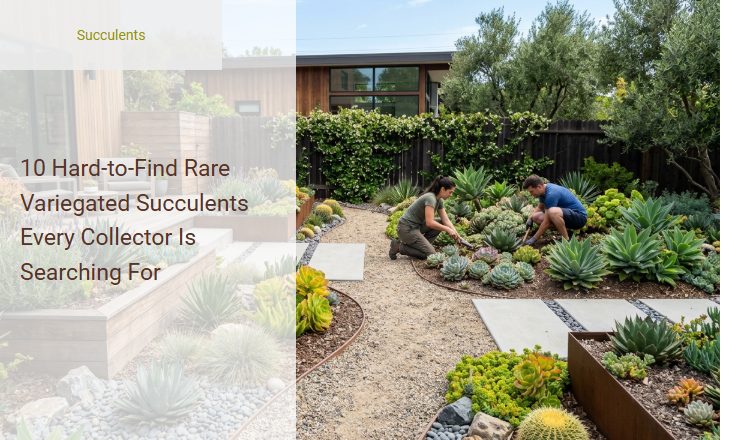
For serious succulent collectors, the thrill of the hunt is increasingly overshadowed by the frustration of sourcing authentic, high-quality specimens. Navigating a market flooded with chemically induced "fakes" and unstable genetics makes acquiring true rarities a costly, stressful gamble.
To protect your investment, one must first understand the biology of variegation. This genetic anomaly-where sectors of plant tissue lack chlorophyll-inherently limits growth rates and makes propagation exceptionally difficult, which is precisely what drives their scarcity. Demystifying these mechanics grants collectors a distinct advantage, allowing you to confidently identify genuine genetic mutations. However, a crucial caveat remains: these plants demand meticulous care, as their reduced photosynthetic capability makes them highly sensitive to light fluctuations and prone to reverting to solid green.
From the highly coveted Cotyledon orbiculata variegata to the ultra-rare Haworthia maughanii variegata, these specimens represent the pinnacle of botanical curation. Below, we analyze the ten rarest variegated succulents currently driving the global market, detailing their unique characteristics and acquisition profiles.
Read also: Seed Sowing vs Offset Separation for Rare Varieties
Introduction: The Allure of Variegated Succulents
Among plant collectors, variegated succulents represent the peak of botanical desire. These living treasures stand out due to their striking color variations, transitioning from creamy whites and soft yellows to deep pinks and vibrant greens. This spectacular visual phenomenon is typically caused by genetic mutations, such as chimera variegation, where a plant contains two or more genetically distinct tissues. Because these mutated cells lack chlorophyll, the plants display striking patterns instead of uniform green. This biological quirk also makes them delicate and slow-growing. Their inherent scarcity, combined with the difficulty of propagation, drives their market value to astronomical heights, turning simple houseplants into highly prized investments.
Echeveria 'Compton Carousel'
The breathtaking Echeveria 'Compton Carousel' is a legendary cultivar among succulent enthusiasts. It features a perfectly symmetrical rosette composed of soft blue-grey centers wrapped in wide, cream-white margins. During cooler months or under light stress, the pale borders can blush with a delicate pink hue. However, maintaining the beauty of Echeveria 'Compton Carousel' requires a gentle hand. Lacking significant chlorophyll, it is highly prone to rot and scorching. It requires excellent airflow, incredibly gritty, fast-draining soil, and filtered bright light to prevent its pristine white margins from burning.
Haworthia Truncata 'Variegata'
The variegated version of Haworthia Truncata is a true masterpiece of the plant kingdom. Known colloquially as the "horse tooth" Haworthia, this species naturally grows with unusual, rectangular leaf structures that look as if they have been cleanly sliced off at the tips. The variegated form elevates this unique architecture by weaving bright lime-green and rich yellow stripes across the windowed leaf tops. Because Haworthia Truncata 'Variegata' grows incredibly slowly and is exceptionally difficult to propagate from seed while maintaining the mutation, mature specimens are highly sought-after, premium investments for serious collectors.

Senecio Rowleyanus 'Variegatus' (Variegated String of Pearls)
Senecio Rowleyanus 'Variegatus', commonly known as the Variegated String of Pearls, transforms a classic cascading plant into a whimsical array of marble-like spherical leaves. Each pea-shaped bead is marbled with swirls of green, cream-white, and occasional flushes of pastel pink. To keep this delicate plant thriving, watering must be handled with precision; overwatering easily leads to root rot, while underwatering shrivels the pearls. Ensuring the soil dries out completely between waterings and providing bright, indirect sunlight will help maintain the stability of its variegation and keep the strands full and robust.
"To maximize the stunning pink hues on your Variegated String of Pearls, let the plant experience mild temperature drops in autumn and keep it in bright indirect light-this safe level of environmental stress encourages the pink coloration to lock in."
Cotyledon Orbiculata 'Variegata'
Cotyledon Orbiculata 'Variegata' is a showstopper that immediately draws attention in any greenhouse. This succulent features thick, paddle-shaped leaves that are heavily coated in a powdery, chalky white substance known as farina. Underneath this protective coating lies a beautiful blend of mint green and creamy yellow, outlined by vibrant, hot-pink margins. Within the plant collecting community, this rare beauty is affectionately referred to by the colorful nickname "Unicorn Poop" due to its round, pastel-colored, and almost unbelievable appearance.
Variegated Aloe 'Christmas Carol'
The variegated form of Aloe 'Christmas Carol' offers a dramatic, festive explosion of color. While the standard version is loved for its deep green leaves and red raised spots, the variegated selection introduces vibrant yellow stripes that run vertically down the leaves. This creates an intense contrast against the glowing red, toothy edges that trim the margins. It is a highly textured, compact plant that brings a dramatic sculptural element to any small container or windowsill display.
Agave Victoriae-Reginae 'Aureomarginata'
The Queen Victoria Agave is famous for its geometric perfection, but the variegated cultivar 'Aureomarginata' elevates this structural beauty to another level. It forms a dense, compact rosette of rigid, dark green leaves outlined by thick, golden-yellow margins. Thin white lines also trace the leaf faces, adding to the mathematical precision of the plant. Unlike many delicate, mutated succulents, this Agave is exceptionally hardy and durable. It can withstand harsher conditions and is suitable for outdoor cultivation in xeriscapes across USDA Hardiness Zones 9 to 11, provided it has excellent drainage.
Sansevieria Ehrenbergii 'Banana' Variegated
The dwarf variegated form of Sansevieria ehrenbergii, commonly referred to as the 'Banana' Sansevieria, is a holy grail plant for collectors of structural succulents. It gets its common name from the thick, boat-shaped leaves that curve gently, mimicking the shape of a banana. These leaves grow in a slow, alternating fan-like pattern. The variegated version displays brilliant bands of Canary yellow contrasting with deep forest green. Due to its slow growth, low pup production, and high demand, it remains one of the most expensive and exclusive dwarf Sansevierias in the global plant trade.
Essential Care Requirements for Variegated Succulents
While variegated succulents are undeniably beautiful, their unique coloring makes them more fragile than their solid-green counterparts. Because they possess less chlorophyll, they cannot produce energy as efficiently, making tailored care essential for their survival.
- Lighting: Provide bright, indirect light or filtered morning sun. Avoid harsh, direct afternoon sunlight, as the white and yellow variegated areas lack protective pigments and burn easily.
- Watering: Implement a strict "soak and dry" method. Variegated succulents have weaker root systems and are highly susceptible to root rot if left in damp soil.
- Soil: Use a highly porous potting mix consisting of at least 60% to 70% pumice, perlite, or gritty gravel to ensure rapid drainage.
- Fertilization: Limit feeding. Use a highly diluted, low-nitrogen fertilizer only during the active growing season. Too much nitrogen can stimulate rapid green growth, causing the plant to lose its beautiful variegation.
Sourcing Guide: How to Avoid Scams and Find Genuine Plants
Acquiring rare variegated succulents can be a thrilling pursuit, but the high market value of these plants makes the hobby a prime target for unscrupulous sellers. When shopping online, buyers must exercise extreme caution. Beautiful, artificially colored succulents-often chemically treated with hormones or dyes to look temporarily pink or yellow-will eventually revert to green or die. Always verify the seller's reputation by reading reviews, asking for photos of the actual plant being sold, and purchasing from established specialty nurseries.
Beware of online seed scams claiming to sell "variegated succulent seeds." Variegation is a somatic mutation and is almost never passed down reliably through seeds. If you buy seeds expecting a variegated crop, you will almost certainly end up with ordinary green plants, or worse, weed seeds. To guarantee you are getting a genuine variegated plant, always purchase established offsets, cuttings, or tissue-cultured specimens from trusted, verified growers.
Summary
Succulent collecting has reached new heights with the growing obsession over rare, variegated varieties. Characterized by beautiful genetic mutations that produce striking stripes or patches of cream, yellow, and pink, these plants are highly coveted yet incredibly difficult to source. The featured article highlights ten of the most sought-after variegated succulents that enthusiasts dream of adding to their collections, including prized specimens like the variegated Cotyledon orbiculata and unique Haworthia cultivars.
Beyond showcasing these botanical gems, the guide explores the science behind their rarity, explaining how genetic instability and slow growth rates make them so hard to find. It also provides essential care tips, noting that these delicate plants require precise lighting and watering to maintain their stunning colors. This piece serves as both an ultimate wishlist and a practical guide for dedicated collectors looking to elevate their indoor gardens.
Leave a comment