
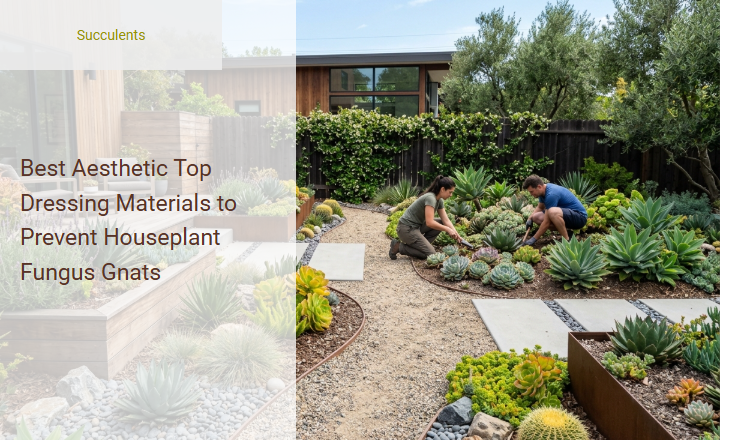
Few things disrupt the serenity of an indoor jungle like a sudden cloud of fungus gnats hovering around your favorite houseplants. These persistent pests thrive in the damp, organic top layer of potting soil, where they find the perfect moist environment to lay eggs and multiply.
Fortunately, applying a strategic top dressing grants a powerful dual benefit: it physically disrupts the gnat life cycle while instantly elevating your interior design with a clean, polished look. However, as an educational stipulation, please note that while a top barrier is an excellent preventative measure, it works best alongside proper watering practices rather than as a standalone cure for severe, active infestations.
By incorporating dry, inorganic materials such as fine horticultural sand, polished river pebbles, or coarse poultry grit, you create an inhospitable barrier for pests. Below, we will evaluate the best aesthetic top dressing materials that seamlessly blend pest prevention with high-end visual appeal for your indoor garden.
Read also: Top Dressing vs Bare Soil for Moisture Retention
The Duel of Aesthetics and Pest Control
Few things disrupt the serene beauty of a curated indoor jungle quite like the erratic, hovering flight of fungus gnats. These persistent pests thrive in moist potting soil, turning your thriving houseplant display into an annoying battlefield. Fortunately, you do not have to sacrifice style for sanitation. A thoughtfully chosen top dressing serves as a beautiful, highly functional barrier that enhances the visual appeal of your pots while permanently cutting off the lifecycle of these unwelcome invaders.
Horticultural Sand for a Minimalist Desert Look
For those who love clean lines and a modern, arid aesthetic, coarse horticultural sand is an exceptional choice. This medium creates a fine, tightly packed texture reminiscent of tranquil desert landscapes. Beyond its striking visual appeal, it performs a vital defensive function by acting as a suffocating blanket over the potting soil.
Why coarse sand is a superior physical deterrent:
- Its fine particles pack tightly, leaving zero gaps for adult gnats to crawl through.
- It dries out almost instantly after watering, eliminating the damp surface gnats require.
- The sharp texture abrasively wears down and suffocates emerging gnat larvae.
Decorative Gravel and Polished River Stones
If your home decor leans toward contemporary elegance, polished river stones and colored gravel offer a sophisticated touch. These heavy top dressings form a solid, interlocking shield over the damp potting mix. By blocking soil access completely, they prevent adult gnats from laying their eggs in the organic matter below.
Volcanic Pumice and Lava Rock for Raw Texture
Bring a rugged, natural element into your living space with the earthy textures of red or black lava rock and white volcanic pumice. These porous volcanic materials do more than just look beautifully organic; their high porosity ensures they dry incredibly fast, denying fungus gnats the moist habitat they need to survive.
- Red and black lava rocks offer a bold, contrasting frame for vibrant green foliage.
- White pumice provides a clean, volcanic aesthetic that brightens up dark corners.
- Their rapid-drying properties create a hostile, moisture-free environment for pest reproduction.
Crushed Oyster Shells for a Coastal Vibe
Evoke the calming spirit of the shoreline by adorning your houseplants with crushed oyster shells. This unique top dressing introduces a bright, beachy look characterized by soft pearlescent tones. More than just a pretty layer, the razor-sharp edges of these crushed shells act as a physical deterrent that shreds and discourages crawling gnat larvae attempting to reach the surface.
Diatomaceous Earth with a Decorative Layer
To completely eradicate a severe gnat infestation, you can implement a hidden tactical layer of diatomaceous earth. Apply a generous layer of this naturally occurring, microscopic powder directly onto the dry soil, and then cover it with your favorite aesthetic top dressing. This clever combination keeps your pots looking immaculately clean while the hidden powder below physically punctures and dehydrates any insect that tries to cross it.
Sleek Glass Gems for Modern Interiors
For a touch of vibrant artistry, colorful or clear glass gems offer a striking alternative to traditional stone. These smooth, reflective pieces catch and scatter incoming light, instantly elevating modern decor with a subtle shimmer. Functionally, their heavy and dense arrangement forms an impenetrable physical barrier that stops gnats right in their tracks.
- They reflect natural light back up into the plant's lower leaves.
- They create a completely solid, non-porous layer that pests cannot bypass.
- They are easily washed and reused whenever you decide to repot.
Lightweight Expanded Clay Pebbles (LECA)
Known for their earthy, uniform round shape, lightweight expanded clay pebbles (commonly called LECA) make an excellent modern top dressing. These clay balls dry almost instantly on the surface, denying gnats the critical surface moisture they need to deposit eggs. By choosing LECA, you enjoy a clean, geometric aesthetic while keeping your plants entirely inhospitable to breeding insects.
Master the Depth: How to Properly Apply Top Dressing
Achieving total victory over fungus gnats requires more than just sprinkling a thin layer of material over your soil. To build an effective barrier, you must follow specific application guidelines to ensure success without harming your plants.
- Maintain the sweet spot: Aim for a depth of at least 1 to 2 inches of top dressing to ensure gnats cannot burrow down to the organic soil.
- Protect the stems: Keep the dressing slightly pulled back from the main stem of the plant to prevent moisture retention and stem rot.
- Monitor drainage: Ensure your pot has adequate drainage holes so the lower soil layers do not remain waterlogged beneath the new barrier.
Sustaining a Gnat-Free Aesthetic Oasis
Once your beautiful top barrier is in place, maintaining its pristine appearance and insect-blocking power depends on your ongoing care routine. Adjusting your watering habits is the most critical step in preserving this balance. By adopting bottom watering techniques, you draw moisture directly to the root zone while keeping the top dressing completely bone-dry, ensuring long-term success and a beautiful, pest-free home environment.
Summary
Managing houseplant fungus gnats can be both a practical and aesthetic endeavor. Fungus gnats thrive on the moist organic matter in topsoil, where they lay their eggs. Applying a dry, physical barrier-known as a top dressing-is an effective, chemical-free way to disrupt their life cycle by preventing adult gnats from reaching the soil and newly hatched larvae from emerging.
This article highlights the best aesthetic top dressing materials that combine pest prevention with visual appeal. Recommended options include coarse horticultural sand, decorative river rocks, colorful aquarium gravel, fine pumice, and chicken grit. These materials drain quickly, keeping the surface dry and inhospitable to pests. By selecting a top dressing that complements your interior decor, you can successfully eradicate fungus gnats while beautifully elevating the presentation of your indoor garden.
Leave a comment