
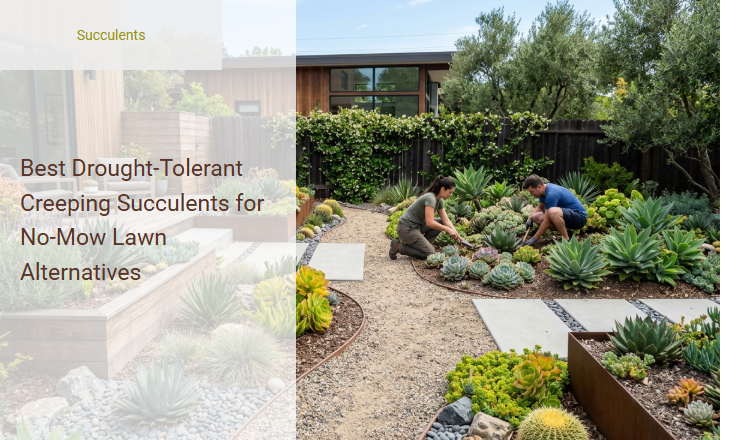
Maintaining a lush, traditional turf lawn in arid climates has become an increasingly costly and exhausting battle. Homeowners routinely struggle with soaring water bills and the relentless chore of weekly mowing, particularly as regional water restrictions tighten. However, simply removing your turf often leaves the landscape looking barren and uninviting.
Transitioning to creeping succulents offers a vibrant, living carpet that slashes irrigation needs by up to 90% while adding striking year-round texture. To succeed, it is crucial to understand that while these plants are highly resilient, they are best suited for low-to-moderate foot traffic and require excellent soil drainage.
Hardy species like Sedum album (White Stonecrop) and Delosperma cooperi (Cooper's Ice Plant) prove that a water-wise lawn alternative can be both highly functional and visually stunning. In this guide, we will evaluate the best creeping succulent varieties for your specific zone, analyze their soil requirements, and outline a step-by-step plan to establish your new, low-maintenance landscape.
Read also: Sedum vs Delosperma for Ground Cover
Reimagining the Lawn: The Rise of Creeping Succulents
Traditional green lawns, while historically prized, demand immense amounts of water, constant mowing, and chemical fertilizers to stay pristine. As climate shifts and water conservation becomes imperative, homeowners are turning to a brilliant, sustainable alternative: creeping succulents. These low-growing, drought-tolerant plants form lush, living carpets that thrive where turfgrass fails, redefining modern landscape aesthetics with minimal effort.
Why Choose Creeping Succulents as Turf Alternatives?
Replacing high-maintenance turf with succulent groundcovers provides numerous ecological and practical benefits for the modern homeowner.
- Water Conservation: Succulent groundcovers use up to 80% less water than traditional lawns once established.
- Low Maintenance: These plants eliminate the need for weekly mowing, edging, and heavy fertilization.
- Soil Erosion Control: Deep, fibrous root networks bind the soil together, preventing runoff during heavy rains.
Sedum Album: The Resilient White Stonecrop
Sedum album, commonly known as White Stonecrop, is a tough-as-nails groundcover that forms a dense, carpet-like mat of succulent green leaves. It exhibits extreme drought tolerance, turning a beautiful reddish-bronze in cold or dry conditions, and bursts into a cloud of star-shaped white blooms during the summer.

Delosperma: Vibrant Ice Plants for Heavy Color
For homeowners seeking a dramatic splash of color, Delosperma (Ice Plant) is an exceptional choice. This fast-growing, flowering groundcover thrives in hot, dry conditions with minimal water, producing daisy-like blossoms that open in the sun. To ensure success, full sun exposure and sharply draining soil are absolute cultivation requirements for these resilient beauties.
Sempervivum: Structural Beauty with Hens and Chicks
To add architectural interest and geometric texture to your outdoor space, Sempervivum tectorum-popularly known as Hens and Chicks-is unmatched. This hardy succulent forms tight, rosette-shaped clusters that interlock to create a dense, low-profile tapestry. Because of their fleshy, rigid leaves, they are ideal for low-traffic garden zones where their structural beauty can be appreciated without being crushed.
Sedum Acre: The Golden Carpet Groundcover
Sedum acre, or Goldmoss Stonecrop, features bright, yellowish-green foliage that quickly spreads to form a brilliant golden carpet. Growing only a few inches tall, it is the perfect living filler for tucking into the tight gaps between stepping stones and pathways.
Preparing the Soil for Succulent Success
Succulents hate "wet feet." Ensuring proper drainage is the most critical step in establishing a healthy succulent lawn and preventing root rot.
- Clear existing turf grass, weeds, and debris from the designated planting zone.
- Till the soil to a depth of six inches to loosen compacted earth.
- Incorporate coarse sand, pea gravel, or pumice to vastly improve drainage capacity.
- Level the planting bed gently to prevent water from pooling in low spots.
Establishment and Watering Guidelines
While established succulents require virtually no supplemental water, newly planted plugs need a structured routine to develop deep, resilient roots.
Always use the "soak and dry" method: water the soil thoroughly until completely saturated, then allow it to dry out entirely before watering again. Do not water wet soil.
Navigating Foot Traffic: Stepping Stones and Pathways
Unlike traditional grass, creeping succulents cannot withstand heavy, repetitive footsteps. To preserve your living carpet, integrate flat stepping stones or flagstone pathways directly into the design. This creates a clear walking path while protecting the delicate succulent foliage. Avoid walking directly on the fleshy leaves to prevent bruising and stem breakage.
A Greener, Easier Future for Home Landscapes
Transitioning from a traditional grass lawn to a creeping succulent carpet is a powerful step toward ecological responsibility and effortless curb appeal. By choosing drought-tolerant groundcovers, you drastically reduce water waste, eliminate noisy mowing, and invite vibrant life back into your soil. Embrace this modern landscape revolution to enjoy a beautiful, resilient garden that works with nature rather than against it.
Summary
Replacing traditional, high-maintenance grass lawns with creeping succulents is an eco-friendly and visually stunning alternative for modern landscaping. This guide highlights the best drought-tolerant, low-growing succulents that thrive with minimal water, making them ideal for arid climates and water-conscious homeowners looking to slash their utility bills and conservation footprint.
Popular varieties such as creeping Sedum (stonecrop), vibrant Delosperma (ice plant), and tough Dymondia margaretae offer dense, weed-suppressing ground cover that requires absolutely no mowing. In addition to extreme drought resistance, these hardy plants help prevent soil erosion, withstand light foot traffic, and produce beautiful blooms that support local pollinators. Embracing a succulent-based "no-mow" lawn allows homeowners to trade exhausting yard work for a sustainable, fire-resistant, and highly textured landscape that remains vibrant and colorful year-round.
Leave a comment