
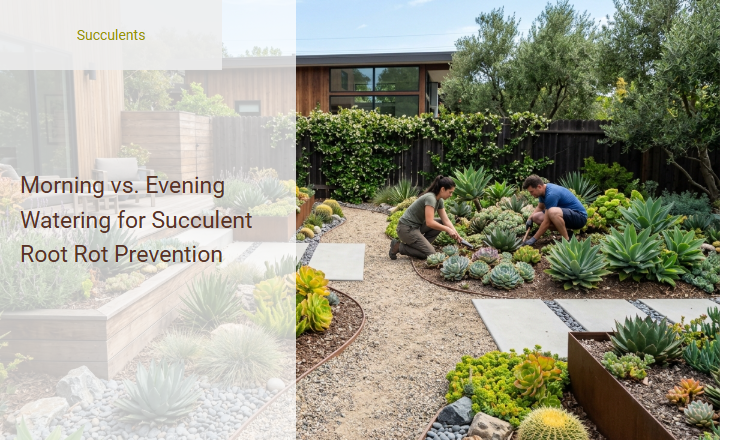
Many succulent enthusiasts know the heartbreak of watching a prized specimen turn mushy and translucent from the bottom up-the unmistakable sign of lethal root rot. Before adjusting your watering can, it is crucial to understand how soil evaporation rates and ambient humidity shift between day and night. Mastering this delicate timing grants you the ultimate reward: vibrant, resilient plants that thrive instead of just survive.
However, optimizing your schedule is not a magic cure-all; even a perfect routine cannot compensate for compacted soil or pots lacking drainage holes. For highly moisture-sensitive species like Echeveria or the Jade plant (Crassula ovata), proper timing is simply the final piece of the health puzzle. In this article, we will analyze the biological differences between morning and evening irrigation, evaluate their impact on fungal prevention, and outline a strategic watering plan to protect your collection.
The Delicate Balance of Succulent Hydration
Succulents are naturally adapted to arid environments, storing water in their fleshy leaves and stems to survive prolonged droughts. However, this unique adaptation makes them highly susceptible to overwatering, with root rot being the number one killer of these resilient plants. Finding the perfect hydration routine is a delicate balancing act. Growers often find themselves debating whether a morning or evening watering schedule is the best choice for protecting their plants from devastating rot.
Understanding Root Rot in Succulents
Root rot occurs when succulent roots are subjected to prolonged moisture, creating an anaerobic environment devoid of oxygen. Because plant roots need to breathe, wet soil suffocates them, leading to tissue decay. This lack of oxygen stresses the plant, making it highly vulnerable to opportunistic soil-borne fungi. The critical trigger for these destructive pathogens is the duration of wetness-the longer the soil remains soggy, the more likely fungal spores will germinate and destroy the root system.
The Case for Morning Watering: Working with Nature
Harnessing Sunlight and Temperature
Watering your succulents in the morning aligns perfectly with the natural daily cycle of the environment. As the sun rises, temperatures begin to climb, which aids in the rapid evaporation of excess water from both the soil and the plant's leaves.
During the morning hours, plants are waking up and actively preparing for metabolic processes. Providing water at this time ensures that succulents can absorb the hydration they need while the natural heat of the day takes care of the rest, preventing water from pooling unnecessarily around the roots.
How Morning Hydration Prevents Fungal Growth
Morning watering supports the physiological process of transpiration, where plants pull water through their roots and release it as vapor. Because the sun stimulates this process, the plant efficiently utilizes the moisture provided. This active uptake, combined with daytime warmth, results in quick-drying soil that dries out before fungal spores have a chance to take hold. Without sustained dampness, dangerous pathogens cannot thrive, keeping the root system healthy and intact.
The Perils of Evening Watering
Watering your succulents in the evening introduces several environmental hazards that can compromise plant health. As night falls, the temperature drops, and the sun is no longer available to drive evaporation. This leaves the soil damp for an extended period, which is highly dangerous for succulents.
- Prolonged soil dampness that suffocates root systems.
- Increased atmospheric humidity which prevents leaves from drying.
- Colder soil temperatures that slow down plant metabolism.
- Ideal breeding grounds for nocturnal pests and fungal spores.
Environmental Exceptions to the Rule
Extreme Climates and Indoor Setups
While morning is generally best, there are certain situations where evening watering is acceptable or even preferred. In extremely hot, arid desert climates, morning water can evaporate too quickly, or worse, heat up in the sun and scald the shallow roots. In these intense conditions, watering at dusk allows the plant to absorb moisture overnight without thermal stress.
Similarly, indoor growers who utilize highly controlled environments with consistent air movement, fans, and dehumidifiers might find evening watering works well, as artificial airflow mimics the drying effects of daytime conditions.
Identifying Early Signs of Succulent Root Rot
Catching the signs of root rot early is crucial for saving your plant before the damage becomes irreversible. Because the decay starts underground, you must monitor the lower leaves and stems closely for changes.
- Translucent leaves that appear water-logged and mushy to the touch.
- Yellowing foliage, particularly starting at the base of the plant.
- Mushy, dark stems near the soil line, indicating that decay has spread upward.
- Soft, black roots that easily fall apart when handled.
The "Soak and Dry" Method Explained
To keep your succulents thriving, you should master the soak and dry method. This technique involves watering the soil thoroughly until water drains out of the bottom of the pot, ensuring the entire root system receives moisture. After this deep watering, you must allow the soil to dry out completely before watering again. This cycle of heavy moisture followed by drought mimics the succulent's natural habitat and encourages deep, healthy root growth.
The Role of Soil and Potting Media in Moisture Control
Optimizing the Growing Medium
Even the perfect watering schedule cannot save a succulent planted in the wrong soil. Standard potting soil retains too much water, which defeats the purpose of morning watering. To ensure success, you must use a well-draining grit mixture.
Adding inorganic materials like pumice, perlite, or coarse sand to your soil mix drastically increases aeration. This coarse texture allows excess water to escape rapidly, working hand-in-hand with morning sunlight to dry the pot quickly and keep rot at bay.
Setting Your Ultimate Succulent Watering Schedule
Establishing a successful routine requires aligning your watering habits with the plant's natural rhythms. Choosing morning watering stands as the superior choice for most growers, as it utilizes daytime warmth and light to prevent prolonged dampness. By watering early in the day, you provide the safest possible environment for your plants to drink and dry.
As a final actionable rule of thumb, always check the soil moisture with a wooden chopstick or moisture meter before watering, ensuring the pot is dry all the way to the bottom to keep your root systems vibrant and healthy.
| Comparison Factor | Morning Watering | Evening Watering |
|---|---|---|
| Foliage Drying Speed | Rapid. Rising sun and wind dry wet leaves quickly, preventing fungal spore germination. | Very slow. Water sits on leaves and crown overnight, fueling mold and black rot. |
| Soil Moisture Retention | Balanced. Soil absorbs moisture while daytime evaporation prevents prolonged waterlogging. | Excessive. Zero evaporation leads to saturated, oxygen-deprived soil, suffocating roots. |
| Pathogen Proliferation | Suppressed. UV light and dry conditions naturally inhibit root-rot and damping-off fungi. | High. Cool, dark, and damp environment stimulates Pythium, Phytophthora, and Rhizoctonia. |
| Rot Risk Level | Low (Optimal for plant health) | High (Severe root and crown rot danger) |

Leave a comment