
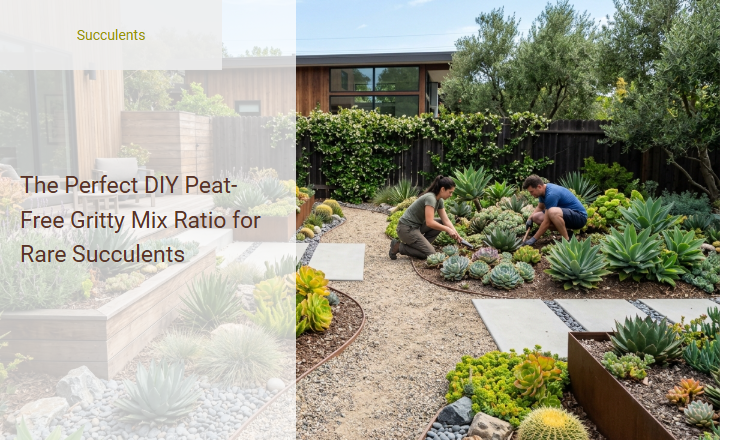
Watching a prized, expensive rare succulent succumb to root rot is a heartbreaking rite of passage for many collectors. Before addressing drainage solutions, we must first examine traditional potting mediums. Standard commercial soils rely heavily on peat moss, which degrades rapidly and retains moisture far too long, ultimately suffocating delicate root systems.
Transitioning to a custom, peat-free gritty mix grants your plants immediate access to vital root zone oxygen, unlocking vibrant stress colors and preventing fungal pathogen growth. However, successful cultivation requires a crucial stipulation: your specific microclimate, local humidity, and pot selection must dictate your final ingredient proportions. For example, highly sensitive species like the powdery Echeveria laui or choice Haworthia cultivars require a much higher ratio of inorganic minerals to survive.
Below, we will break down the essential peat-free components, outline the precise ratios for different environmental conditions, and provide a step-by-step guide to mixing your own premium substrate.
Read also: Peat Moss vs Coco Coir for Organic Matter
Why Rare Succulents Demand a Peat-Free Gritty Mix
Rare and delicate succulents require specialized drainage to thrive because their native environments are typically arid, rocky, and nutrient-poor. Traditional peat-based soils hold onto moisture for far too long, suffocating the roots and rapidly leading to devastating root rot. By switching to a peat-free gritty mix, you mimic these natural habitats while enjoying significant environmental benefits. Avoiding peat preserves precious peatland ecosystems, which are vital carbon sinks, while drastically improving the long-term health and survival rates of your prized botanical collection.
The Hidden Dangers of Standard Potting Soil
Standard commercial potting mixes pose a silent threat to exotic succulents. Over time, the fine particles in these soils compact tightly, squeezing out essential air pockets and trapping stagnant moisture directly around delicate root systems. This prolonged wetness creates an anaerobic environment where pathogens thrive, turning your pot into an ideal breeding ground for pests such as fungus gnats and root mealybugs. Once these infestations and fungal diseases take hold, rescuing a rare specimen becomes incredibly difficult.
Understanding the Science of Gritty Mixes
The physics of a gritty mix revolves around eliminating the perched water table-the layer of saturated soil that naturally sits at the bottom of a container. Standard soils exhibit strong capillary action, pulling water upward and keeping the root zone wet. In contrast, a gritty mix utilizes a larger, uniform particle size to break this capillary pull. This ensures that excess water drains instantly through the gravity-fed spaces, keeping vital oxygen flowing directly to the roots and preventing suffocation.
Core Components of the Ultimate Peat-Free Blend
To create a balanced, highly functional growing medium, you must combine three distinct structural elements. This ensures your rare succulents receive the perfect balance of moisture, airflow, and physical support:
- An aerating agent to maximize drainage and prevent compaction.
- An organic, sustainably sourced water-retentive element to provide controlled moisture.
- A mineral-rich structural agent to facilitate nutrient exchange and stabilize the root system.
Pumice: The Backbone of Drainage
Horticultural pumice is an essential volcanic rock that serves as the physical backbone of this specialized mix. Its highly porous structure contains countless microscopic pockets that trap minimal, healthy moisture while allowing the surrounding space to remain filled with fresh oxygen. Because pumice is lightweight and structurally stable, it will never break down or compact, ensuring your soil structure remains permanently aerated.
Coconut Coir: The Sustainable Peat Alternative
Coconut coir pith or fine chips represent the ideal eco-friendly replacement for unsustainable peat moss. Coir boasts a near-neutral pH, unlike highly acidic peat, and possesses incredible re-wetting capabilities, meaning it easily absorbs water even after drying out completely. Additionally, its tough, fibrous nature makes it highly resistant to compaction, ensuring the organic portion of your mix stays fluffy and breathable for years.
Calcined Clay: Managing Nutrient Retention
Calcined clay, often sold as Turface, is a kiln-fired ceramic clay that plays a crucial role in nutrient management. It features an exceptionally high cation exchange capacity (CEC), which allows it to attract, bind, and slowly release essential nutrients back to the succulent roots when they need it most. This prevents nutrients from washing away during watering sessions while adding weight and stability to the pot.
The Golden Ratio: 1:1:1 DIY Formula
For rare and highly rot-prone succulents, the absolute best recipe is the classic 1:1:1 volumetric ratio. By combining equal parts of pumice, coconut coir, and calcined clay, you create a perfectly balanced environment. This precise formula offers just enough moisture retention to keep the plant hydrated without ever risk of waterlogging, giving you complete control over the root zone's hydration cycle.
How to Sift and Prepare Your Mix
Preparation is key to ensuring your gritty mix performs optimally. Fine dust and small debris can clog the air spaces, defeating the purpose of your hard work.
- Sift the ingredients: Run your pumice and calcined clay through a 1/4-inch mesh screen to discard any fine dust and retain only uniform, larger particles.
- Wash the particles: Rinse the sifted minerals thoroughly with clean water to remove any lingering residue.
- Hydrate the coir: Fully expand your coconut coir block in water, then squeeze out the excess moisture.
- Mix thoroughly: Combine the three elements in equal volumes until you achieve a completely uniform, gravelly distribution.
Long-Term Maintenance and Watering Strategies
Because this gritty mix drains so rapidly, you will need to adjust your traditional watering habits. Instead of light sips, water your succulents thoroughly until moisture flows freely from the drainage holes, ensuring the porous elements absorb what they need. Because this mineral-heavy substrate is naturally low in nutrients, it is highly recommended to apply a weak, balanced liquid fertilizer with every second or third watering during the active growing season to keep your rare collection vibrant and strong.
Summary
This guide explores how to create the ultimate DIY peat-free gritty mix tailored specifically for rare succulents. Traditional commercial potting soils often retain too much moisture, leading to devastating root rot in delicate and valuable species. By transitioning to a peat-free, gritty alternative, growers can successfully mimic the natural, well-draining, and rocky habitats of these plants.
The ideal recipe balances drainage, aeration, and minimal water retention using a customizable ratio of inorganic components like pumice, lava rock, and calcined clay, alongside sustainable organic alternatives like coconut coir. A classic 1:1:1 ratio of pumice, calcined clay, and pine bark (or granite) provides the perfect structural integrity. This specialized mix prevents soil compaction, ensures rapid drying, and promotes robust, healthy root systems, giving rare succulents the optimal environment to thrive.
Leave a comment