
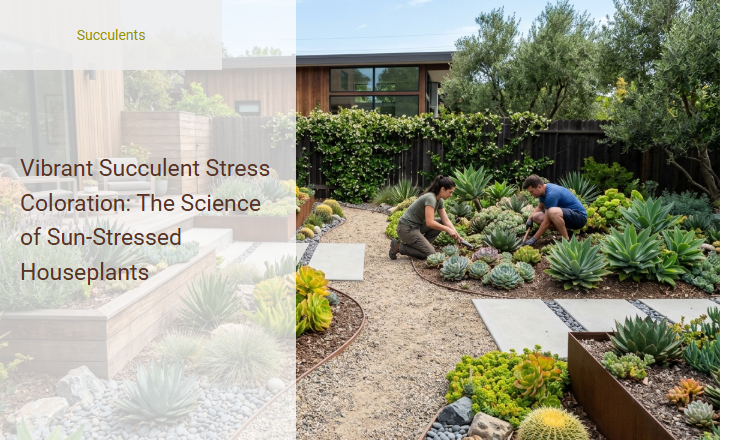
Many succulent enthusiasts bring home vibrant, sunset-hued specimens only to watch them gradually fade into a uniform, disappointing green on their windowsills. While standard care guides focus purely on basic plant survival, plant biology reveals that these shifting pigments are actually dynamic, protective responses to environmental factors. Mastering the science of "sun-stress" grants growers the precise ability to curate a brilliant, custom aesthetic palette of pinks, purples, and deep reds.
However, this transformation requires a clear stipulation: intentional stress must be carefully managed to avoid permanent tissue damage. When executed correctly, varieties like the blush-pink Echeveria or the fiery-tipped Sedum rubrotinctum demonstrate the stunning potential of controlled environmental exposure. In this guide, we will deconstruct the physiological mechanisms of anthocyanin production, analyze the crucial balance of light and temperature, and provide a safe, step-by-step framework to color your collection.
Read also: Direct Sunlight vs Indirect Light for Leaf Coloration
Introduction: The Paradox of Beautiful Stress
In the world of indoor gardening, stress is typically viewed as a harbinger of decline. However, when it comes to succulents, environmental tension unlocks a breathtaking secret. Under specific conditions, these resilient plants undergo a transformation known as stress coloration. This phenomenon changes muted greens into brilliant shades of crimson, deep purple, amber, and gold. Far from a sign of impending death, this vibrant shift is an evolutionary triumph-a survival mechanism that double-acts as a visual masterpiece for the observant indoor horticulturist.
The Evolutionary Purpose of Plant Pigmentation
Succulents do not change color because they are failing; they do so to survive. In their native habitats-ranging from arid African deserts to high-altitude American plains-these plants face intense environmental pressures. The adaptation of shifting pigments is a form of *photoprotection*. When resources are scarce or solar radiation is punishing, the plant synthesizes protective compounds to shield its delicate photosynthetic machinery, ensuring survival in *xerophytic* conditions rather than succumbing to the elements.
Solar Fuel: How Sunlight Triggers the Shift
Sunlight is the primary driver of succulent coloration. When exposed to intense ultraviolet (UV) radiation, chlorophyll-the green pigment responsible for capturing energy-becomes overloaded. To prevent cellular degradation, the plant activates accessory pigments that act as natural sunscreen.
"When light absorption exceeds the capacity of photosynthetic electron transport, plants must dissipate the excess energy to prevent oxidative damage to their chloroplasts."
By absorbing excess UV rays, these vibrant pigment layers allow the succulent to safely manage energy levels without damaging its core internal structures.
Temperature Fluctuations as Color Catalysts
While light sets the stage, temperature shifts act as a powerful catalyst for dramatic color changes. Extreme temperature swings, particularly the transition to cooler autumn nights, alter how plants process energy.
The effects of temperature variations on succulent cell chemistry are distinct:
- Cool Temperatures (Below 50°F / 10°C): Cold slows down metabolic activity and stunts chlorophyll production. This allows the more stable, underlying pigments to become dominant, turning leaves deep red or purple.
- High Heat (Above 90°F / 32°C): Extreme heat increases respiration rates, prompting the plant to generate protective stress pigments to prevent thermal cell damage and minimize moisture loss.
The Impact of Controlled Drought and Osmotic Stress
Water deprivation is another key factor in pigment synthesis. When a succulent goes without water, it experiences a drop in cellular turgor. This water deficit increases the internal osmotic pressure within the plant's tissues. As cellular fluids become highly concentrated, the concentration of colorful protective compounds rises, resulting in a dramatic deepening of leaf colors. This response helps protect the plant's internal structures during prolonged dry spells.
Chemical Magic: Anthocyanins, Carotenoids, and Betalains
The stunning colors observed in stressed succulents are driven by three primary pigment classes: anthocyanins, carotenoids, and betalains. Anthocyanins are water-soluble pigments that produce striking red, purple, and blue hues in response to cold and light stress. Carotenoids, which are always present but often masked by chlorophyll, yield brilliant yellows and oranges as green tones fade. In specific families like Cactaceae, betalains replace anthocyanins, creating highly saturated pinks and yellows. Together, these compounds serve as a chemical shield against environmental stressors.
Distinguishing Healthy Stress from Actual Damage
While stress coloration is highly desirable, growers must learn to distinguish between a healthy, vibrant defense mechanism and a plant in distress. Overstepping the line can lead to irreversible cellular damage.
- Check leaf texture: Healthy stressed leaves remain firm and plumb. Soft, translucent, or mushy leaves point to rot, while overly wrinkled, flat leaves indicate severe dehydration.
- Inspect for sunburn: Look for dry, papery, white or dark brown patches on the leaves. Unlike a uniform color change, these patches indicate scorched tissue that cannot photosynthesize.
- Examine growth points: Ensure the center of the rosette or the newest growth remains healthy and active, even if the outer leaves display deep stress tones.
Practical Steps to Safely Stress Your Indoor Succulents
Stressing indoor succulents requires a careful, methodical approach. Sudden, drastic changes can shock and kill your plants, so gradual adjustments are essential for achieving vibrant colors safely.
- Gradually increase light intensity: Slowly acclimate your plants to high-output full-spectrum LED grow lights over a period of two weeks, eventually providing 12 to 14 hours of daily exposure.
- Implement "soak and dry" watering: Extend the dry period between waterings. Wait until the soil is completely bone-dry and the lower leaves show slight wrinkling before watering thoroughly.
- Introduce cool night temperatures: If possible, place your succulents near a drafty window during autumn or lower your indoor thermostat at night to mimic desert temperature drops.
Top Succulent Species with Dramatic Color Potential
Not all succulents respond to stress in the same way. Some species possess a genetic predisposition for jaw-dropping color transformations when properly stimulated.
- Echeveria 'Perle von Nurnberg': Shifts from a dusty grey-green to intense shades of violet and deep pink.
- Sedum rubrotinctum (Jelly Bean Plant): Its bright green, bean-shaped leaves develop brilliant cherry-red tips under intense sunlight.
- Euphorbia tirucalli (Firesticks): Transitioning from basic green to striking shades of fiery orange and bright yellow during cooler months.
- Kalanchoe luciae (Paddle Plant): The flat, paddle-like leaves turn a deep crimson along the margins when exposed to cold and direct sun.
Conclusion: Nurturing Resilient Beauty
Understanding the science behind succulent stress coloration shifts our perspective on plant care. These vivid hues are not a cry for help, but rather a display of biological resilience and adaptation. By learning to safely navigate these environmental triggers, indoor gardeners can cultivate a dynamic, living canvas that celebrates the strength and beauty of these desert survivors.
Summary
The article "Vibrant Succulent Stress Coloration: The Science of Sun-Stressed Houseplants" explores the fascinating phenomenon of environmental stress transforming ordinary green succulents into vibrant masterpieces of red, purple, and orange. Far from indicating poor health, this color shift is a natural defense mechanism. When exposed to stressors such as intense sunlight, cool temperatures, and restricted watering, succulents produce protective pigments like anthocyanins and carotenoids to shield themselves from UV damage.
The guide explains the delicate balance required to safely induce these stunning hues-a process known as "sun-stressing"-without harming the plants. By carefully managing light exposure, temperature fluctuations, and watering schedules, indoor gardeners can mimic arid natural habitats. This scientific approach allows enthusiasts to safely bring out their houseplants' most brilliant colors while maintaining their long-term health and resilience.
Leave a comment