
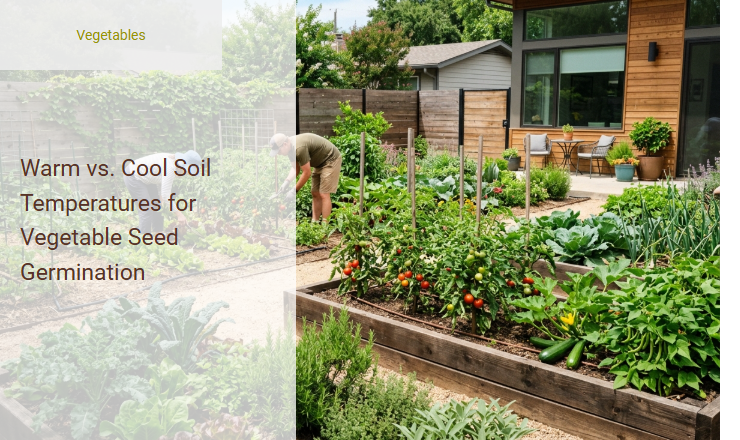
Every spring, home gardeners and commercial growers alike face the frustrating disappointment of sown seeds that simply refuse to sprout, resulting in wasted labor, lost revenue, and empty seedling trays. While it is tempting to blame seed viability, this failure usually lies in a fundamental misunderstanding of the invisible thermodynamic environment of the soil itself.
Mastering these soil temperature dynamics grants you the power to slash germination windows in half and secure near-perfect emergence rates. However, optimizing thermal conditions is not a singular cure-all; success stipulates that you balance heat with precise moisture management and proper sowing depths. For example, while warm-season crops like tomatoes require a balmy 85°F (29°C) to sprout, cool-season staples like spinach will enter thermal dormancy if soil temperatures exceed 75°F (24°C).
In this guide, we will analyze the precise temperature thresholds for popular vegetables, compare the biological mechanics of warm versus cool germination, and outline actionable methods to regulate your soil's microclimate.
Understanding the Role of Soil Temperature in Seed Germination
While spring sunshine and warming breezes often signal the start of the gardening season, it is the subterranean environment that truly dictates when life begins. Air temperature can fluctuate wildly from day to night, but the earth beneath acts as a thermal buffer, steadily absorbing and holding heat. For a dormant seed buried in the dark, this subterranean warmth is the definitive signal to wake up. Soil temperature, rather than air temperature, acts as the true environmental trigger that coaxes a seed to crack its shell and begin its journey upward.
The Biological Trigger: How Temperature Affects Seed Metabolism
Within every tiny seed lies a sleeping embryo waiting for the precise physical cue to initiate its life cycle. When the surrounding soil reaches its ideal thermal threshold, moisture absorption triggers a cascade of internal chemical reactions. Hydration under the right thermal conditions activates crucial enzymes like amylase, which rapidly break down stored starches and lipids into usable sugars. This mobilized energy fuels cellular division at the root tip, driving the radicle outward into the soil to establish a secure anchor and begin nutrient uptake.
Cool-Season Vegetables: Thriving in Chilly Ground
Many traditional spring crops possess unique evolutionary traits that allow them to sprout when the ground is still cold to the touch. These hardy plants have developed specialized cellular membranes and enzymes that remain functional even when thermal energy is minimal. Planting these early-season varieties allows gardeners to maximize their growing space before the intense heat of summer arrives.
- Spinach: Capable of sprouting in ground that is barely above freezing.
- Peas: Adapted to germinate reliably in damp, early-spring soils.
- Radishes: Known for rapid emergence and growth in cool weather.
Temperature Ranges and Timelines for Cool-Season Germination
Understanding the specific thermal limits of cool-season crops helps prevent seed rot and ensures uniform stand establishment. While these seeds can sprout at lower thresholds, cooler temperatures naturally lengthen the time it takes for seedlings to emerge from the soil.
| Vegetable | Minimum Temp (°F) | Optimum Temp (°F) | Maximum Temp (°F) |
|---|---|---|---|
| Spinach | 35 | 70 | 85 |
| Peas | 40 | 75 | 85 |
| Radish | 40 | 85 | 95 |
Warm-Season Vegetables: Demanding Heat to Sprout
Unlike their cold-hardy counterparts, warm-season vegetables originate from tropical and subtropical climates. Consequently, their seeds require high soil temperatures to activate metabolic pathways. Placing these seeds into cold, wet spring earth often leads to metabolic stasis, leaving the seed vulnerable to fungal pathogens and decay before it ever has a chance to sprout.
- Tomatoes: Require consistent warmth to kickstart cellular division.
- Peppers: Demand high soil temperatures to prevent extended dormancy.
- Melons: Highly susceptible to rot if soil temperatures fall below their threshold.
Ideal Thermal Conditions for Warm-Season Crops
To achieve rapid and successful germination, warm-season crops demand significantly higher thermal inputs than cool-season varieties. Under ideal conditions, these seeds can emerge in a fraction of the time compared to when they are planted in marginal temperatures.
- Tomatoes thrive best when the soil registers between 75°F and 85°F, leading to sprouts in as little as five days.
- Peppers perform optimally when the ground reaches a steady 80°F to 90°F, accelerating their otherwise slow start.
- Melons require a minimum soil temperature of 70°F, with peak success occurring near 85°F.
The Consequences of Incorrect Soil Temperatures
Sowing seeds without checking the thermometer can lead to significant crop failure. When seeds are planted too early, they languish in cold, saturated soils, which exposes them to damping-off-a destructive fungal disease that causes young stems to collapse and wither. Conversely, planting too late into overheated summer soil can trigger thermodormancy, a protective state where seeds refuse to germinate to avoid heat stress.
"Success in the vegetable garden begins with respecting the thermal boundaries of your soil, as rushing the season often results in empty rows."
How to Accurately Measure Your Soil Temperature
To avoid guesswork, gardeners should use a dedicated soil thermometer to verify growing conditions. Relying on air temperature forecasts can be highly misleading, as the ground warms at a much slower pace.
- Insert the probe of the thermometer approximately two to three inches deep into the soil where you plan to plant.
- Take your readings consistently in the early morning, as this is when the soil is at its coolest point of the day.
- Repeat this measurement for three consecutive days to establish a reliable average temperature before sowing your seeds.
Practical Methods to Modify Soil Temperatures
If your local climate does not align with your planting timeline, you can actively manipulate the temperature of your garden beds. To accelerate warming in the early spring, utilizing raised beds is highly effective because they drain quickly and absorb solar heat from the sides. Additionally, covering the soil with black or clear plastic mulch traps radiant energy, raising soil temperatures by several degrees.
Conversely, during mid-summer, applying a thick layer of organic mulch like straw or wood chips insulates the soil and keeps it cool. Deploying shade cloth over the planting area also blocks intense solar radiation, protecting sensitive seeds from extreme heat.
Sowing Success: A Strategic Approach to Seasonal Planting
Aligning your planting calendar with the natural thermal cycles of the earth is one of the most effective ways to guarantee a thriving vegetable garden. By paying close attention to the conditions beneath the surface rather than simply looking at the sky, you can provide your seeds with the perfect environment to spark strong, uniform growth. Patience and observation will pave the way for a resilient garden and a truly bountiful harvest.
| Germination Factor | Warm-Season Germination | Cool-Season Germination |
|---|---|---|
| Optimal Temp. Range | 21°C to 32°C (70°F to 90°F) | 7°C to 20°C (45°F to 68°F) |
| Representative Crops | Tomatoes, peppers, squash, melons, corn, beans | Lettuce, spinach, kale, peas, radishes, carrots |
| Average Speed | Rapid (3 to 7 days) in warm soil | Steady (7 to 14 days) in cool soil |
| Low-Temperature Risk | Seed rot, damping-off, dormancy below 15°C (60°F) | Slower emergence, but resilient down to 4°C (40°F) |
| High-Temperature Risk | Desiccation, rapid substrate drying above 35°C (95°F) | Thermodormancy (germination failure) above 25°C (77°F) |
Leave a comment