
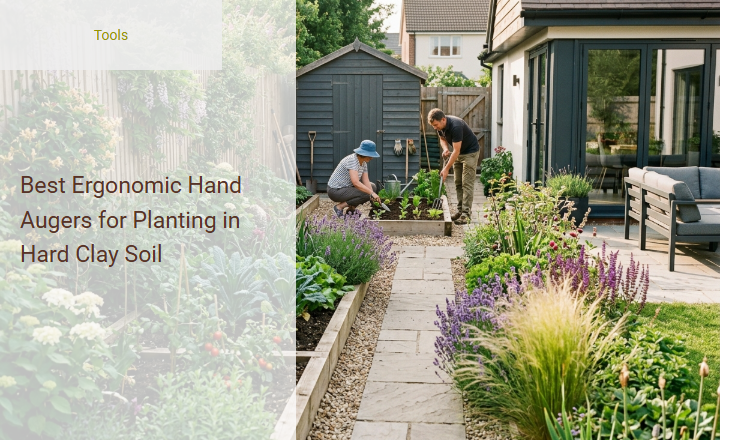
Attempting to pierce compacted, heavy clay soil with standard gardening tools is a recipe for physical exhaustion, joint strain, and ruined afternoons. The relentless resistance of dense, clay-heavy earth can turn a simple planting project into a grueling test of physical endurance.
While many gardeners instinctively reach for a traditional spade, these manual tools fail to leverage mechanical advantage, requiring repetitive bending and high-impact force. Transitioning to a specialized tool design grants you the ergonomic leverage needed to bypass this physical toll, transforming stubborn ground into a receptive planting bed with minimal effort.
However, successfully navigating clay requires a tool built for the task; standard models will bend or slip under pressure. True relief lies in specific engineering, such as heavy-duty steel flighting that actively slices through hardpan and extra-wide, padded T-handles that utilize your core body weight rather than raw wrist strength.
In this guide, we review the best ergonomic hand augers on the market, evaluating their cutting efficiency, grip comfort, and durability to help you garden pain-free.
Read also: Post Hole Digger vs Auger for Installing Fences
Taming Hard Clay: Why Traditional Digging Fails
Planting in heavy clay soil can feel like trying to dig through concrete. Traditional shovels and spades are poorly suited for this task, as they rely on brute force to break through dense layers. This method causes severe soil compaction, sealing off the earth and preventing roots from establishing. Furthermore, forcing a shovel into resistant ground places immense physical strain on your back, shoulders, and joints, turning a simple weekend gardening project into a source of chronic pain. Ergonomic hand augers offer an elegant, efficient solution by slicing cleanly into the earth with minimal resistance, preserving both your soil structure and your physical health.
The Science of Ergonomics in Clay Digging
Ergonomics in tool design is about matching the equipment to the human body's natural movements. When tackling dense clay, an ergonomic hand auger utilizes a long shaft and a balanced T-bar handle to eliminate the need for bending. This upright posture prevents severe lumbar strain and keeps the spine in neutral alignment. The wide handle design allows for dual-handed leverage, which distributes the rotational force evenly across both arms. This protects your rotator cuffs from overexertion and ensures proper wrist alignment, preventing repetitive strain injuries while maximizing the downward force exerted into the earth.
Must-Have Features for Clay-Busting Augers
Heavy-Gauge Welded Steel
Clay exerts incredible torsional resistance. A high-quality auger must be constructed from heavy-gauge, powder-coated steel to prevent the shaft from bending or snapping under pressure.
Aggressive Spiral Flighting
The flighting (the spiral blade) needs a sharp, tapered leading edge to slice through packed clay particles, drawing the soil upward rather than simply compacting it further.
Non-Slip Rubberized Grips
Sweaty hands lose leverage quickly. Ergonomic grips made of thick, shock-absorbing rubber ensure your hands remain securely positioned, reducing friction blisters.
Top Ergonomic Hand Augers for Hard Soil
Selecting the right tool depends on your physical capability and the scale of your planting project. Below is a curated comparison of the leading manual and drill-powered hand augers designed to tame tough clay.
| Auger Model | Type | Key Ergonomic Feature | Best For |
|---|---|---|---|
| Pro-Force Manual T-Bar | Manual | Extra-Wide Padded Handle | Deep Taproot Weeding & Deep Planting |
| PowerPlanter Heavy Duty | Drill-Powered | Hex Shaft Non-Slip Fit | Mass Planting & Bulbs |
Manual vs. Drill-Powered Garden Augers
Manual T-Handle Augers
Manual T-handle augers offer unmatched depth control and tactile feedback. As you twist the tool into the ground, you can feel rocks and roots immediately, allowing you to adjust your angle before damaging the tool. While they require more physical effort than powered alternatives, their deliberate pace reduces the risk of sudden torque twists that can wrench your wrists.
Drill-Attached Auger Bits
Drill-powered augers leverage the mechanical speed of a cordless drill to bore through compacted clay in seconds. This drastically reduces the physical effort required for digging multiple holes. However, because they spin at high speeds, they require a strong grip and careful speed control to prevent the drill from kicking back violently when striking buried obstacles.
Deep Dive: The Ultimate Heavy-Duty Manual T-Handle Auger
For gardeners who prefer a traditional, reliable hand tool, the heavy-duty manual T-handle auger stands out. Built with solid steel construction and a thick welded shaft, this tool is designed specifically for stubborn clay soils. Its extra-wide handle is fitted with soft, non-slip rubber grips that minimize hand fatigue. The business end features a razor-sharp cutting tip that bites into dry clay without slipping sideways, allowing you to slice clean holes for bare-root saplings and deep-root vegetables.
Deep Dive: The Best Drill-Bit Auger for Compacted Clay
When efficiency is your primary goal, a heavy-duty garden drill auger bit is the ultimate choice. Engineered to fit any standard 3/8-inch or 1/2-inch cordless drill, this bit features a machined hex shaft that prevents slippage within the drill chuck under high torque. Its tight, continuous spiral flighting efficiently lifts pulverized clay out of the hole, leaving clean, loose soil behind. It is particularly effective for planting spring bulbs, bedding plants, and cultivating dense garden borders.
"I had to plant fifty bulbs in dense clay that hadn't been turned in twenty years. This drill attachment finished the job in under half an hour without my back aching the next day!" – Sarah M., Home Gardener
Step-by-Step Guide: How to Auger in Clay Safely
Operating an auger in high-resistance clay requires correct technique to avoid muscle strain or sudden tool binding. Follow these steps to ensure safe, easy drilling:
- Adopt a balanced stance: Position your feet shoulder-width apart and bend your knees slightly to lower your center of gravity.
- Position the tool vertically: Place the auger tip on the soil and ensure the shaft is perfectly perpendicular to the ground to avoid awkward angles.
- Use slow, controlled speeds: If using a drill, start on the lowest speed setting to maintain control and prevent high-torque kickback.
- Work in shallow increments: Drill down three to four inches, then pull the auger straight up to clear the heavy clay debris from the hole before drilling deeper.
Caring for Your Clay Auger: Maintenance and Longevity
Heavy clay is highly abrasive and retains moisture, both of which accelerate tool wear and rust. Proper post-gardening maintenance preserves the sharpness of the cutting edges and ensures the tool remains highly functional for years to come.
- Scrape and rinse: Remove all stuck clay immediately after use with a stiff brush and water, then dry the tool thoroughly.
- Oil the metal: Wipe down the steel shaft and spiral flighting with a light coat of household mineral oil to prevent rust formulation.
- Sharpen the cutting tip: Periodically touch up the leading cutting edge with a metal file to maintain its slicing efficiency.
- Protect the grips: Store the tool in a dry, shaded area to prevent UV rays from degrading the rubberized ergonomic grips.
Choosing the Right Tool for Your Garden's Success
Overcoming the challenges of compacted clay does not require brutal, back-breaking labor. By replacing outdated spades with modern, ergonomic hand augers, you work in harmony with your body's natural biomechanics. Investing in a dedicated clay-busting auger transforms heavy yard work into an efficient, pain-free process, protecting your body while helping your garden thrive.
Summary
Conquering hard clay soil is one of the toughest challenges for gardeners, but the right tools can make all the difference. This guide highlights the best ergonomic hand augers specifically designed to penetrate compacted, heavy clay with minimal physical effort. Traditional digging tools often cause wrist strain and back fatigue, but ergonomic augers feature padded, non-slip T-handles, heavy-duty steel construction, and optimized spiral flights that slice through tough earth efficiently.
By focusing on leverage and body mechanics, these top-rated augers allow you to dig perfect planting holes for bulbs, shrubs, and bare-root trees without exhausting your muscles. Whether you are a backyard enthusiast or a professional landscaper, choosing an ergonomic hand auger is the key to transforming frustrating clay-heavy gardening into a smooth, pain-free, and highly productive experience.
Leave a comment