
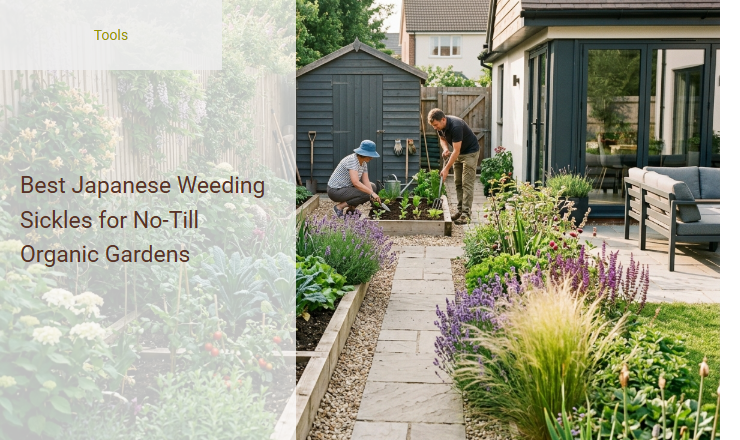
Managing invasive weeds in a no-till organic garden often feels like an uphill battle, especially when standard weeding methods threaten to destroy the delicate soil biology you have carefully cultivated. To preserve vital mycorrhizal networks, successful weed management must shift away from disruptive soil-churning toward precise, surface-level maintenance.
Traditional Japanese weeding sickles offer the perfect solution, granting gardeners unmatched precision to slice tough roots cleanly beneath the surface without disturbing the surrounding soil strata. It is important to stipulate, however, that these tools require a refined, pulling-and-slicing technique rather than heavy-handed hacking to protect both the blade and your soil structure. Proven designs like the hand-forged Nejiri Gama demonstrate how high-quality steel can transform tedious chore work into a highly efficient, low-impact practice.
In this guide, we review the premier Japanese weeding sickles on the market, analyzing their blade geometry, ergonomics, and durability to help you select the ideal tool for your regenerative garden.
Read also: Claw Weeder vs Stand Up Weeder for Eradicating Dandelions
Introduction to Japanese Weeding Sickles in No-Till Gardens
Maintaining a thriving no-till organic garden requires tools that respect the delicate subsurface ecosystem. Japanese weeding sickles, traditionally known as Kama, offer an elegant solution to weed management by targeting unwanted plants without disrupting soil layers.
Unlike aggressive cultivation methods that churn the earth, these specialized hand tools allow gardeners to slice weeds away cleanly. By integrating a Japanese weeding sickle into your routine, you can keep your garden beds pristine while protecting the vital structure of your living soil.
Why Japanese Sickles (Kama) Excel in No-Till Systems
Traditional tillage disrupts the biological equilibrium of the soil. Utilizing a Kama allows gardeners to practice in-situ weed suppression that aligns with organic principles.
These tools excel in conservation-minded systems due to several distinct biological advantages:
- Slicing at the soil line preserves the established networks of beneficial mycorrhizal fungi.
- Leaving the soil undisturbed prevents buried weed seeds from being brought to the surface to germinate.
- The remaining root systems decay naturally, creating channels for air and water while feeding soil microbes.
The Nejiri Kama: Best for Precision Surface Weeding
The Nejiri Kama is a favorite among organic growers who need to work in highly concentrated spaces. Featuring a sharp, angled blade and a remarkably lightweight design, this scraper sickle excels at weeding tight spaces between delicate crops.
By using the pointed tip of the Nejiri Kama, you can glide just under the soil surface to shear weed seedlings at the hypocotyl level, keeping your organic beds clean without damaging your main crops.
The Nokogiri Kama: Best for Tough, Fibrous Weeds and Cover Crops
When dealing with aggressive, woody weeds or terminating cover crops, the Nokogiri Kama is the ideal tool. This saw-toothed sickle features a razor-sharp serrated edge that grabs and cuts through tough, fibrous stems with minimal effort.
Instead of pulling plants up and disturbing the root zone, the Nokogiri Kama slices cleanly through thick grasses and cover crops at ground level, facilitating rapid organic mulching.
The Hoe-Style Kama: Best for Shallow Root Cutting and Scalping
For larger areas requiring rapid weed clearing, heavy-duty hoe-style weeding sickles provide exceptional leverage. These tools feature a robust blade designed for shallow root cutting and scalping large patches of weeds quickly.
By sliding the heavy blade just beneath the mulch, the hoe-style Kama severs weed systems at the subsurface level, leaving the precious topsoil undisturbed and ready for planting.
Key Features: Understanding Japanese Steel Types
The performance of any Kama relies heavily on the quality of its metal. Traditional Japanese tools are forged from specialized high-carbon steels, each offering distinct characteristics for organic gardeners.
- Shirogami (White Paper Steel): Known for its extreme purity, this steel can be sharpened to a scalpel-like edge, making it incredibly precise for delicate weeding tasks.
- Aogami (Blue Paper Steel): Infused with chromium and tungsten, this steel offers enhanced wear resistance and durability, retaining its sharp edge longer when scraping against gritty soil.
Ergonomics and Handle Length: Choosing the Right Fit
Selecting the appropriate handle length depends largely on your physical gardening style and plot size. Short-handled sickles offer unmatched precision for close-up, kneeling work, allowing you to feel the exact resistance of the soil and protect delicate crop roots nearby.
Conversely, long-handled options provide excellent ergonomic comfort for standing work. These longer tools reduce lower back strain in larger no-till plots, allowing you to clear paths and beds with a sweeping, comfortable motion.
How to Use a Japanese Sickle to Protect Soil Biology
To maximize the ecological benefits of your Kama, master the proper cutting technique to ensure the soil microbiome remains entirely intact.
- Position the blade parallel to the soil surface, resting just slightly below the mulch layer.
- Use a smooth, pulling motion toward your body rather than a hacking motion to slice through the weed stems.
- Leave the severed roots in the ground to decompose, maintaining channel pathways for soil biology.
Maintenance Guide: Sharpening and Rust Prevention
High-carbon steel requires regular care to maintain its legendary sharpness and prevent oxidation in humid garden environments.
- Clean off sap and soil residue immediately after use using water and a mild scrubbing pad.
- Dry thoroughly and apply a thin layer of protective Camellia oil (Tsubaki) to safeguard the blade from rust.
- Sharpen regularly with a quality wet whetstone, matching the factory bevel angle of the blade.
Choosing the Best Japanese Sickle for Your Garden
Selecting the ideal weeding sickle depends on your unique garden landscape and weed pressure. If your beds are dominated by small, tender annual weeds, a lightweight scraper will serve you best. For thick, established cover crops and woody wild growth, a serrated or heavy-duty model will prove indispensable.
Embracing these traditional Japanese tools allows you to maintain clean, highly productive beds while honoring the biological integrity of your soil. By working with the earth rather than disrupting it, you build a resilient, sustainable growing system for seasons to come.
Summary
For no-till organic gardeners, maintaining undisturbed soil structure is paramount, making aggressive tilling tools obsolete. Japanese weeding sickles, traditionally known as Kama, have emerged as the premier choice for precise, low-impact weed management. These specialized hand tools allow gardeners to slice weeds cleanly at or just below the soil surface, leaving the vital soil food web and beneficial microbial networks completely intact.
The guide highlights the best options on the market, focusing on the popular Nejiri Kama-ideal for swift, light scraping-and heavier-duty Japanese scythes designed for clearing tough perennials and harvesting cover crops. Crafted from high-quality carbon steel, these tools offer unmatched sharpness, ergonomic balance, and durability. Selecting the right sickle will significantly enhance your weeding efficiency while preserving the long-term health, moisture retention, and fertility of your organic, no-till garden beds.
Leave a comment