
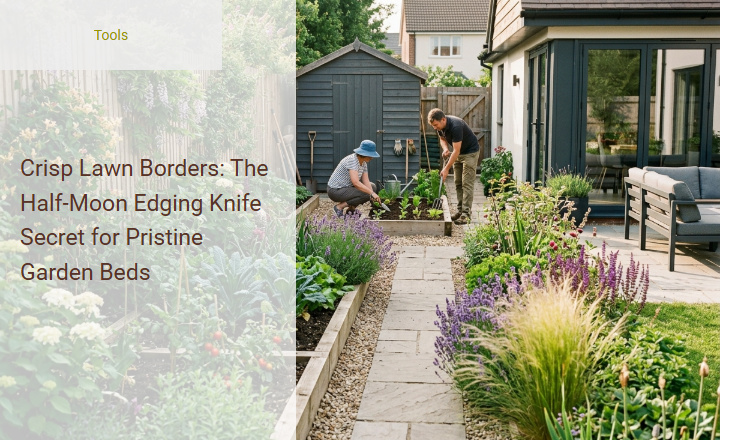
Maintaining a clean line between a lush lawn and garden beds is a constant, frustrating struggle for many homeowners. Despite hours of meticulous weeding, aggressive grass stolons relentlessly invade mulch zones, leaving once-defined borders looking ragged and unfinished.
While mechanical string trimmers offer a quick fix, they often create sloppy, uneven ruts rather than the sharp, architectural definition that characterizes high-end landscapes. Achieving that coveted, professional-grade finish actually relies on a classic hand tool: the half-moon edging knife. This simple implement grants gardeners the precise control needed to slice clean, vertical barriers that naturally deter turf encroachment.
However, pristine results stipulate a basic understanding of soil moisture levels and proper rocking techniques. For instance, carving precise arcs around formal rose beds or reclaiming overgrown borders alongside gravel pathways requires a deliberate, steady approach.
In this guide, we will unpack how to select the right half-moon edger, master the cutting technique, and maintain your tool for enduring, crisp garden borders.
Read also: Edging Knife vs Spade for Creating Borders
The Allure of Clean Garden Borders
There is an undeniable magic in a perfectly manicured lawn, but nothing defines outdoor space quite like crisp, clean borders. When the boundary between green grass and rich garden soil is sharply defined, the entire aesthetic of your home instantly shifts from casual to professionally curated. Achieving this high-end look does not require noisy, expensive machinery. Instead, the traditional half-moon edging knife remains the premier tool for creating flawless, classic lines that frame your plants beautifully.
Why Choose the Half-Moon Edging Knife?
While heavy gas-powered edgers and standard square spades are common garden implements, they lack the finesse required for truly immaculate lawn borders. The half-moon edging knife is specifically designed to master this task with unmatched precision.
- Precision and Control: The unique curved blade allows you to navigate tight corners and graceful sweeps with deliberate accuracy.
- Eco-Friendly Design: Operating entirely on human power, this tool produces zero emissions, runs silently, and saves electricity or fuel.
- Clean Cuts: Unlike standard spades, which can tear the sod, the thin, curved edge slices cleanly through dense grass roots without disrupting the surrounding lawn structure.
Selecting Your Perfect Edging Tool
To get the best results, you need a high-quality tool that stands up to compacted soils and stubborn root systems. Look for a half-moon edger crafted with a tempered stainless steel blade to ensure it resists rust and maintains its sharp edge over time.
Additionally, choose a sturdy T-shaped handle made from hardwood or lightweight fiberglass. This ergonomic shape provides maximum leverage and prevents the tool from twisting in your hands during tough cuts.
Preparing the Ground and Marking Your Lines
Before making a single cut, proper preparation ensures your final borders look straight and professional. Cutting blindly often results in wavy, uneven edges that disrupt the harmony of your garden beds.
- Clear any large stones, thick weeds, or debris away from the immediate perimeter of the lawn.
- For perfectly straight borders, drive wooden stakes into the ground at each end and tie a taut piece of string between them as a guide.
- For flowing curves, lay out a flexible garden hose or thick rope along the desired path, stepping back occasionally to inspect the flow from different angles of your yard.
Mastering the Half-Moon Technique
Using a half-moon edger is a physical art form that relies on correct posture and a fluid, rhythmic motion rather than sheer brute strength. Position yourself directly over the tool with your feet firmly planted. Align the blade of the edger with your guide marker, placing the center of the blade right on the line.
Step onto the foot tread with one foot, using your body weight to drive the blade straight down into the turf, aiming for a depth of about two to three inches. Once the blade is fully submerged, gently rock the handle from left to right. This rocking motion slices cleanly through the grass roots and separates the sod from the garden bed. Pull the blade straight up, step over a few inches, overlapping your previous cut slightly, and repeat the process.
Clearing the Cut: Creating the Perfect Trench
Once you have severed the sod along your marked line, the next step is removing the waste to reveal your crisp new border. Slicing the grass is only half the battle; clearing the debris is what creates the visual depth.

Using a hand trowel or a small garden spade, carefully lift out the severed clumps of grass and shake loose any valuable topsoil back into your flower beds. Shake the excess dirt off the grass roots and compost the discarded sod, leaving behind a pristine, vertical dirt wall.
The Secret of the "V" Shaped Barrier
The secret to keeping your borders sharp for months rather than weeks lies in the structure of the trench itself. A flat, shallow cut allows grass roots to quickly bridge the gap and invade your flower beds again.
"A proper V-shaped trench acts as a physical barrier that grass roots cannot easily cross."
To create this, make your first cut completely vertical at 90 degrees on the grass side. Then, on the garden bed side, shave the soil down at a 45-degree angle toward the base of your vertical cut. This deep "V" trench deprives wandering grass rhizomes of the soil and moisture they need to creep into your cultivated plantings.
Maintenance: Caring for Your Tool
A dull or rusty blade will tear grass roots instead of cutting them, making your work significantly harder and leaving messy, frayed edges. Proper maintenance guarantees your half-moon edger remains a reliable partner in the garden.
- Clean the blade thoroughly with a stiff brush and water after every use to remove clinging soil and moisture.
- Wipe the metal dry and apply a thin coat of lubricating oil or linseed oil to prevent rust during storage.
- Use a flat metal file to sharpen the beveled edge of the blade once a season, maintaining its original cutting angle.
Seasonal Timing for Edging Maintenance
While you can touch up your borders anytime, planning your edging around the seasons yields the most efficient and long-lasting results.
Moist, spring soil is incredibly easy to cut through, making early spring the ideal time for your primary deep cut. A late autumn touch-up keeps the garden looking neat through the dormant winter months.
| Season | Primary Goal | Action Required |
|---|---|---|
| Early Spring | Establishment | Cut a deep, clean "V" trench to define the beds for the growing season. |
| Mid-Summer | Maintenance | Trim away escaping grass runners and tidy up collapsing edges. |
| Late Autumn | Preservation | Clean up borders before winter to ensure a neat appearance in spring. |
The Lasting Impact of Professional Borders
Investing a small amount of physical effort into hand-edging your lawn rewards you with spectacular visual definition. This simple, mindful task does more than keep grass from invading your flower beds; it frames your plantings like a work of art. By mastering the use of the traditional half-moon edging knife, you achieve a level of landscaping precision that elevates your entire home. The rewarding sight of a clean, sharp soil line against a lush green lawn proves that some of the best gardening results are still achieved by hand.
Summary
Achieving sharp, professional garden borders doesn't require expensive landscaping services or complex machinery; the secret lies in a classic manual tool: the half-moon edging knife. This article explores how this simple, semi-circular blade offers unmatched precision for slicing through stubborn turf and establishing clean, distinct lines between lawns and garden beds.
Readers will learn the proper techniques for using the tool effectively, including optimal body positioning, depth control, and how to create straight edges or smooth, sweeping curves using basic guide ropes. Additionally, the guide highlights key maintenance tips to keep the blade sharp and rust-free for long-lasting performance. By mastering the half-moon edging knife, gardeners can easily elevate their home's curb appeal, contain spreading grass roots, and achieve pristine, crisp borders that define and beautify any outdoor landscape.
Leave a comment