
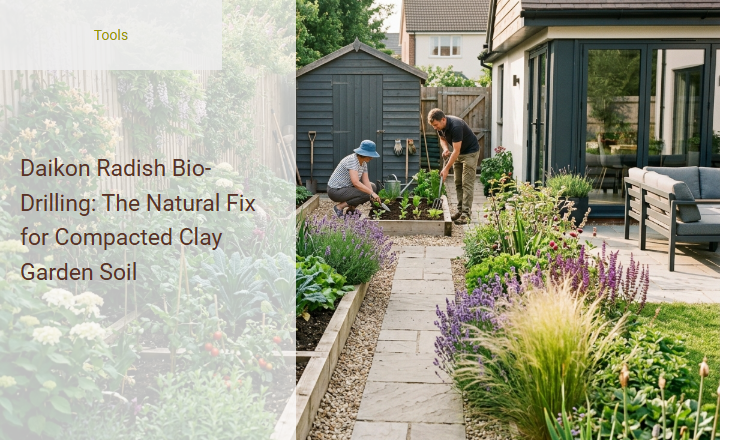
Heavy, compacted clay soil is a gardener's most frustrating obstacle-stifling root growth, causing waterlogging, and resisting the spade. While mechanical tilling is the traditional response, this aggressive disruption often destroys vital soil biology and worsens compaction over time.
Fortunately, "bio-drilling" offers a low-labor, highly effective ecological alternative. This biological method requires patience; it is a seasonal cycle of growth and decay, not an overnight chemical cure. By utilizing the Daikon radish-whose massive, muscular taproots can punch through dense hardpan up to six feet deep-you can shatter compacted layers naturally. As these roots decompose, they leave open channels for air, water, and future plant roots.
In this guide, we will examine the science behind bio-drilling, outline the step-by-step planting process, and explain how to manage the winter-kill phase to transform your clay soil into a fertile, well-structured growing medium.
Read also: Lawn Roller vs Hand Tamper for Leveling Ground
The Clay Soil Dilemma: Understanding Compaction
Gardening in heavy clay soil often feels like working with concrete. When clay particles pack tightly together, they cut off the vital pathways that air and water need to move through the earth. While many gardeners instinctively reach for a mechanical rototiller to break up this dense barrier, traditional tilling actually destroys fragile soil aggregates, pulverizing the earth and leading to even worse compaction over time. Instead of relying on disruptive machinery, a shift toward natural aeration allows living root systems to gently fracture the soil, preserving the underground ecosystem while restoring natural porosity.
What is Bio-Drilling? The Daikon Radish Solution
Bio-drilling is an eco-friendly soil management practice that uses deep-rooting plants to break through compacted subsurface layers. The premier biological tool for this job is the Daikon radish (Raphanus sativus var. longipinnatus), a unique cover crop specially bred to penetrate heavy clay. Instead of using metal blades to force open the earth, this botanical drill uses its rapid biological growth to carve out channels, acting as a natural aerator that prepares your garden beds for future plantings without disturbing beneficial microbes.
How the Daikon Radish Taproot Penetrates Hardpan
The secret to the success of this cover crop lies in its incredibly powerful root system. As the plant grows, the taproot exerts tremendous downward force, pushing through dense hardpan layers that stop other plant roots in their tracks. This thick taproot acts as a physical wedge, fracturing dense clay layers and expanding in diameter to push the surrounding soil aside. This natural expansion creates broad, vertical channels that remain intact long after the radish itself is gone.
Key Benefits of Bio-Drilling with Daikon Radishes
Integrating Daikon radishes into your soil-building routine provides several compounding advantages for your garden:
- Improved aeration: The deep channels allow oxygen to penetrate deep into the lower soil horizons.
- Enhanced water infiltration: Rain and irrigation water flow easily through the root paths instead of pooling on the surface.
- Organic matter accumulation: The decomposing root leaves behind nutrient-rich carbon deep in the earth.
- Nutrient scavenging: These deep roots pull up minerals from the subsoil, storing them in their foliage for spring crops to use.
Timing is Everything: When to Plant Daikon Radishes
To maximize the drilling power of your radishes, you must sow them when the soil is warm enough to encourage rapid vegetative growth. The ideal planting window is during the late summer to early autumn, specifically between and . Planting during this period allows the radish to establish a massive root system before the arrival of hard winter frosts, which naturally kill the plant and initiate the decomposition process.
Step-by-Step Guide to Sowing Daikon Seeds
Establishing a successful cover crop requires proper planting density to ensure complete soil coverage and maximum root penetration. Follow these steps to sow your seeds:
- Clear any large weeds and rake the surface of your garden bed to create a smooth, loose seedbed.
- Scatter the radish seeds evenly across the soil, aiming for a spacing of roughly three to four inches apart.
- Lightly press the seeds into the soil to a depth of about one-half inch to ensure good seed-to-soil contact.
- Water the bed thoroughly and keep the soil moist until the green shoots emerge.
Caring for Your Bio-Drill Cover Crop
Once established, the Daikon radish requires minimal intervention to do its job. Because of its vigorous growth habit, the plant quickly develops dense, leafy canopy growth that naturally shades out competing weeds. Under normal autumn weather conditions, rainfall is usually sufficient to sustain the crop, though supplemental watering during dry spells will encourage deeper taproot development.
Termination: Letting Nature Clear the Path
The beauty of using Daikon radishes as a winter cover crop is that termination requires zero labor from the gardener. When sustained winter temperatures drop below 20°F, the freezing weather naturally terminates the plant. Instead of pulling these massive roots out of the ground, leave them in place to rot. Harvesting them removes the biological scaffolding that is actively holding the newly created soil channels open.
The Decomposition Process: Turning Roots into Channels
As spring approaches, the frozen radish root begins to break down, transforming into a soft, sponge-like material. Over the course of a few weeks, soil microbes and earthworms devour the decaying organic matter, leaving behind deep, open vertical tunnels. These empty pathways act as direct conduits for air, water, and the root systems of your subsequent spring vegetables.
Next Steps: Planting in Your Revitalized Garden Soil
With the arrival of spring, you can plant your vegetables directly into the newly aerated garden beds. Simply clear away any remaining leafy surface residue and transplant your spring crops directly into the soft, uncompacted channels left behind by the radishes. By avoiding the rototiller, you maintain the integrity of the soil food web while enjoying loose, fertile, and naturally aerated earth year after year.
Summary
Compacted clay soil is a major obstacle for gardeners, restricting root growth, water drainage, and vital air circulation. "Daikon Radish Bio-Drilling" offers an eco-friendly, labor-free solution to this problem. Also known as tillage radishes, Daikon radishes possess powerful, deep-penetrating taproots that can drill several feet into hardpacked earth, naturally fracturing and loosening the clay structure.
When winter frosts arrive, the radishes die and decompose in place. This decay leaves behind open vertical channels that allow water, oxygen, and subsequent plant roots to easily penetrate deep into the ground. Additionally, the decomposing foliage and roots enrich the soil with valuable organic matter and recycled nutrients. By sowing Daikon seeds in late summer, gardeners can avoid back-breaking mechanical tilling, naturally restoring soil health and preparing fertile beds for a highly productive spring planting season.
Leave a comment