
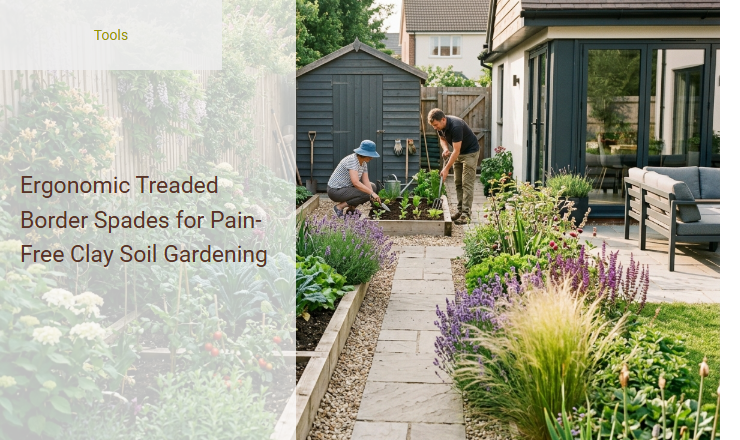
Digging in heavy, compacted clay soil is a notoriously exhausting task that frequently leaves gardeners suffering from aching backs, strained wrists, and chronic joint fatigue. Traditional flat-edged garden spades offer little relief, as their basic design requires immense physical downward force just to pierce the sticky, dense earth.
Fortunately, upgrading to specialized equipment grants you the mechanical advantage needed to reclaim the joy of gardening without sacrificing your physical well-being. It is important to understand, however, that overcoming stubborn clay relies less on brute strength and more on the scientific principles of ergonomic tool geometry. For instance, integrated features such as oversized, non-slip treaded boot steps and teardrop-shaped steel shafts serve as concrete proof of how smart engineering reduces foot slippage and spinal strain.
In this article, we will examine the biomechanical benefits of ergonomic treaded border spades, detail the key features to look for, and guide you toward selecting the perfect tool for pain-free clay cultivation.
Read also: Spade vs Shovel for Digging Trenches
The Clay Soil Conundrum: Why Your Back Hurts and How to Fix It
Every passionate gardener knows the dread of encountering heavy clay soil. It is dense, sticky, and unforgivingly heavy, turning a simple planting task into an exhausting workout. Working this stubborn earth places immense physical stress on your body, often resulting in severe lower back strain, throbbing shoulder joints, and painful wrist fatigue. The sheer resistance of compacted clay demands excessive force, forcing your spine to bend and twist under load. Fortunately, you do not have to sacrifice your physical well-being to achieve a beautiful garden. The key to pain-free cultivation lies in using the right tool: an ergonomic treaded border spade designed specifically to pierce tough ground with minimal exertion.
Understanding the Border Spade: Compact Power for Heavy Ground
A border spade is a specialized digging tool characterized by its relatively small, narrow blade and shorter overall length compared to standard digging shovels. While a traditional shovel is designed to scoop loose material, its wide, cupped blade is highly inefficient in dense earth, often getting stuck or lifting far too much heavy weight at once. In contrast, the slim profile of a border spade allows it to slice cleanly through tough soil layers. This compact design is ideal for clay because it naturally limits the volume of earth you lift with each scoop, keeping the weight manageable and reducing the leverage strain on your lower back. By focusing your downward force on a smaller surface area, this tool penetrates compacted layers with far less resistance.
The Importance of Treaded Blades in Clay Excavation
In quality garden tools, a "treaded" blade refers to a wide, flat flange or rolled edge integrated along the top shoulders of the metal spade head. This physical feature provides a stable, comfortable platform for your boot, which transforms the way you apply force to the ground.
- Prevents Boot Slippage: The wide, textured surface ensures your foot remains securely positioned, even when working in slick, wet clay conditions.
- Maximizes Foot Power: By offering a broader platform, the tread allows you to direct your full body weight straight down through the center of the blade.
- Reduces Plantar Strain: Traditional thin metal rims concentrate pressure on a narrow strip of your foot, causing arch soreness. A treaded step distributes this pressure evenly across your boot sole.
Ergonomics 101: Shaft Designs That Save Your Spine
The construction of a spade's shaft determines how much you must bend, twist, and strain during a day of digging.
Shaft Materials
Fiberglass shafts offer an excellent balance of high strength and lightweight flexibility, absorbing shock before it reaches your joints. Traditional wood shafts, usually crafted from ash, provide natural shock absorption and a classic feel, though they require more maintenance. Heavy-duty steel shafts offer maximum durability for extreme clay but add substantial weight to the tool.
Handle and Grip Shapes
The style of the grip significantly impacts wrist alignment. A classic D-grip allows for a natural hand position and excellent control when lifting heavy soil. T-grips provide a solid push-point for driving the tool downward but offer less leverage during lifting. Modern O-grips or teardrop handles allow for multi-directional hand placement, minimizing wrist fatigue by adapting to your natural movement patterns.
Heavy Clay vs. Ergonomic Spades: The Physics of Less Effort
Digging in compacted earth is a battle of leverage and surface area. When you attempt to push a blunt, non-ergonomic tool into dense soil, the resistance forces your muscles to do the heavy lifting. An ergonomic, treaded border spade utilizes physics to shift the workload away from your muscles. The razor-sharp, narrow blade reduces the surface area meeting the soil, which drastically increases the downward pressure. By applying up to 40% more localized force simply through the mechanical advantage of a narrower edge and a structured foot tread, you can pierce the earth using your natural body weight rather than raw muscle power.
Key Features to Look For in a Premium Clay Spade
Before purchasing your next digging tool, evaluate its structural specifications to ensure it can withstand the rigors of heavy clay while protecting your body.
- Blade Gauge and Material
- Look for high-quality, heat-treated carbon steel or stainless steel (ideally 12 to 14-gauge) that will not bend or warp under heavy prying forces.
- Tread Width
- Select a spade with integrated steps that are at least 0.5 inches wide to accommodate heavy work boots comfortably and securely.
- Shaft Angle
- An ergonomic, slightly forward-tilted shaft angle reduces the need to bend forward at the waist, helping to keep your spine in a neutral, upright position.
How to Dig in Clay Without Pain: Proper Body Mechanics
Even the finest ergonomic tool cannot prevent discomfort if your lifting technique is flawed. Always prioritize safety and joint alignment to prevent acute lower back injuries.
- Stand close to the spade with your feet hip-width apart, keeping your spine straight and shoulders relaxed.
- Place the ball of your foot firmly in the center of the treaded step, using your body weight to drive the blade straight down.
- Bend your knees slightly and engage your core muscles, avoiding the temptation to round your lower back.
- Keep the load close to your body as you lift, using the leverage of your legs rather than pulling upward with your lower spine.
Maintaining Your Spade: Keeping the Blade Sharp and Rust-Free
A neglected spade quickly loses its ergonomic advantages. Sticky clay clings to rusted, pitted metal, significantly increasing friction and requiring more physical effort to slide the blade into the earth.
"Maintaining a sharp edge on your spade is the easiest way to reduce back strain. A dull tool behaves like a hammer against the soil, while a sharp spade acts like a hot knife through butter." - Professional Landscaping Guild
After each gardening session, scrape away clinging soil with a stiff brush and wipe the blade clean. Periodically file the cutting edge to keep it sharp, and apply a thin layer of mineral oil to the metal blade and wooden shaft to prevent rust and splitting.
Real Gardener Experiences: Transitioning to Pain-Free Digging
Stories like Arthur's are common among those who transition away from oversized, flat-shouldered shovels. By downsizing the tool head and capitalizing on structured foot treads, gardeners with physical limitations, arthritis, or chronic back pain successfully reclaim their outdoor spaces without the physical toll of traditional digging.
Reclaim Your Garden: Choosing Comfort Over Pain
Gardening should be a source of joy and relaxation, not a cause of physical suffering. By understanding how to work with heavy clay soil rather than fighting against it, you can protect your body for years to come. Investing in an ergonomic, treaded border spade minimizes strain on your joints, saves your back from unnecessary injury, and makes quick work of the most compacted ground. Do not let stubborn soil keep you from creating the garden of your dreams. Explore our top-rated selection of ergonomic garden tools today and experience the difference that proper physics and design can make.
Summary
Gardening in heavy clay soil often leads to intense physical strain, joint pain, and fatigue. "Ergonomic Treaded Border Spades for Pain-Free Clay Soil Gardening" highlights how specialized border spades can transform this grueling chore into a manageable, pain-free activity. Unlike standard shovels, these ergonomic spades feature extra-wide, non-slip treads that allow gardeners to leverage their body weight safely, significantly reducing foot and leg discomfort.
Additionally, their narrower blade profile easily slices through dense, sticky clay with minimal resistance, making them perfect for working in tight garden borders. Designed with teardrop-shaped shafts and ergonomic D-grips, these tools promote neutral wrist alignment and reduce lower back strain. By investing in a high-quality treaded border spade, gardeners can protect their bodies, prevent repetitive strain injuries, and comfortably maintain beautiful landscapes despite challenging soil conditions.
Leave a comment