
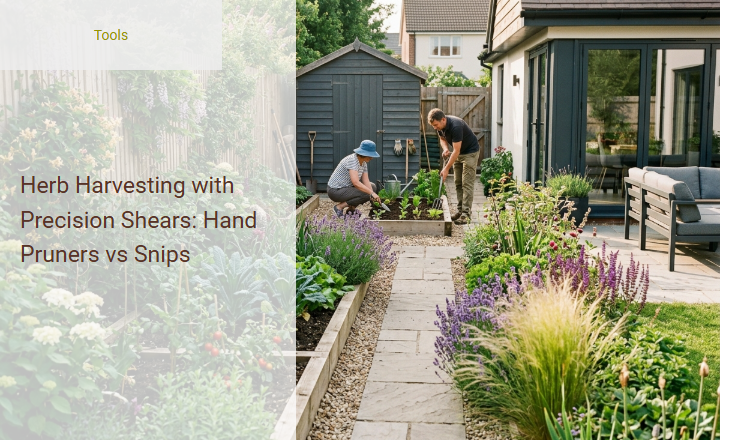
Harvesting delicate herbs often feels like a high-stakes balancing act; one clumsy cut can crush tender stems, bruise valuable leaves, and ultimately stunt future plant growth. To transition from casual gardening to culinary excellence, understanding the physiological needs of different plant structures is crucial. Mastering the use of specialized cutting tools grants you the ability to maximize essential oil yields, ensuring your harvest retains peak flavor and aroma.
However, it is important to note that a tool's effectiveness depends entirely on matching its blade dynamics to the stem density of your crop. For instance, woody rosemary requires a robust bypass mechanism, whereas delicate cilantro demands the micro-tips of a needle-nose snip.
In this guide, we will compare the structural designs, cutting mechanisms, and ideal applications of hand pruners versus precision snips to help you select the perfect tool for your herb garden.
Introduction to Precision Herb Harvesting
Harvesting culinary and medicinal herbs is a beautiful bridge between gardening and the culinary arts. Whether you are gathering fresh leaves for a weekend recipe or collecting botanical yields for wellness infusions, the way you harvest matters. Selecting the correct tool-hand pruners versus precision snips-directly impacts both the immediate harvest yield and the long-term plant vitality. Using the proper blade ensures that the plant heals rapidly, preserving its energy to generate fresh foliage instead of fighting off environmental stress.
Understanding Hand Pruners: Power and Leverage
Bypass Blade Mechanics
Hand pruners, also known as secateurs, are designed for heavy-duty garden tasks. Operating on a bypass mechanism where a sharp, curved blade glides closely past a flat anvil-like hook, these tools function like heavy-duty scissors. This scissor-action design delivers the mechanical advantage and leverage needed to cut through thick, woody fibers cleanly without crushing the stem's interior structure.
- Heavy-duty forged steel construction built to withstand high pressure.
- Bypass cutting mechanism that avoids crushing delicate plant tissues on thick stems.
- Ergonomic handle designs that leverage hand power to cut woody materials up to half an inch in diameter.
Understanding Precision Snips: Delicacy and Speed
Spring-Assisted Action
Precision snips are built for detailed, close-quarters work. Featuring long, narrow, needle-nose blades, they excel at selective harvesting in dense canopies. The lightweight design combined with a responsive spring-assisted handle reduces hand fatigue, allowing for rapid, continuous snipping of delicate stems without damaging neighboring growth.
- Ultra-fine, razor-sharp tips perfect for isolating and cutting individual stems.
- Spring-loaded return mechanism that automatically reopens the blades after each cut.
- Lightweight chassis that offers maximum maneuverability and high-speed operation.
Head-to-Head Comparison: Pruners vs. Snips
Choosing between these two essential tools depends on the physical characteristics of the plant you are harvesting. Below is a detailed breakdown of how hand pruners and precision snips compare across key performance areas.
| Feature | Hand Pruners | Precision Snips |
|---|---|---|
| Blade Type | Thick, curved bypass blades | Straight, needle-nose micro-tips |
| Cutting Capacity | Up to 1/2 inch (or larger for premium models) | Up to 1/8 inch (soft stems only) |
| Ideal Stem Thickness | Thick, semi-woody, and fully woody stems | Tender, green, and herbaceous stems |
| Primary Application | Heavy pruning, structural shaping, shrubby herbs | Deadheading, leaf thinning, rapid leaf harvesting |
When to Reach for Hand Pruners: Best Herbs
Many perennial herbs develop tough, lignified wood as they mature. Attempting to cut these sturdy branches with lightweight snips can damage the delicate blades and tear the outer bark of your plants, opening up pathways for infection. Reach for your hand pruners when working with these robust, woody herbs:
- Rosemary (Rosmarinus officinalis) - dense, woody stems require heavy leverage to harvest thick sprigs.
- Lavender (Lavandula angustifolia) - spring shaping and flower harvesting demand strong blades that can handle dense undergrowth.
- Sage (Salvia officinalis) - semi-woody stems can resist weak blades, making bypass pruners the safer choice.
- Thyme (Thymus vulgaris) - harvesting older growth sections near the base requires clean, decisive cuts.
When to Reach for Precision Snips: Best Herbs
Soft-stemmed herbs require a delicate touch. Using heavy pruners on tender annuals often crushes the stems, bruising the leaves and ruining the quality of your culinary harvest. Precision snips allow you to trim right at the node with surgical accuracy. Use precision snips for:
- Basil (Ocimum basilicum) - pinch out growing tips easily to promote bushy, lateral growth.
- Cilantro (Coriandrum sativum) - harvest individual leaf stems from the outer rosette without disturbing the core.
- Parsley (Petroselinum crispum) - cut outer stalks cleanly near the base of the plant.
- Mint (Mentha spp.) - harvest tender runners and top leaves rapidly for fresh garnishes.
- Chives (Allium schoenoprasum) - crop handfuls of tender hollow leaves near ground level with minimal effort.
How Cut Quality Affects Herb Regrowth
The biological response of a plant to pruning is highly dependent on the quality of the cut. When a sharp tool slices through a stem, it makes a clean wound that preserves the surrounding vascular system. This allows the plant to continue transporting water and nutrients efficiently while initiating rapid wound healing. Conversely, dull or improper tools crush the stem, causing cell walls to rupture. This damage leaves jagged edges that invite bacterial rot and compromise the plant's natural pathogen defense, making it susceptible to insect infestations.
Ergonomics and Comfort During Extended Harvesting
Ergonomic Criteria
During long sessions in the garden, hand fatigue can quickly set in. Selecting tools built with advanced ergonomics is essential to prevent repetitive strain injuries and hand cramps. Both hand pruners and snips offer distinct physical advantages depending on how they are used.
- Non-slip, padded grip materials like thermoplastic rubber that absorb shock and reduce hand slippage.
- Optimal handle span that matches your hand size to prevent overextension.
- Responsive, low-resistance spring returns that minimize the effort needed to open the tool after each cut.
Maintenance and Care for Lifelong Performance
To keep your harvesting tools performing at their best, a regular maintenance routine is essential. Clean, sharp tools protect your plants from cross-contamination and ensure effortless cuts every time.
- Wipe down blades with a microfiber cloth after every use to remove sticky sap, dirt, and moisture.
- Disinfect the blades using isopropyl alcohol or a mild bleach solution to prevent transferring diseases between plants.
- Sharpen the cutting bevels regularly with a diamond file or whetstone, following the factory blade angle.
- Apply a few drops of multi-purpose tool oil to the pivot joint and spring to prevent rust and maintain smooth operation.
Designing Your Ultimate Herb Harvesting Toolkit
A thriving, productive herb garden relies on using the right tool for the job. Rather than relying on a single pair of shears for every task, integrating both hand pruners and precision snips into your gardening toolkit offers the perfect balance of power and delicacy. Use hand pruners to manage structural growth and woody perennials, and switch to precision snips for daily kitchen harvesting and delicate trimming. Equipping yourself with this dual-tool system protects your plants, promotes rapid regrowth, and maximizes your herbal yields season after season.
| Feature | Hand Pruners (Bypass) | Herb Snips |
|---|---|---|
| Best For | Woody, fibrous herbs (Rosemary, Lavender, Sage) | Soft, delicate herbs (Basil, Cilantro, Dill, Mint) |
| Blade Design | Thick, curved, heavy-duty bypass blades | Fine, straight, needle-nose pointed blades |
| Max Stem Capacity | Up to 1/2 inch (12 mm) | Up to 1/8 inch (3 mm) |
| Harvesting Precision | Moderate; bulky in dense foliage | High; isolates single stems near the node |
| Action & Grip | Squeeze-to-cut; requires moderate grip strength | Spring-loaded; optimized for rapid, repetitive pinching |
| Plant Damage Risk | High on soft stems (can crush tender tissue) | Low; clean, scissor-like micro-cuts |

Leave a comment