
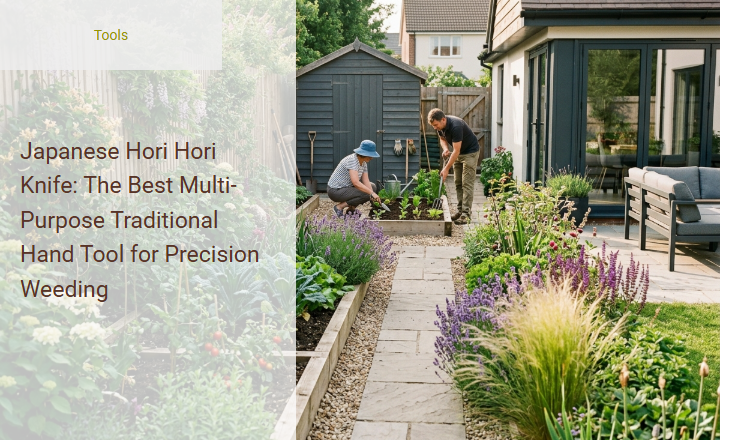
Few tasks in the garden are as frustrating as trying to extract deep-rooted weeds from tight crevices without damaging your prized ornamental plants. Too often, gardeners find themselves constantly switching between a hand trowel, a weeding fork, and a pocket knife, resulting in cluttered toolbags and physical fatigue.
Historically, horticultural efficiency relied not on a multitude of gadgets, but on a single, highly refined instrument. Consolidating your weeding and planting tasks into one masterfully crafted Japanese Hori Hori knife grants you both effortless precision and immense time savings. While utilizing this dual-edged steel blade effectively requires a basic understanding of soil leverage and blade maintenance, its utility is undeniable.
From slicing through stubborn dandelion taproots to measuring precise depths for spring bulbs, its applications are immediate. This article will examine the anatomy, history, and practical techniques of the Hori Hori to help you master this indispensable tool.
Read also: Scythe vs Sickle for Clearing Tall Grass
Introduction to the Japanese Hori Hori Knife
The world of gardening is filled with specialized implements, yet few hold the legendary status of the Japanese Hori Hori knife. Originating centuries ago in Japan, this remarkable instrument was first utilized by mountain foragers seeking wild vegetables and bonsai enthusiasts collecting specimens. The name itself reveals its core purpose; translated literally, "Hori Hori" translates directly to "dig-dig" in Japanese, reflecting the satisfying sound made when plunging the blade into rich earth.
In the modern era, this traditional weeding tool has evolved from a regional secret into an international favorite. Gardeners across the globe have embraced its heavy-duty utility, finding that it replaces several tools at once. By combining historical craftsmanship with everyday practicality, the Hori Hori has secured its position as an indispensable companion for anyone serious about cultivating the soil.
Anatomy of a Hori Hori: Key Design Features
The enduring popularity of the Hori Hori lies in its brilliant, highly functional anatomy. Unlike standard garden trowels or kitchen knives, a standard Hori Hori features a unique combination of structural attributes specifically engineered for subterranean work.
- Dual-Edge Blade: One side of the blade is ground to a razor-sharp straight edge for slicing, while the opposite side features a aggressive serrated edge designed to saw through tough roots and vines.
- Concave Profile: The blade is slightly curved, mimicking a shallow scoop. This concave shape allows the user to easily scoop, lift, and throw soil during planting or weeding.
- Integrated Depth Markings: Graduated measurements, typically engraved in millimeters and inches along the center of the blade, allow gardeners to measure soil depth instantly.
This careful integration of features makes the tool exceptionally versatile, ensuring that you always have the exact edge or measurement required for precision soil work.
Why the Hori Hori Excels at Precision Weeding
Weeding can often be a frustrating chore, but the Hori Hori transforms the process through sheer mechanical efficiency. Standard weeders often snap the stems of invasive plants, leaving the root system intact to regenerate. The Hori Hori solves this issue by combining depth with cutting power.
Targeting Deep Taproots
Thanks to its narrow, heavy-duty blade, you can drive the tool deep into the ground directly alongside the root of stubborn weeds. The serrated edge cuts through lateral roots effortlessly, allowing you to target deep taproots like dandelions, thistles, and dock with surgical precision.
Minimizing Garden Disruption
Because the blade is so slim, you can work closely to your prized ornamental plants and vegetables. Instead of digging a massive hole that disturbs the root systems of nearby flowers, you cleanly slice and extract only the target weed, keeping the surrounding soil structure intact.
One Tool, Many Tasks: Multi-Purpose Gardening Applications
While weeding is its primary claim to fame, the Hori Hori functions as a true multi-tool in the garden, easily transitioning between vastly different tasks without requiring you to carry a heavy tool belt.
- Planted bulb depths can be gauged instantly using the blade's markings, ensuring proper growth.
- Dividing root-bound perennials becomes simple by sawing through dense root balls with the serrated edge.
- Sod can be sliced cleanly to create perfect borders or to patch bare spots in the lawn.
- Tough plastic soil bags and fertilizer sacks are easily sliced open using the sharp straight edge.
By executing all of these tasks seamlessly, this single tool streamlines your workflow and keeps your hands free to focus on the plants themselves.
Ergonomics, Grip, and Hand Safety
Using a tool for heavy-duty digging and sawing requires an emphasis on comfort and safety. Traditional Hori Hori knives feature beautiful hardwood handles, often secured with brass rivets, which provide a classic look and mold to the user's hand over time. Modern variations may utilize composite grips or textured rubber, which offer superior slip resistance when working in wet, muddy conditions.
Regardless of the handle material, a critical safety feature is the integrated handguard. The small, raised bolster between the handle and the blade prevents your hand from sliding forward onto the sharp edges when pushing down into hard soil. This safety guard ensures you can apply maximum downward force with total peace of mind.
Material Comparison: Carbon Steel vs. Stainless Steel
When selecting a Hori Hori, the choice of metal is paramount. Both carbon steel and stainless steel have distinct advantages depending on your gardening environment and maintenance habits.
| Material Type | Edge Retention | Rust Resistance | Ease of Sharpening |
|---|---|---|---|
| Carbon Steel | Excellent | Low (Requires oiling) | Very Easy |
| Stainless Steel | Good | High (Low maintenance) | Moderate |
Carbon steel is preferred by traditionalists who demand the sharpest edge and do not mind taking time to dry and oil their tools. Stainless steel is highly recommended for gardeners who prioritize convenience and frequently work in wet climates where rust presents a constant challenge.
Step-by-Step Guide: How to Use a Hori Hori for Weeding
- Position the blade: Insert the tip of the Hori Hori into the soil approximately one to two inches away from the crown of the weed, angling it slightly toward the root.
- Drive it deep: Push the blade straight down into the soil, utilizing the depth markings to ensure you reach the bottom of the root system.
- Leverage and twist: Gently rock the handle backward while executing a slight twisting motion to loosen the soil surrounding the taproot.
- Lift and remove: Pull upward on the weed's base with your free hand while using the blade to lift the root mass out of the ground.
Maintenance, Sharpening, and Rust Prevention
A well-maintained Hori Hori can easily last a lifetime, passing down through generations of gardeners. Neglect, however, can lead to a dull edge and destructive corrosion.
Routine Cleaning and Oiling
After every gardening session, scrape away caked-on dirt and wash the blade clean. Dry the tool completely with a rag. To prevent rust, especially on carbon steel models, wipe the metal with a light coat of camellia oil, mineral oil, or linseed oil before storing it.
Sharpening the Dual Edges
- Sharpen the straight edge regularly using a medium-grit whetstone or pocket diamond file, maintaining the factory bevel angle.
- Use a specialized round file or a tapered sharpening rod to carefully hone the individual gullets of the serrated edge.
- Store the dry tool in a well-ventilated area to prevent moisture buildup.
Essential Hori Hori Accessories
To get the most utility out of your knife, investing in a few key accessories is highly recommended. Because this tool features very sharp edges, safe transport is a primary concern for any mobile gardener.
A durable sheath made of heavy leather or heavy-duty synthetic nylon is the most important accessory. Outfitted with a sturdy belt loop, a high-quality sheath allows you to carry the knife safely at your hip, keeping it instantly accessible while keeping your hands free for carrying plants or pushing wheelbarrows.
Why the Hori Hori belongs in Every Gardener's Tool Shed
In a world saturated with single-purpose gadgets, the Japanese Hori Hori knife stands out as a triumph of minimalist design and maximum utility. By combining a trowel, a weeding tool, a saw, a measuring stick, and a knife into one elegant package, it saves precious time and declutters your garden shed.
For those seeking to make their outdoor chore time more efficient and enjoyable, investing in this versatile tool is a decision you will appreciate with every plunge into the soil. Its time-tested design ensures that you have the ultimate weeding companion right at your side, ready to tackle any horticultural challenge that lies beneath the surface.
Summary
The Japanese Hori Hori knife, often referred to as a "soil knife," is celebrated as the ultimate multi-purpose hand tool for modern gardeners. Originating from traditional Japanese horticulture, this versatile implement seamlessly combines the functions of a trowel, saw, knife, and measuring ruler into a single, highly durable tool.
Its unique design features a dual-sided steel blade with one sharp edge for slicing and one serrated edge for sawing through tough roots, alongside a curved shape ideal for digging. Additionally, integrated depth markings ensure precise bulb planting. The Hori Hori excels at precision weeding, allowing gardeners to easily penetrate compacted soil and extract deep taproots without disrupting surrounding plants. Whether you are transplanting seedlings or clearing stubborn overgrowth, this ergonomic tool streamlines garden maintenance, making it an indispensable asset for achieving a pristine outdoor space.
Leave a comment