
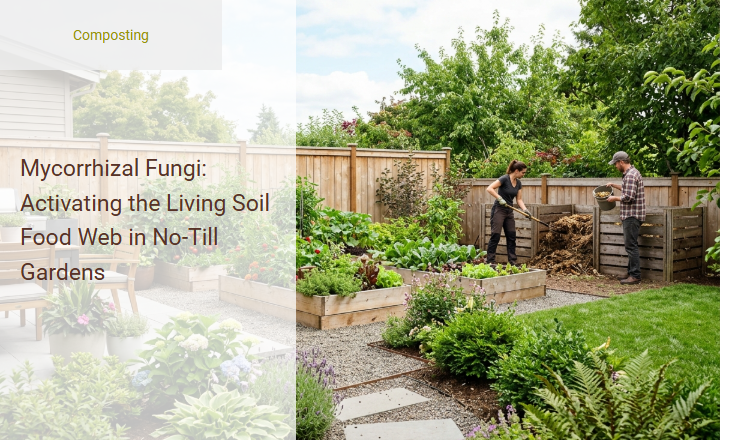
Many no-till gardeners struggle to maintain vigorous crop growth, often watching plants stall or display nutrient deficiencies despite avoiding the disruptive practice of tilling. While preserving soil structure is a vital first step, physical structure alone remains inert without its biological engine.
Activating this system with mycorrhizal fungi grants your plants an expanded underground network, dramatically increasing their access to otherwise locked-up phosphorus and deep water reserves. However, these fungi are not a synthetic quick-fix; they are living partners that require host roots and specific soil conditions to thrive. For example, arbuscular mycorrhizal fungi form vital symbiotic alliances with crops like tomatoes and onions, while brassicas remain non-hosts.
This article will examine how to successfully inoculate your soil, foster these crucial fungal networks, and leverage their symbiotic power to optimize your no-till garden's productivity.
Read also: Mulch vs Compost for Weed Control
Introduction: The Underground Network of No-Till Gardens
Beneath the surface of a thriving, undisturbed garden lies a bustling metropolis of microscopic life. While we often focus on the plants we can see, the true magic of a successful no-till system happens underground. At the heart of this subterranean world are mycorrhizal fungi, remarkable organisms that serve as the biological bridge between the soil and plant roots. Mycorrhizal fungi form a vast, interconnected web that transforms inert dirt into a dynamic, self-sustaining ecosystem. By understanding and nurturing this ancient relationship, gardeners can unlock the full potential of their soil without ever needing to turn a spade.
The Science of Symbiosis: Mycorrhizae and Root Systems
The term "mycorrhiza" literally translates to "fungus-root," describing a mutually beneficial partnership that has evolved over hundreds of millions of years. When plant roots meet these beneficial fungi, a microscopic handshake occurs. The fungi penetrate or wrap around the host plant's root cells, establishing a direct channel of communication and resource exchange. Through this physical connection, the plant shares its surplus liquid carbon-sugars produced via photosynthesis-with the fungi. In return, the extensive fungal network, or mycelium, acts as an auxiliary root system, absorbing essential nutrients and water from deep within the soil matrix and delivering them directly to the plant's vascular system.
Connecting to the Soil Food Web
Mycorrhizal fungi do not operate in isolation; they are the central communication hubs of the entire soil food web. The hyphae-thin, root-like fungal filaments-exude carbon-rich compounds that attract and feed beneficial soil bacteria. These bacteria, in turn, mineralize nutrients, making them bioavailable to the fungi and host plants. When protozoa and beneficial nematodes consume these bacteria, they release excess nitrogen and other minerals right in the root zone where the mycorrhizae can immediately gather them.
"The fungal network acts as a highway system, allowing nutrients, water, and biological signals to flow seamlessly between diverse species of plants and microbes."
Why No-Till Matters: Protecting the Hyphal Network
Building a robust mycorrhizal network takes time, stability, and an undisturbed soil profile. When a gardener uses mechanical tilling, the spinning metal blades act as a devastating natural disaster for the underground world. Tillage tears apart the delicate, microscopic hyphal threads, instantly shattering the living infrastructure that took months or years to build. Without a continuous, intact network, plants are forced to expend massive amounts of energy rebuilding their root connections from scratch. Embracing a strict no-till methodology preserves these vital fungal pathways, allowing the underground network to grow stronger, denser, and more resilient season after season.
Supercharging Nutrient Uptake and Water Retention
By extending far beyond the reach of normal plant roots, mycorrhizal fungi dramatically increase the surface area available for nutrient and water absorption.
Unlocking Bound Nutrients
Many essential plant nutrients, particularly phosphorus, are chemically locked in the soil and unavailable to plant roots. Mycorrhizae produce specialized enzymes and organic acids that dissolve these chemical bonds, freeing up vital minerals for plant uptake.
- Phosphorus Mobilization: Converts insoluble inorganic phosphorus into a plant-ready form.
- Trace Mineral Gathering: Efficiently mines copper, zinc, manganese, and iron from micro-pores.
- Drought Resilience: Reaches deep water reserves in microscopic soil spaces that thick plant roots cannot access.
Glomalin: The Secret to Perfect Soil Structure
Beyond nutrient delivery, mycorrhizal fungi are master engineers of soil physical structure. They produce a unique, sticky glycoprotein called glomalin, which is secreted by the hyphal tips into the surrounding soil. Glomalin acts as a biological glue, binding tiny silt, clay, and sand particles together into stable soil aggregates. These aggregates create a porous soil structure rich in micro-tunnels, allowing oxygen to penetrate deep into the ground and water to drain effectively while remaining retained in the soil sponge. Furthermore, because glomalin is highly resistant to decay, it plays a massive role in sequestering carbon deep within the earth for decades.
How to Inoculate Your No-Till Garden
Introducing mycorrhizal inoculants to your garden is a straightforward process that yields lifetime benefits if done correctly during the planting phase.
- Seed Treatment: Dust dry seeds with mycorrhizal powder before planting to ensure the very first emerging root makes immediate contact with the fungal spores.
- Bare-Root Dipping: Mix the inoculant with water to create a slurry, then dip the roots of bare-root plants directly into the mixture before placing them in the ground.
- Transplant Application: Sprinkle a generous teaspoon of granular inoculant directly into the planting hole, ensuring the root ball of your transplant makes direct physical contact with the powder.
Feeding the Fungi: Cover Crops and Living Roots
Mycorrhizal fungi are obligate biotrophs, meaning they rely entirely on living plant roots for their survival and carbon supply. When a garden bed is left bare over winter or between cash crops, the fungal network starves and begins to die back. Utilizing diverse, multi-species cover crops ensures that a continuous supply of photosynthetic carbon flows into the soil year-round. By keeping living roots in the ground at all times, you maintain an active, fully functional fungal highway that is primed and ready to support your next round of vegetables or flowers without any developmental delay.
Practices to Avoid: Protect Your Fungal Allies
To keep your underground fungal network thriving, certain common gardening habits must be modified or avoided entirely.
Chemical and Physical Disruptions
Modern gardening products can accidentally sever or suppress the very biological systems we want to foster.
- High-Phosphorus Fertilizers: Excessive synthetic phosphorus tricks the plant into thinking it does not need fungal help, causing it to reject mycorrhizal colonization.
- Chemical Fungicides: Synthetic fungicides do not differentiate between harmful pathogens and beneficial mycorrhizae, wiping out your entire soil biology.
- Soil Compaction: Heavy foot traffic and working wet soil collapses the macro-pores required for hyphal growth and air circulation.
Harvesting the Rewards of a Living Soil System
Nurturing a healthy mycorrhizal network is an investment that pays compound interest over time. As the fungal web matures within an undisturbed no-till system, the soil transitions from a medium requiring constant synthetic inputs to a self-regulating, fertile ecosystem. Plants grown in this living soil display enhanced disease resistance, superior pest tolerance, and unmatched nutritional density. By stepping back, stopping the tiller, and allowing these ancient fungal allies to manage the subterranean world, gardeners can enjoy abundant yields while actively regenerating the earth.
Summary
The article "Mycorrhizal Fungi: Activating the Living Soil Food Web in No-Till Gardens" explores the vital symbiotic relationship between plant roots and beneficial fungi, which serves as the cornerstone of a healthy, living soil ecosystem. These fungi form extensive underground networks of hyphae that dramatically extend a plant's reach, facilitating the uptake of water and crucial nutrients like phosphorus. In return, plants provide the fungi with essential carbon sugars produced through photosynthesis.
The text emphasizes that no-till gardening practices are crucial for preserving these fragile fungal networks, as tilling physically disrupts and destroys them. By avoiding tillage, gardeners allow mycorrhizae to thrive, which improves soil structure through the production of glomalin, enhances plant drought tolerance, and boosts natural disease resistance. Ultimately, fostering this subterranean partnership reduces the reliance on synthetic inputs and creates a resilient, self-sustaining garden.
Leave a comment