
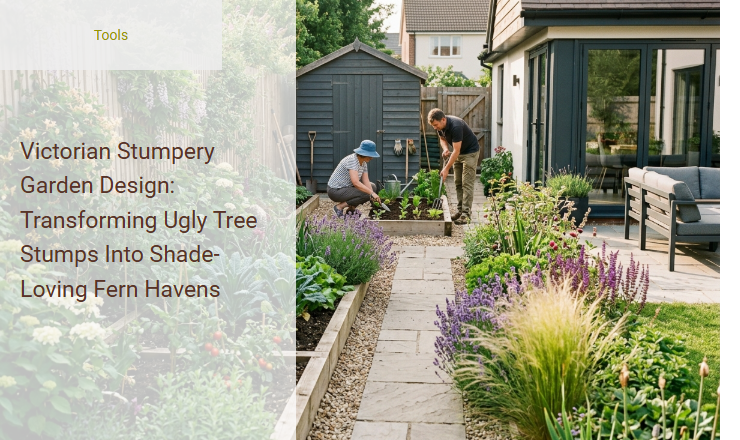
Many homeowners face the frustrating challenge of dealing with stubborn, unsightly tree stumps that disrupt their landscape design and resist easy removal. Before investing in costly grinding machinery, it is highly beneficial to examine the ingenious horticultural traditions of 19th-century England, where estate gardeners faced similar shaded dilemmas.
Reviving the classic Victorian "stumpery" grants you the unique opportunity to transform these problematic eyesores into captivating, low-maintenance artistic focal points. However, a successful design requires the stipulation that you actively manage wood decay dynamics and shade microclimates to maintain the right moisture balance for your plantings.
By pairing weathered wood with shade-loving species like the robust Asplenium scolopendrium (Hart's Tongue fern) and the delicate Polystichum setiferum (Soft Shield fern), you can craft a thriving, textured ecosystem. Below, we will examine the history of this unique design, detail the essential steps for construction, and outline the best plant selections for your new woodland haven.
Read also: Root Saw vs Reciprocating Saw for Removing Stumps
The Rebirth of the Victorian Stumpery
Originating in mid-19th-century Britain, the stumpery was born as a whimsical, gothic alternative to the traditional rockery. Victorian gardeners, fueled by a passion for botany and romantic landscapes, sought creative ways to display their growing collections of exotic ferns. By arranging artistically upturned tree roots, logs, and stumps, they created atmospheric, shaded nooks that felt delightfully ancient and wild. Today, this unique garden feature is experiencing a grand revival, offering modern gardeners a way to celebrate the raw, untamed beauty of nature. These historical installations prove that even the discarded remnants of the forest can become the crown jewels of a shade garden.
Why Transform Ugly Stumps into Garden Art?
Rather than spending effort and money grinding down dead tree stumps, transforming them into a stumpery yields immense ecological and aesthetic rewards. These structures instantly turn awkward, shaded garden eyesores into enchanting focal points. Over time, the decaying wood becomes a rich habitat, supporting diverse wildlife such as beetles, solitary bees, and amphibians. Fostering beneficial mycorrhizal fungi within the rotting wood also improves the overall health of your garden soil. This low-maintenance shade haven requires minimal intervention once established, thriving on the natural cycles of decomposition and growth.
Sourcing the Best Wood and Roots for Your Design
The longevity and visual appeal of your stumpery depend heavily on the types of wood you select. Slow-decaying hardwoods are ideal because they retain their structural integrity for decades, providing a stable anchor for plants.
- Oak, chestnut, and sweet chestnut stumps offer incredible textures and decay very slowly.
- Weathered tree roots salvaged from land clearing projects provide dramatic, sculptural shapes.
- Driftwood collected legally from beaches adds a smooth, silvery, ethereal aesthetic.
- Local tree surgeons, forestry commissions, and online garden marketplaces are excellent sources for acquiring these organic materials.
Designing Your Stumpery Layout
Before placing your wood, it is crucial to plan a layout that feels organic rather than artificial. Begin by creating natural-looking mounds of earth to vary the topography of your garden floor. Arrange your stumps with the root flares facing outward and upward, interlocking the root structures to create stability and depth. By twisting the logs and overlapping the roots, you will naturally create intentional planting pockets. These pockets mimic the crevices found on a wild forest floor, providing the perfect microclimates for delicate woodland species to nestle into and thrive.
Preparing the Perfect Forest-Floor Soil Blend
To ensure your shade-loving plants flourish, you must replicate the rich, spongy earth found in mature woodlands. Standard garden soil is often too dense or lacks the organic matter required by woodland flora. A premium blend consisting of equal parts leaf mold, well-rotted organic compost, and coarse horticultural grit provides the perfect balance. This specific mixture ensures the growing medium remains moisture-retentive while allowing excess water to drain away freely, preventing root rot in your delicate ferns.
Selecting the Best Ferns for Your Stumpery
Ferns are the undisputed stars of the stumpery, softening the rugged wood with their delicate textures and architectural fronds. Here are some outstanding varieties to tuck into your root crevices:
- Hart's Tongue Fern (Asplenium scolopendrium)
- Features glossy, strap-like, undivided fronds that provide a striking structural contrast to feathery ferns.
- Soft Shield Fern (Polystichum setiferum)
- Offers elegant, finely divided, moss-green fronds that form beautiful, soft rosettes.
- Lady in Red Fern (Athyrium angustum forma rubellum)
- Showcases lacy, light-green fronds held aloft on brilliant, contrasting violet-red stems.
Lush Companion Plants to Enhance the Woodland Vibe
While ferns provide the essential framework, introducing companion plants adds layers of color, texture, and seasonal interest to your stumpery. These plants thrive in the same moist, shady conditions as your ferns:
- Mosses and liverworts to carpet the damp wood and soften hard edges.
- Hostas with variegated leaves to brighten dark corners with broad foliage.
- Hellebores to deliver delicate winter and early spring blooms when other plants are dormant.
- Wild ginger for its glossy, heart-shaped ground cover that weaves beautifully around the logs.
Step-by-Step Stumpery Installation Guide
- Dig the foundation: Clear the designated area and excavate a shallow trench to help anchor the heaviest root balls into the ground.
- Position and anchor the logs: Place your largest, most dramatic stumps first, burying their bases slightly and packing soil around them so they are completely stable.
- Fill the crevices with soil: Pack your prepared forest-floor soil blend tightly into the natural pockets and gaps between the interlocking roots.
- Plant your ferns and companions: Gently tuck your plants into the soil pockets, ensuring their crowns sit just above the soil level to prevent rot.
- Mulch the entire area: Apply a thick layer of bark mulch or leaf mold over the soil to conserve moisture and complete the natural woodland aesthetic.
Essential Care and Long-Term Maintenance
Once established, a stumpery is incredibly self-sufficient, but some basic care ensures it stays vibrant. During dry summer spells, deep watering is essential, especially for plants tucked into elevated wood pockets that dry out faster than the ground. In colder climates, providing a light winter protection of fallen leaves helps shelter delicate fern crowns from severe frosts. Allowing the natural decomposition of the wood is part of the process, as the crumbling timber continuously feeds the surrounding soil with rich organic nutrients.
Embracing the Evolving Beauty of Organic Decay
The true magic of a stumpery lies in its gradual transformation over the seasons. Unlike static stone features, this living installation shifts and matures as the wood slowly decomposes. Mosses will colonize the bark, fungi will sprout in unexpected clusters, and ferns will spread their roots deeper into the decaying timber. This continuous cycle of decay and regeneration ensures your garden feature grows more atmospheric, mysterious, and ecologically diverse with each passing year, beautifully blending the boundaries between art and wild nature.
Summary
This article explores the whimsical and eco-friendly art of Victorian stumpery garden design, a fascinating 19th-century horticultural trend experiencing a modern revival. Instead of removing unsightly tree stumps, logs, or roots, this creative gardening style artistically arranges decaying wood to construct intricate, sculptural landscapes. These wooden structures naturally trap moisture and create cool, shaded microclimates that are ideal for cultivating lush, shade-loving flora. While various species of ferns remain the traditional centerpiece of a stumpery, they are beautifully complemented by mosses, lichens, hostas, and delicate woodland wildflowers. Beyond their enchanting, fairytale aesthetic, stumperies are highly sustainable. They promote local biodiversity by providing vital habitats for beneficial insects, fungi, and small wildlife. Ultimately, the guide demonstrates how gardeners can transform ordinary garden waste into captivating, low-maintenance sanctuaries that celebrate the organic beauty of decay and new growth.
Leave a comment