
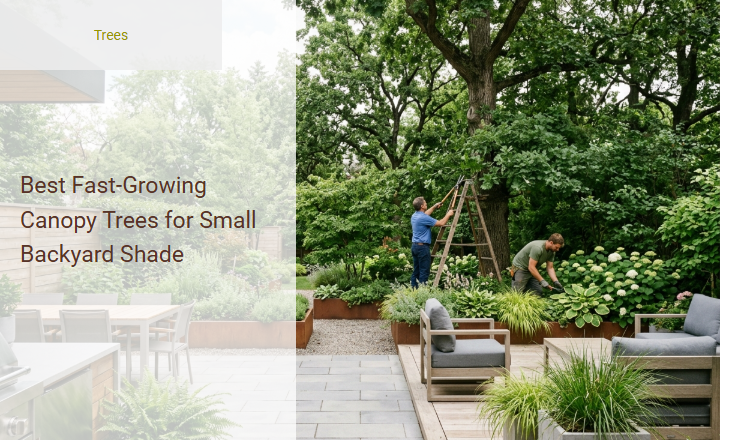
Homeowners with compact yards often find themselves trapped in a frustrating paradox: enduring scorching summer heat while waiting decades for a traditional shade tree to mature. However, simply planting any rapid grower in a limited footprint is a recipe for disaster, risking invasive root damage to nearby patios and foundations.
Selecting a species specifically engineered for compact spaces delivers rapid environmental relief, transforming a stifling backyard into a cool, private sanctuary in just a few seasons. To achieve this safely, property owners must balance accelerated growth with non-aggressive root systems and a predictable mature canopy height.
Sturdy, compact specimens like the Trident Maple and the Eastern Redbud prove that you do not have to sacrifice structural safety for swift canopy coverage. Below, we analyze the premier fast-growing canopy trees tailored for small landscapes, evaluating their growth rates, soil preferences, and urban tolerance to help you make the ideal selection.
Read also: Sweetgum vs Tupelo for Autumn Foliage
Creating a Cool Oasis in a Compact Space
As summer temperatures climb, compact urban and suburban backyards often transform into heat traps, radiating warmth from concrete, fences, and brick walls. Finding relief in a limited outdoor area can feel like an uphill battle, but you do not need a sprawling estate to establish a refreshing retreat. Fast-growing canopy trees offer the perfect natural cooling solution, scaling beautifully to match tight boundaries. By investing in these compact shade makers, you can enjoy lowered ambient temperatures, reduced energy costs, and a highly-effective living shield against the sun's harsh rays, all without overcrowding your precious outdoor living space.
Essential Criteria for Small-Yard Canopy Trees
Selecting the right tree for a confined space requires a strategic approach. To prevent your future shade provider from becoming a costly landscape hazard, prioritize specimens that exhibit specific growth habits designed for urban environments:
- Manageable Mature Height: Look for trees that max out between twenty and thirty feet to keep them proportional to small yards and away from overhead power lines.
- Non-Invasive Root Systems: Select species with deep or non-aggressive roots that will not crack nearby patios, walkways, or foundation walls.
- Rapid Growth Rate: Choose varieties known to put on substantial height and foliage width within their first few seasons to secure cooling relief sooner.
Eastern Redbud: Rapid Spring Blooms and Heart-Shaped Shade
Eastern Redbud
The botanical wonder known as Cercis canadensis is a premier choice for homeowners seeking immediate aesthetic and functional rewards. In early spring, before its leaves even emerge, this tree blankets its branches in vibrant pink-to-purple blossoms. Soon after, a dense canopy of large, heart-shaped leaves unfolds, casting a soothing, dappled shade over your patio. Reaching a highly manageable mature size of twenty to thirty feet, it offers a rapid rate of growth that delivers reliable cooling protection without imposing on nearby structures.
Paperbark Maple: Year-Round Visual Interest and Compact Shade
Paperbark Maple
If you desire a tree that works hard through every season, the Paperbark Maple is an unparalleled candidate. This compact specimen is celebrated for its outstanding exfoliating copper-bronze bark, which peels away gracefully to expose a rich, cinnamon-colored inner trunk. During the warmer months, its soft green canopy filters sunlight beautifully, only to transform into a fiery, brilliant crimson display once autumn arrives. It represents a perfect fit for tight spaces, delivering striking year-round visual appeal, structural elegance, and reliable summer shade in a neat, non-imposing silhouette.
Autumn Brilliance Serviceberry: Edible Berries and Multi-Season Appeal
Autumn Brilliance Serviceberry
The Autumn Brilliance Serviceberry is an exceptional multi-stemmed or single-trunk tree that offers a sensory feast. It ushers in the growing season with a delicate cloud of white spring blossoms, which transition into sweet, edible dark berries by midsummer-highly prized by both songbirds and home gardeners alike. Its fast-growing, airy canopy provides a gentle cooling effect, which gives way to an explosion of bright orange and red leaves in the fall.
Natchez Crepe Myrtle: Fast Growth and Stunning Summer Blooms
Natchez Crepe Myrtle
For those living in climates with scorching, humid summers, the 'Natchez' Crepe Myrtle is a standout selection. This vigorous grower quickly develops a graceful, vase-shaped canopy that naturally arches over seating areas to cast soothing shade. It boasts clusters of pure white crinkled blossoms throughout the hottest months, perfectly complemented by its highly decorative, smooth, exfoliating cinnamon-colored bark. Gardeners favor this cultivar because of its exceptional heat tolerance, drought resilience, and remarkably rapid growth rate, which combine to establish a cool, tropical-feeling sanctuary in record time.
Sweetbay Magnolia: Elegant Evergreen Canopy for Damp Soils
Sweetbay Magnolia
Many homeowners struggle to find trees that survive in areas with poor drainage or heavy clay. Fortunately, Magnolia virginiana thrives in wet soils while maintaining a slender, elegant upright profile. Commonly known as the Sweetbay Magnolia, this tree produces shimmering, glossy green leaves with striking silver undersides that glisten in the breeze. Throughout late spring and summer, it releases creamy white, waxy blossoms with a sweet, lemony fragrance, constructing a refreshing, fragrant canopy that serves as an evergreen or semi-evergreen privacy screen in smaller gardens.
Where to Plant for Optimal Cooling and Safety
Strategic positioning is the secret to maximizing the physical cooling power of your new tree. To block the most intense summer heat, plant your tree on the west or southwest side of your home. This ensures its canopy casts a protective shadow over walls, windows, and outdoor patios during the blazing afternoon hours. However, close proximity must be balanced with structural safety; ensure your tree is set back at least 8 to 10 feet from foundations, fences, and underground pipes to accommodate natural root expansion.
Safety Warning: Always dial 811 or contact your local utility location service to identify underground lines before digging any planting holes, preventing costly disruptions and ensuring a safe planting process.
Keeping Roots in Check and Fueling Fast Growth
In tightly bound properties, managing below-ground growth is just as critical as nurturing the canopy above. To keep root systems from wandering toward sensitive hardscaping, install physical root barriers along patios and pathways. Concurrently, you can expedite canopy density and height by giving your tree an optimal head start during the planting phase:
- Install Root Deflectors: Place specialized plastic barriers vertically into the soil next to walkways to direct root growth downward rather than outward.
- Enrich the Soil Bed: Dig a hole twice as wide as the root ball and backfill it with organic compost to supply essential nutrients.
- Implement Deep Watering: Water deeply and thoroughly twice a week during the first two growing seasons to encourage deep, stable root systems.
- Apply Protective Mulch: Layer three inches of organic mulch around the base, keeping it away from the trunk, to conserve moisture and regulate soil temperature.
Cultivating Your Private Shaded Sanctuary
Embracing a smaller footprint does not mean sacrificing the luxury of a cool, lush summer landscape. By evaluating your local hardiness zone, checking soil conditions, and selecting a fast-growing canopy tree tailored to your garden's layout, you can easily reclaim your outdoor living space from the summer heat. A small investment of time and care today will quickly flourish into a living canopy, rewarding you with cooler temperatures, increased property value, and a beautiful, private oasis for many years to come.
Summary
Finding the perfect balance of shade, privacy, and space in a compact garden can be challenging. This article highlights the best fast-growing canopy trees tailored specifically for small backyards. While traditional shade trees often grow too large and overwhelm limited spaces, selected compact varieties offer rapid growth while maintaining manageable mature heights.
The guide features top recommendations such as the Japanese Maple, River Birch, and various ornamental cherries, which provide quick cooling relief, beautiful seasonal foliage, and support for local wildlife. Additionally, the article offers essential tips on choosing trees with non-invasive root systems to safeguard patios, pipes, and home foundations. By selecting the right fast-growing species, homeowners can quickly transform a hot, cramped outdoor area into a lush, shaded, and comfortable retreat.
Leave a comment