
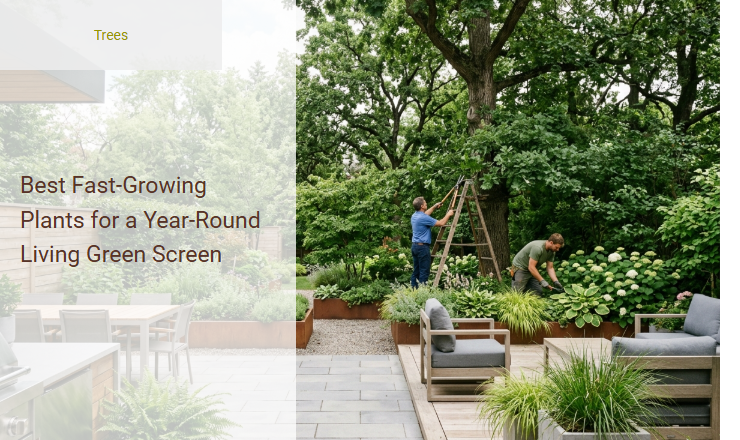
Staring at a neighbor's blank wall or enduring an exposed yard can make your outdoor space feel entirely uninviting, yet waiting years for traditional hedging to mature is a frustrating exercise in patience. While installing wooden fencing offers an immediate fix, these stark structures often lack aesthetic warmth and fail to mitigate wind or noise effectively.
A living green screen, however, grants you a dynamic, self-healing barrier that absorbs sound and dramatically enhances your property's microclimate. To succeed, one must recognize that rapid growth requires a careful balance of soil preparation and regular hydration. Utilizing proven evergreen specimens like Thuja 'Green Giant' or clumping bamboo ensures you achieve dense, year-round density in just a few seasons.
In this guide, we will evaluate the premier fast-growing botanical varieties, outline their specific site requirements, and provide a step-by-step blueprint to establish your permanent natural sanctuary.
Read also: Arborvitae vs Privet for Privacy Hedges
The Power of Living Green Screens for Year-Round Privacy
A living green screen offers a dynamic, breathing alternative to the sterile monotony of traditional wooden or vinyl fencing. Beyond simply blocking unwanted views, these natural barriers enhance your landscape with shifting textures, rich colors, and seasonal blooms. Environmentally, living walls of flora act as natural windbreaks, absorb localized noise pollution, and provide critical habitats for local songbirds and beneficial pollinators. By choosing fast-growing plants, you can establish a robust, self-healing boundary that purifies the air and cools your immediate microclimate, transforming a basic property line into a vibrant sanctuary.
Key Criteria for Selecting the Perfect Screening Plants
Choosing the right specimens for your privacy barrier requires careful planning to ensure long-term success. Before purchasing, evaluate your local environment and spatial constraints to select plants that will thrive in your specific location.
- USDA Hardiness Zone: Verify that your selected species can withstand the average minimum winter temperatures of your specific region to prevent seasonal dieback.
- Growth Rate: Fast-growing varieties will establish your screen quickly, though they may demand more frequent maintenance and pruning over time.
- Mature Height and Spread: Ensure the plant's final dimensions align with your privacy needs without encroaching on power lines, structures, or neighboring yards.
- Evergreen Characteristics: Select year-round foliage to maintain privacy during winter, or choose deciduous options if seasonal sunlight is preferred.
Rapid-Growth Conifers for Maximum Density
Top Coniferous Evergreens for Quick Cover
Coniferous evergreens are the gold standard for creating impenetrable, year-round screens due to their dense, needle-like foliage and pyramidal growth habits. They perform exceptionally well in large yards where maximum height and wind protection are needed.
- Thuja Green Giant: This exceptionally hardy arborvitae can grow up to three feet per year, thriving in moist, well-draining soils with full to partial sun.
- Leyland Cypress: Renowned for its rapid upward growth of three to four feet annually, this tree prefers fertile, acidic, and well-aerated soils.
Lustrous Broadleaf Evergreens for Year-Round Color
Excellent Broadleaf Varieties for Texture
Broadleaf evergreens bring a classic, polished aesthetic to the landscape, offering glossy, wide leaves that reflect light and soften hard property boundaries. They provide excellent sound absorption and block strong winds effectively throughout all four seasons.
- Cherry Laurel: Featuring thick, dark green leaves and fragrant white spring flowers, it grows vigorously in both shade and sun, preferring moist, organic soil.
- Wax Myrtle: This salt-tolerant native shrub grows rapidly, providing olive-green foliage with a pleasant herbal aroma, ideal for sandy or wet coastal soils.
Clumping Bamboo for Swift and Modern Privacy
Utilizing Clumping Bamboo Safely
For homeowners seeking an almost instant privacy solution, bamboo offers unparalleled growth speeds and a sleek, contemporary aesthetic. However, it is vital to select clumping bamboo rather than running varieties, as running bamboo spreads aggressively via underground rhizomes and can quickly invade neighboring properties. In contrast, clumping species grow outward from a central root mass, making them highly controllable, safe for residential borders, and incredibly fast to form dense, tall screens.
Vertical Green Walls Using Climbing Vines
Space-Saving Trellis Screens
When lateral yard space is limited, vertical gardening provides an elegant solution by training climbing vines upwards to form narrow, dense partitions. This method allows you to enjoy lush foliage even in tight side yards or compact urban patios.
- Star Jasmine offers fragrant white blossoms and deep green leaves that remain beautiful throughout the winter months.
- English Ivy creates a classic, rich green carpet over mesh panels, establishing a hardy barrier in shady zones.
Strategic Planting and Spacing for a Seamless Wall
To achieve a cohesive green barrier, plants must be spaced close enough to mesh together quickly but far enough apart to prevent root overcrowding and air stagnation. Proper planning during installation prevents future health issues.
- Measure the mature spread of your chosen species to calculate the perfect distance between center points.
- Dig a continuous trench or individual planting holes that are twice as wide as the root balls.
- Stagger your plants in a double row if you want to create a thicker, more immediate privacy screen.
Essential Watering and Soil Preparation Tips
The secret to rapid growth lies beneath the surface, where healthy roots require a balance of oxygen, moisture, and nutrients. Before planting, mix organic compost or aged manure into your native soil to improve its structure and nutrient content. During the first growing season, implement a deep watering schedule, providing at least one to two inches of water per week through drip irrigation or soaker hoses. This encourages roots to grow deep into the soil profile rather than staying near the dry surface, making your privacy screen highly drought-tolerant once established.
Pruning Techniques to Encourage Thicker Growth
Regular, strategic pruning is essential to prevent your screen from becoming leggy and sparse at the bottom. Trimming the growing tips of your plants forces the plant to redirect its energy into side shoots, resulting in a tighter, more protective barrier.
- Prune deciduous hedges in late winter or early spring while they are still dormant to minimize stress.
- Trim evergreen conifers in early summer after their initial growth spurt to maintain shape and density.
- Always ensure the bottom of the hedge is kept slightly wider than the top so sunlight can reach the lower branches.
Troubleshooting Common Green Screen Issues
Even the healthiest living walls can encounter occasional setbacks such as pests, yellowing leaves, or localized branch dieback. Regular monitoring allows you to spot issues early, ensuring your screen remains robust. Apply organic insecticidal soaps to combat common pests like spider mites or aphids before they multiply. Address nutrient deficiencies by applying a balanced, slow-release fertilizer in early spring, which rectifies chlorosis and promotes vibrant green foliage. Keeping the base clear of fallen debris reduces fungal risks, maintaining a clean environment for your plants. With a small amount of attentive care, your living green screen will continue to flourish, offering a breathtaking, natural sanctuary that enhances your home value and outdoor lifestyle for decades to come.
Summary
Creating a year-round living green screen is an eco-friendly and aesthetically pleasing alternative to traditional fencing, offering privacy, noise reduction, and wind protection. The key to a successful screen lies in selecting fast-growing, evergreen plants that maintain their foliage through all seasons. Popular choices include the dense and rapid-growing Leyland Cypress, the resilient and narrow Thuja ‘Green Giant' (Arborvitae), and non-invasive clumping bamboo, which provides a modern, fast-growing barrier. For those seeking additional texture, options like English Laurel and Holly offer glossy leaves and seasonal berries. When establishing a living screen, proper spacing, soil preparation, and regular early-stage watering are essential to ensure rapid, dense growth. Ultimately, selecting the right species for your climate guarantees a vibrant, low-maintenance natural barrier that enhances your property's beauty and biodiversity year after year.
Leave a comment