
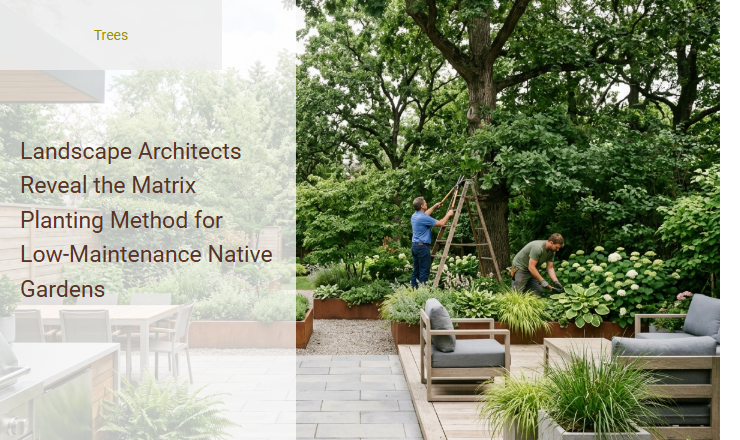
Many homeowners eagerly transition to native gardens to support local biodiversity, only to find themselves locked in an exhausting battle against aggressive weeds and a chaotic, unkempt aesthetic that requires constant maintenance.
To resolve this, we must first look at how natural plant communities actually organize themselves. Traditional landscaping relies on isolated specimen plants surrounded by open mulch-a vacancy sign for weeds. The matrix planting method bridges this gap by mimicking nature's dense, layered structures. This system grants you a self-sustaining, weed-suppressing ecosystem that thrives with minimal human intervention. While this approach stipulates a shift in perspective-requiring careful planning of functional layers rather than random planting-the ecological payoff is unmatched.
For example, pairing structural perennials like Purple Coneflower (Echinacea purpurea) with a dense ground matrix of Pennsylvania Sedge (Carex pensylvanica) creates a living mulch that naturally blocks weed germination. Below, we will detail the core principles of matrix design, identify the best native species for your region, and provide a step-by-step blueprint to establish your own low-maintenance landscape.
Read also: Birch vs Aspen for Ornamental Landscapes
What is the Matrix Planting Method?
Imagine a garden that grows like a wild ecosystem, defending itself against weeds, conserving water naturally, and requiring almost no traditional maintenance. This is the essence of the matrix planting method. Inspired by the dense, layered structure of natural prairies and woodlands, modern landscape architects use this design technique to shift away from traditional, high-maintenance mulch beds. By planting native species in a highly functional, interlocking grid, we can establish resilient native gardens that thrive on their own terms.
The Core Philosophy: Designing Like Nature
In the wild, bare soil is an anomaly that nature quickly covers. Traditional landscaping fights this reality by separating plants with vast oceans of wood mulch, creating an open invitation for opportunistic weeds. Matrix planting, conversely, embraces how plant communities interact cooperatively. By replicating the high-density growth of natural habitats, plants physically crowd out competition and share resources below the ground, eliminating the need for synthetic fertilizers or chemical herbicides.
"Plants do not grow in isolation; they form complex social communities where every species has a specific ecological niche to fill."
Anatomy of a Matrix: The Three Essential Layers
To design a successful matrix, we must look at the landscape in three dimensions. Instead of focusing on individual specimens, we arrange plants into cooperative layers based on their mature height, growth habit, and ecological function. This system ensures that every square inch of soil is occupied, maximizing ecological productivity and aesthetic appeal.
These three essential layers consist of the low-growing groundcover layer that blankets the soil, the mid-height seasonal theme plants that offer dynamic bursts of color, and the tall, architectural structural plants that anchor the design throughout the year.
The Groundcover Layer: Green Living Mulch
The Foundation of the Matrix
The groundcover layer is the workhorse of the matrix planting design, comprising up to fifty to sixty percent of the total plant palette. Instead of relying on dyed wood chips that deplete soil nitrogen as they decompose, this layer utilizes low-growing, fast-spreading native species to form a continuous, green living mulch. These plants fill the physical gaps beneath taller species, blocking sunlight from reaching weed seeds in the soil.
By choosing dense, shade-tolerant plants like Carex pensylvanica (Pennsylvania sedge) or Phlox subulata (creeping phlox), you create a self-sustaining carpet. This living barrier stabilizes the soil, retains moisture, and fosters a rich subterranean ecosystem.
The Seasonal Theme Layer: Year-Round Color and Life
Dynamic Ecological Successions
Above the green living mulch sits the seasonal theme layer. This level is composed of mid-height native perennials and ornamental grasses that drift through the garden, capturing the eye as they shift through their life cycles. Rather than blooming all at once, these plants are carefully selected to provide sequential visual interest and reliable forage for local pollinators from spring through autumn.
When choosing plants for this dynamic layer, aim for species that offer sequential beauty:
- Early spring ephemerals and delicate columbines
- Mid-summer coneflowers, bee balms, and black-eyed Susans
- Late-autumn asters, goldenrods, and warm-season grasses
The Structural Layer: Creating Visual Anchors
Architectural Elements in the Garden
The final layer provides the skeleton of your matrix. Structural and accent plants are the tallest elements in the design, placed sparingly to act as visual anchors that guide the viewer's eye through the landscape. These long-lived species are selected for their distinct form, bold foliage, or persistent seed heads that retain their shape long after the growing season ends.
Strategically grouping plants like Baptisia australis (blue wild indigo) or structural grasses like switchgrass ensures that your garden maintains its structural integrity and beauty during the quiet winter months.
Choosing the Right Native Plants for Your Matrix
A successful matrix planting relies entirely on selecting the right plants for the right place. Because these gardens are designed to function as a self-sustaining system without irrigation systems or soil amendments, you must accurately assess your site's natural conditions before buying plants. Carefully analyze your soil texture, drainage capabilities, and the path of the sun throughout the seasons.
Step-by-Step Layout and Spacing Strategies
Installing a matrix garden differs significantly from traditional planting. Instead of placing plants in isolated clusters surrounded by mulch, you will arrange them in a tight, randomized grid that mimics natural distribution. This layout encourages fast canopy closure, sealing off the soil from weeds within the first growing season.
- Calculate your total square footage and determine a dense spacing interval, typically 12 to 18 inches on center.
- Lay out your groundcover plugs first, distributing them evenly across the entire planting area to establish the base layer.
- Intersperse seasonal theme plants in natural-looking drifts, avoiding straight lines or formal geometric patterns.
- Position your tall structural plants as individual focal points or in small, odd-numbered groupings to guide the eye.
Minimal Maintenance: Caring for Your Matrix Garden
While a matrix garden requires careful planning and initial watering during its establishment phase, its long-term maintenance needs are exceptionally low. As the living mulch layer fills in, your weeding and watering chores will steadily decrease, allowing you to enjoy a beautiful, self-regulating landscape.
| Task | Traditional Garden Care | Matrix Garden Care |
|---|---|---|
| Watering | Frequent automated irrigation | Only during severe drought |
| Weeding | Weekly hand-pulling and pre-emergents | Minimal spot weeding in spring |
| Mulching | Annual application of wood chips | Never needed; living groundcover suffices |
Embracing a Sustainable, Living Landscape
Reimagining our outdoor spaces through the lens of matrix planting allows us to step away from the endless cycle of mowing, fertilizing, and weeding. By shifting our perspective from manicured lawns to dynamic, multi-layered plant communities, we create yards that are both ecologically functional and breathtakingly beautiful.
By choosing this forward-thinking, nature-inspired approach, you can transform your property into a thriving haven for local wildlife while enjoying a vibrant, resilient, and virtually effortless native garden for years to come.
Summary
The matrix planting method, championed by modern landscape architects, is a nature-inspired design technique that creates highly resilient, low-maintenance native gardens. Instead of traditional individual plant spacing separated by wood mulch, this ecological approach layers plants tightly to mimic natural plant communities.
The system relies on three distinct layers: a dense ground-cover "matrix" (comprising 50 to 60 percent of the area) that acts as a living mulch to suppress weeds; seasonal theme plants that provide bursts of color; and structural accent plants that add height and year-round form. By filling every ecological niche, matrix planting significantly reduces evaporation, eliminates the need for repetitive mulching, and fosters biodiversity. Once established, these gardens require minimal weeding, watering, and pruning, offering a sustainable and cost-effective alternative to conventional landscaping.
Leave a comment