
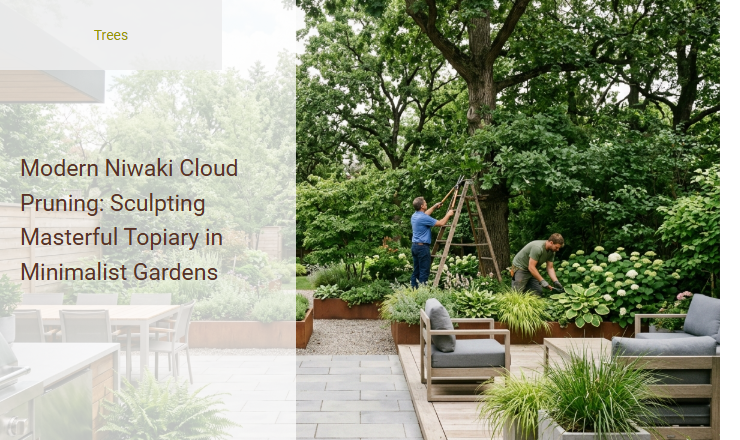
Many modern homeowners struggle to bridge the gap between stark, minimalist architecture and the organic chaos of a traditional garden, often resulting in outdoor spaces that feel either sterile or unkempt. To resolve this tension, contemporary designers are increasingly looking to ancient Japanese horticultural principles, where the deliberate manipulation of negative space dictates the landscape's flow.
Mastering the art of Niwaki, or cloud pruning, grants your garden a striking, living architecture that elevates the entire property's aesthetic and instills profound tranquility. However, successfully transforming species like Pinus sylvestris (Scots Pine) or Ilex crenata (Japanese Holly) into structural masterpieces requires a commitment to patient training and precise, directional pruning rather than hasty shearing.
In this guide, we will examine the essential tools, structural training methods, and seasonal maintenance schedules required to sculpt your own backyard masterpieces.
Read also: Boxwood vs Yew for Formal Topiary
Introduction to Modern Niwaki: Nature Sculpted for Minimalist Spaces
Modern landscape design frequently searches for a harmonious balance between structured architecture and organic beauty. In this pursuit, the ancient Japanese art of Niwaki-literally meaning "garden tree"-and its sister technique of cloud pruning have emerged as profound design elements. By sculpting living trees into striking, stylized forms, designers can bring the grandeur of natural forests into confined urban spaces. These highly structured specimens serve as dynamic, living sculptures that perfectly complement the clean lines and understated elegance of contemporary, minimalist homes.
The Philosophy of Tamabuki: Understanding Cloud Pruning
At its heart, the practice of Tamabuki, or cloud pruning, is deeply rooted in Japanese aesthetic philosophy, seeking to distill the vastness of nature into a single, localized form. Rather than forcing a tree into artificial geometric shapes, the gardener coaxes out the inherent character of the plant, capturing the essence of an ancient, wind-swept tree clinging to a mountain cliff. This approach values asymmetry and dynamic balance over rigid symmetry, acknowledging that nature is beautifully imperfect. Through careful reduction and deliberate spacing, the artist creates a sense of age and permanence, transforming a young garden tree into a timeless monument of wind, weather, and resilience.
Selecting the Perfect Canvas: Ideal Species for Niwaki
Choosing the right plant material is critical, as certain species respond far better to the rigorous pruning and shaping required to form distinct cloud pads.
- Pinus thunbergii (Japanese Black Pine): The quintessential Niwaki subject, prized for its rugged bark, stiff needles, and malleable branches that accept training easily.
- Ilex crenata (Japanese Holly): An exceptional broadleaf evergreen with small, dense foliage that is incredibly easy to shear into smooth, pillowy cushions.
- Taxus baccata (English Yew): Extremely tolerant of hard pruning, this slow-growing conifer regenerates reliably from old wood, making it ideal for correcting structural mistakes.
The Sculptor's Toolkit: Essential Gear for Precision Pruning
Executing clean, precise cuts requires high-quality Japanese tools designed specifically for this deliberate style of gardening. Investing in authentic, hand-forged gear ensures the health of the tree and ease of execution for the practitioner.
- Pruning Shears (Sentei Bansho): Heavy-duty shears used for structural pruning and cutting back larger twigs.
- Japanese Tripod Ladders: Wide-base, three-legged aluminum ladders that offer unparalleled stability on uneven garden terrain.
- Sharpening Stones: Vital for maintaining a razor-sharp edge on blades, preventing torn wood that invites disease.
Anatomy of a Masterpiece: Defining the Cloud Pad
The Trunk and Master Branches
The foundation of any Niwaki specimen lies in its main trunk line and primary branches. The trunk should guide the eye upward, ideally featuring graceful curves or a strong, tapered lean. Secondary branches are carefully selected to emerge from the outer bends of the trunk, ensuring they do not cross or cluster together.
Establishing the Floating Pads
Once the core skeletal structure is defined, the gardener focuses on developing the Tamakazari, or the distinct, floating "cloud" pads. These pads are dense clusters of foliage cultivated on the horizontal extremities of the main branches. They must be spaced widely enough to let light and air pass through, creating the illusion of green clouds drifting lazily around a mountain peak.
Step-by-Step: Sculpting Your First Cloud Tree
Transforming an overgrown nursery shrub into a refined cloud-pruned masterpiece is a structured process that rewards patience and deliberate execution.
Assess the plant from all angles to identify the natural flow of the main trunk and determine the best front-facing side of the future sculpture.
Remove weak, dead, crossing, or vertical branches to reveal the underlying skeleton of primary lateral limbs.
Isolate the ends of the remaining branches, stripping away foliage from the inner parts of the branches to leave clear tufts of growth at the tips.
Lightly trim the outer edges of these remaining foliage tufts to encourage dense, lateral branching, slowly forming the flat-bottomed, rounded tops of the cloud pads.
Niwaki in Minimalist Gardens: Placement and Composition
In minimalist garden design, every single element must justify its presence. A well-placed Niwaki tree acts as a powerful focal point, drawing the eye and anchoring the entire landscape composition.
To maximize the visual impact of your sculpted tree, position it against a neutral backdrop such as a raw concrete wall, a simple wooden fence, or a vast expanse of light-colored gravel. This contrast highlights the intricate silhouette of the foliage pads. The proximity of water features can also enhance the design, reflecting the twisted branches and adding a sense of profound serenity.
Seasonal Maintenance: Preserving the Sculptural Form
Spring Candle-Pinching
For pine species, spring is the most active maintenance period. Gardeners must carefully snap the emerging candles (new shoots) by hand, leaving only a fraction of their length to control growth and maintain compact cloud pads.
Autumn Thinning
As growth slows down in the fall, it is time to thin out the dense pads. Removing old, yellowing needles and congested twigs allows sunlight to penetrate deep into the interior of the cloud pads, preventing die-back.
Winter Protection
Heavy winter snow can easily warp or snap carefully trained branches. Gently shaking off heavy accumulations or securing vulnerable limbs with bamboo supports ensures the structural integrity remains intact throughout the coldest months.
Pitfalls to Avoid: Common Mistakes in Cloud Pruning
Beginners often struggle with the balance of reduction and preservation when starting their Niwaki journey.
- Over-clearing the interior: Removing too much inner growth too quickly can weaken the tree and leave branches looking bare and disconnected.
- Forcing rigid symmetry: Creating perfectly symmetrical, identical pads on both sides of the trunk destroys the natural, dynamic flow essential to the style.
- Neglecting lower branches: Lower limbs naturally receive less sunlight and can die off if not given priority during pruning sessions; always ensure they remain wider than the upper branches.
The Living Canvas: The Mindful Art of Ongoing Creation
Rather than being a quick weekend project, cultivating Niwaki is a lifelong endeavor that unfolds in slow, seasonal rhythms. This ongoing dialogue between the gardener and the tree teaches patience, observation, and deep respect for the natural world. By participating in this ancient practice, you create more than just a beautiful minimalist garden; you foster a meditative connection with a living, breathing sculpture that will evolve and grow more beautiful with each passing decade.
Summary
This article explores the transformative art of modern Niwaki, specifically cloud pruning, and its integration into minimalist garden design. Rooted in ancient Japanese traditions, Niwaki involves meticulously sculpting trees and shrubs to mimic the weathered, organic beauty of nature. By shaping foliage into distinct, cloud-like pads, this technique creates striking living sculptures that serve as dramatic focal points in contemporary outdoor spaces.
The piece highlights how the clean lines and limited palettes of minimalist gardens perfectly complement the structured forms of cloud-pruned specimens, such as pines, yews, and boxwoods. Readers will learn the essential principles of branch selection, structural balance, and the ongoing maintenance required to sustain these living masterpieces. Ultimately, modern Niwaki bridges the gap between architectural design and organic serenity, offering a sophisticated way to introduce depth, character, and timeless tranquility to any modern landscape.
Leave a comment