
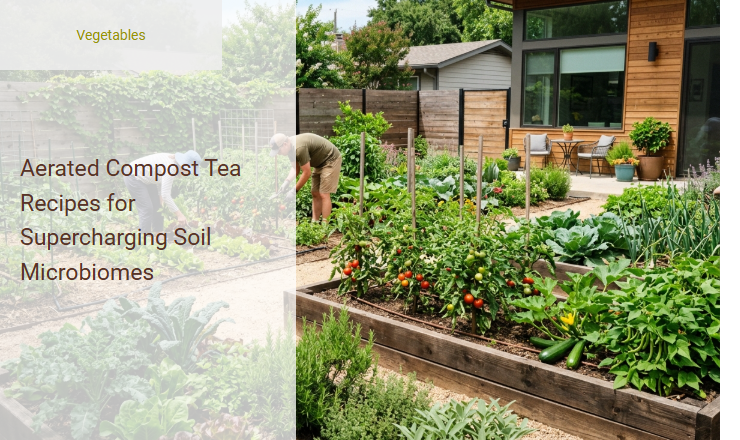
Many growers struggle with stubborn, depleted soils that fail to yield vibrant crops, despite heavy applications of standard fertilizers. While traditional synthetic NPK inputs provide temporary chemical boosts, they often degrade the underlying soil biology over time. Transitioning to biology-first management grants your garden an active defense system, unlocking superior nutrient cycling and natural pest resistance.
However, it is vital to understand that aerated compost tea (ACT) is not a direct liquid fertilizer; rather, it functions as a highly concentrated biological inoculant. By brewing premium compost with specific catalysts-such as unsulphured blackstrap molasses to feed beneficial bacteria, or kelp meal to stimulate fungal networks-you actively multiply these microscopic allies. In this guide, we will break down the science of brewing, provide proven ACT recipes tailored for various plant stages, and outline the essential equipment needed to supercharge your soil microbiome.
Read also: Compost Tea vs Plain Water for Seedling Boost
Introduction to Aerated Compost Tea (ACT)
Aerated Compost Tea (ACT) is a liquid extraction of beneficial microorganisms brewed by suspending high-quality compost in highly oxygenated water. Unlike synthetic fertilizers that act as temporary chemical shots for plants, ACT works by introducing billions of active bacteria, fungi, protozoa, and nematodes directly to your garden. This biological infusion is essential for organic gardening because it builds a thriving, living soil ecosystem. By actively feeding and expanding the soil food web, compost tea establishes a self-sustaining cycle where microbes naturally unlock nutrients for plant roots, improve soil structure, and bolster plant immunity from the ground up.
The Science of Aeration: Why Oxygen is Key
The defining line between a nourishing biological tonic and a toxic pathogen bath is dissolved oxygen. Aerobic environments-those saturated with oxygen-favor the growth of beneficial microorganisms such as mycorrhizal fungi, nitrogen-fixing bacteria, and predatory protozoa. These organisms require oxygen to respire and thrive. Conversely, stagnant, oxygen-depleted (anaerobic) environments foster harmful pathogens, such as E. coli and Salmonella, which tend to produce acidic, foul-smelling byproducts that can devastate plant health. Continuous aeration ensures the biological balance remains firmly in favor of beneficial microbes, suppressing disease through active competition and space colonization.
"Maintaining high dissolved oxygen levels-ideally above 6 parts per million-is the single most critical factor in preventing the proliferation of anaerobic pathogens during the brewing cycle."
Essential Equipment Checklist for DIY Brewers
Building a highly efficient home compost tea brewer requires a few simple but specialized components designed to maximize oxygenation and microbial extraction.
- Heavy-Duty Air Pump: The engine of the brewer, responsible for delivering a constant, high-volume stream of air to maintain optimal dissolved oxygen levels.
- Air Diffuser or Bubbler: Breaks the air stream from the pump into millions of micro-bubbles, maximizing the contact area between oxygen and water.
- Brewing Container (5-Gallon Bucket): The vessel that holds the water and serves as the chamber for the microbial population explosion.
- Mesh Filter Bag (400-800 Micron): Holds the solid compost in place, allowing water and microbes to flow freely while keeping large particulate matter from clogging application sprayers.
Water Quality: The Foundation of a Healthy Brew
Municipal tap water is specifically treated with chemicals like chlorine and chloramine to sterilize biological life. While this keeps drinking water safe, it is lethal to the very bacteria and fungi you are trying to cultivate in your aerated compost tea. Introducing untreated tap water into your brewer will immediately halt microbial reproduction. To give your brew the best foundation, you must neutralize these sanitizing agents before adding any compost or catalysts.
- Fill your brewing container with municipal tap water to the desired level.
- Insert your air pump and bubble diffuser into the water.
- Turn on the pump and let the water aerate vigorously for 24 hours to completely off-gas volatile chlorine.
- If your municipality uses chloramine (which does not off-gas easily), add a spoonful of humic acids or a small amount of vitamin C powder to neutralize the chemical bond instantly.
Recipe 1: Fungal-Dominated Tea for Trees and Woody Perennials
Ingredients and Brewing Time
- 2 cups of fungal-rich forest compost or well-aged leaf mold
- 2 tablespoons of humic acids (liquefied or soluble powder)
- 2 tablespoons of kelp meal (pre-soaked for optimal extraction)
- 5 gallons of dechlorinated water
- Brewing time: 36 to 48 hours at 65-75°F
Fungal-dominated tea is perfect for establishing symbiotic relationships with mycorrhizae around the roots of fruit trees, berries, and woody ornamentals. For best results, apply this tea as a deep soil drench directly over the root zone in early spring or fall when fungal growth naturally peaks.
Recipe 2: Bacterial-Dominated Tea for Vegetables and Annuals
Ingredients and Brewing Time
- 2 cups of high-quality organic worm castings (vermicompost)
- 2 tablespoons of unsulfured blackstrap molasses
- 1 tablespoon of soluble kelp powder
- 5 gallons of dechlorinated water
- Brewing time: 24 hours at 68-75°F
Fast-growing annual vegetables, leafy greens, and brassicas thrive in soils rich in bacterial activity. This recipe uses simple sugars from molasses to feed rapid bacterial reproduction. Apply this tea weekly during the active vegetative growth phase to maximize nutrient uptake and plant vigor.
Microbiome Superchargers: Advanced Additives and Catalysts
To push your compost tea's biological diversity to its absolute limit, you can introduce advanced catalyst ingredients. These inputs act as specialized foods targeting specific trophic levels of the soil food web, allowing you to fine-tune the microbial populations according to your plants' immediate nutritional demands.
| Additive | Target Microbes | Recommended Dosage (per 5 gal) |
|---|---|---|
| Fish Hydrolysate | Beneficial Fungi | 1-2 tablespoons |
| Alfalfa Meal | Decomposing Bacteria & Protozoa | 1 tablespoon |
| Glacial Rock Dust | Mineral-Solubilizing Microbes | 1 tablespoon |
The 24-to-48-Hour Brewing Process Step-by-Step
Brewing compost tea is an active, living process. Success depends on monitoring temperature, duration, and sensory cues to ensure you harvest the tea at its peak biological density.
- Position your brewer out of direct sunlight in an area with a stable temperature between 60°F and 80°F.
- Fill the vessel with your pre-dechlorinated water and turn on the air pump to begin bubbling.
- Load your compost and chosen catalysts into the mesh bag, secure the top, and suspend it directly in the path of the air bubbles.
- Let the mixture brew for 24 to 48 hours; a clean, earthy smell and a thick layer of stable yeast-like foam on top are excellent indicators of high microbial activity.
- Turn off the pump and immediately prepare to apply the fresh liquid before oxygen levels drop.
Application Methods: Soil Drench vs. Foliar Spray
Soil Drenching
Soil drenching targets the root zone directly. Apply the tea undiluted or diluted up to 1:5 with dechlorinated water. Pouring it around the base of plants inoculates the rhizosphere with beneficial organisms that form protective barriers and convert raw organic matter into plant-available nutrients.
Foliar Spraying
Foliar spraying coats the plant's leaves, stems, and buds. Use a clean pressure sprayer to apply the tea at a 1:2 dilution rate. The microbes colonize leaf surfaces, occupying space that would otherwise be targeted by fungal pathogens like powdery mildew. Remember, the living microbes will begin to die once oxygenation stops, so you must apply the brew within 4 hours of turning off your pump.
Troubleshooting and Safety Guidelines
A healthy compost tea should smell clean, like a rich, damp forest floor. If you notice a foul, sour, or sulfur-like odor, it indicates that your brew has gone anaerobic due to a lack of oxygen or excessive sugar inputs. Lack of foam is generally harmless and often depends on the specific compost source, but a temperature spike above 85°F can kill off delicate beneficial organisms. Always clean your equipment thoroughly with hydrogen peroxide or isopropyl alcohol after every single brew cycle to prevent pathogen buildup.
Summary
Aerated Compost Tea (ACT) is a highly effective, liquid soil amendment designed to rapidly multiply beneficial microorganisms, including bacteria, fungi, protozoa, and nematodes. By brewing high-quality compost or vermicompost in non-chlorinated water with active aeration, gardeners can supercharge their soil microbiomes. The brewing process relies on specific food sources to cultivate target microbes: unsulfured blackstrap molasses feeds beneficial bacteria, while humic acids, kelp meal, and fish hydrolysate promote fungal growth.
Constant aeration is critical during the brewing process to maintain an oxygen-rich environment, which prevents the proliferation of harmful anaerobic pathogens. When applied as a soil drench or foliar spray, ACT enhances nutrient uptake, improves soil structure, boosts plant immunity, and naturally suppresses diseases. Ultimately, mastering ACT recipes provides growers with a sustainable, organic tool to foster thriving, resilient ecosystems from the ground up.
Leave a comment