
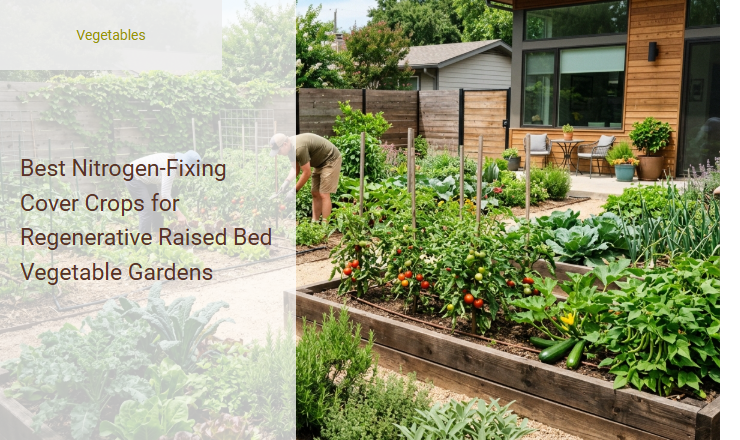
Many raised bed gardeners watch their soil productivity decline year after year, forcing a frustrating, costly cycle of buying synthetic inputs just to keep vegetable yields steady. While raised beds offer excellent drainage and ease of access, their isolated microenvironments rapidly deplete essential macronutrients-particularly nitrogen, which leaches away far quicker than in traditional in-ground plots.
Fortunately, incorporating nitrogen-fixing cover crops allows you to tap into an abundant, free source of atmospheric nutrients, converting them into bioavailable plant food directly at the root zone. However, success requires a key stipulation: these green manures must be managed and terminated at the correct growth stage to release their nutrients effectively without competing with your primary crops. Utilizing specific varieties, such as Crimson Clover or Hairy Vetch, provides a proven, biological engine for soil regeneration.
This guide will review the best nitrogen-fixing cover crops tailored specifically for raised beds, detailing their growth habits, planting schedules, and termination strategies to elevate your garden's fertility naturally.
Read also: Worm Castings vs Chicken Manure for Nitrogen
Introduction to Nitrogen-Fixing Cover Crops in Raised Beds
For years, home gardeners have relied on synthetic, quick-release fertilizers to boost productivity in their raised beds. While these chemical additions provide a brief spike in crop growth, they often degrade the long-term biological vitality of the soil, leaving it lifeless and dependent on constant supplementation. Shifting to a regenerative gardening paradigm introduces a natural, self-sustaining alternative: nitrogen-fixing cover crops. By integrating these specialized plants into raised bed systems, you harness the power of biological soil restoration. These crops act as living green manures that naturally capture plant-essential nutrients, cycle carbon, and build a thriving subterranean ecosystem, turning your raised beds into self-feeding powerhouses without a single drop of synthetic inputs.
The Science of Biological Nitrogen Fixation
At the heart of soil regeneration lies an elegant partnership between legumes and beneficial soil bacteria known as Rhizobium. While Earth's atmosphere is comprised of roughly 78% nitrogen gas, plants cannot access this elemental form. Leguminous cover crops overcome this barrier by exuding chemical signals from their roots to attract free-swimming Rhizobium bacteria. The bacteria colonize the root hairs, prompting the plant to construct protective nodules around them. Inside these specialized nodules, the bacteria utilize an enzyme called nitrogenase to break the strong chemical bonds of atmospheric nitrogen, converting it into ammonium-a form of nitrogen that plants can readily absorb. In return, the host plant provides the bacteria with vital carbohydrates produced through photosynthesis. Within the confined boundaries of a raised bed, this closed-loop exchange rapidly enriches the localized soil volume, building a dense reservoir of organic nitrogen that remains in the root zone for future vegetable crops.
Crimson Clover: The Fast-Growing Organic Matter Builder
Crimson Clover (Trifolium incarnatum) is an exceptional, fast-growing annual cover crop perfectly suited for the intensive spacing of raised bed gardening. It rapidly establishes a dense canopy of trifoliate leaves, capturing solar energy to fuel heavy underground nitrogen fixation while building valuable topsoil structure.
Vibrant Pollinator Support
In mid-to-late spring, Crimson Clover erupts into brilliant, cone-shaped scarlet blossoms. These striking red flowers do more than beautify your garden; they act as a biological magnet for vital pollinators, including bumblebees, honeybees, and predatory insects that help manage garden pests naturally.
Biomass and Soil Protection
Beyond its nutrient contributions, this clover produces a massive volume of green biomass. The thick foliage acts as a natural living blanket, shielding delicate raised bed soil from the erosive forces of heavy rain and wind while suppressing cool-season weed germination.
- Optimal Sowing Depth: 1/4 to 1/2 inch deep
- Soil Temperature: Germinates best between 60°F and 75°F
- Moisture Needs: Requires consistent moisture during establishment
- Hardiness: Winter hardy down to USDA Zone 6
Hairy Vetch: The Heavy-Duty Nitrogen Producer
When it comes to sheer nitrogen yield, Hairy Vetch (Vicia villosa) stands unmatched. This ultra-hardy winter annual is capable of fixing up to 150 pounds of nitrogen per acre, making it an invaluable asset for raised beds destined for heavy-feeding spring crops. Sown in the late autumn, Hairy Vetch establishes a vigorous root system that survives sub-zero temperatures. In early spring, it undergoes an explosive vegetative growth phase, producing long, vine-like tendrils that intertwine to form a thick, weed-smothering mat. This dense ground cover prevents light from reaching weed seeds, keeping your raised beds exceptionally clean and weed-free prior to the main planting season.
Field Peas: The Cool-Season Soil Loosener
Austrian Winter Peas, commonly referred to as Field Peas, offer a dual-action benefit for raised beds that suffer from structural compaction. While their leafy vines accumulate substantial quantities of nitrogen, their aggressive, deep-penetrating taproots work tirelessly beneath the surface. These roots force their way through tight, clay-heavy, or settled soil layers, creating natural pathways for air, water, and future vegetable root systems. As the peas mature during the cool season, they deposit a high concentration of readily available nitrogen in the upper soil layers, leaving behind a loose, crumbly, and highly fertile planting bed come spring.
"The true power of Austrian Winter Peas lies in their underground architecture. The combination of deep taproot penetration and fine lateral root networks works better than mechanical tilling, preserving the delicate soil food web while depositing deep reservoirs of organic nitrogen."
- Dr. Elaine Ingham, Soil Microbiologist
White Clover: The Living Mulch for Pathways and Under-Planting
Unlike annual cover crops that are terminated before spring, White Clover (Trifolium repens) is a low-growing perennial that functions beautifully as a permanent living mulch. Because of its prostrate growth habit and spreading stolons, it forms a durable, traffic-tolerant carpet. This makes it ideal for seeding along raised bed pathways or directly under-planting beneath tall, deep-rooted, heavy-feeding summer vegetables such as sweet corn, tomatoes, or trellised peppers. As a living mulch, White Clover shades the soil surface to minimize evaporation, drastically reduces weed pressure, and continuously feeds nitrogen into the surrounding soil matrix through natural root sloughing, ensuring your main crops remain sustained throughout the warm season.
Matching Cover Crops to Your Planting Calendar
To maximize the nutrient-yielding benefits of cover crops in your raised beds, it is crucial to align their growth cycles with your seasonal planting windows. Warm-season selections thrive in the heat of mid-summer, while cool-season varieties require autumn and winter conditions to establish and perform their biological work.
| Cover Crop | Optimal Season | Nitrogen Yield | Primary Benefit |
|---|---|---|---|
| Cowpeas | Summer (Warm) | High | Drought tolerance & biomass in peak heat |
| Crimson Clover | Late Summer / Fall | Medium-High | Rapid spring growth & pollinator attraction |
| Hairy Vetch | Fall / Winter | Very High | Excellent winter hardiness & weed suppression |
| Field Peas | Early Spring / Late Fall | High | Decompacts heavy soils & rapid establishment |
Step-by-Step Seeding in Raised Beds
Achieving a lush, even stand of nitrogen-fixing cover crops in the intensive space of a raised bed requires careful execution. Follow these steps to ensure rapid germination and strong root colonization:
- Prepare the Seedbed: Gently rake the top two inches of your raised bed soil to remove any remaining debris or large clumps, creating a fine, loose, and level surface.
- Inoculate the Seeds: Dampen your legume seeds slightly with water or a sugar solution, then mix them thoroughly with the appropriate powdered Rhizobium inoculant until all seeds are evenly coated.
- Broadcast the Seed: Evenly scatter the inoculated seeds across the surface of the raised bed. Aim for a slightly higher seeding density than field crops to ensure complete coverage in the confined bed area.
- Incorporate and Compress: Lightly rake the seeds into the soil to a depth of roughly 1/4 to 1/2 inch. Firm the soil surface using a flat board or your hands to ensure excellent seed-to-soil contact.
- Water and Protect: Keep the bed consistently moist with a gentle misting spray until germination occurs, and consider covering the bed with a floating row cover to prevent birds from eating the seeds.
Termination: The Chop-and-Drop Method
Terminating your cover crops correctly is vital to lock in the fixed nitrogen and organic matter. In a no-dig raised bed system, this is achieved effortlessly through the "chop-and-drop" method. Instead of tilling the plants into the soil-which disrupts beneficial fungal networks and releases stored carbon-you cut the crops right at the soil level. The severed roots remain in the soil, where they decompose and slowly release locked-up nitrogen directly to the rhizosphere. Meanwhile, the leafy top growth is dropped in place onto the soil surface, forming a nutrient-rich, moisture-retaining organic mulch that breaks down over time, continually feeding the soil food web.
To execute this successfully, timing is everything. You must terminate your cover crops when they reach 10% to 50% bloom; do not allow them to set seed, as they will draw valuable nitrogen back out of the roots to produce those seeds, and could become weeds in your next vegetable crop.
Integrating Next-Season Heavy Feeders
Once your cover crops have been chopped and dropped, your raised beds are primed for planting. This biological transition represents the pinnacle of regenerative garden management. To plant your spring crops, simply part the decaying cover crop mulch to expose the soil surface, dig a small planting hole, and transplant your heavy-feeding vegetable starts-such as nitrogen-loving tomatoes, leafy brassicas, or hungry summer squash-directly into the bed. The roots of your new vegetables will easily navigate the channels left behind by the decomposing cover crop roots, tapping directly into the newly released nitrogen reserves. As the surface mulch continues to break down, it slowly feeds the soil biology throughout the growing season, completing a natural cycle of fertility that makes synthetic fertilizers completely obsolete.
Summary
Implementing nitrogen-fixing cover crops is a cornerstone of regenerative raised bed vegetable gardening. These hardworking plants, primarily legumes like crimson clover, hairy vetch, and Austrian winter peas, form symbiotic relationships with beneficial soil bacteria to convert atmospheric nitrogen into a usable plant nutrient. By planting these cover crops during the off-season, home gardeners can naturally enrich their soil, drastically reducing the need for synthetic fertilizers.
Beyond boosting nitrogen levels, these crops improve soil structure, suppress weeds, prevent erosion, and foster a diverse soil microbiome within the confined space of raised beds. Utilizing "chop-and-drop" termination methods allows these organic nutrients to return directly to the earth, paving the way for a bountiful vegetable harvest. Ultimately, integrating these cover crops ensures long-term soil fertility and promotes a thriving, self-sustaining garden ecosystem.
Leave a comment