
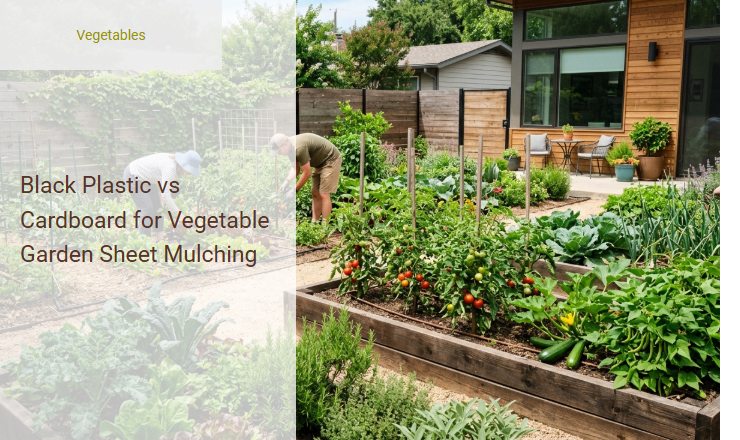
Confronting a relentless tide of weeds while trying to establish a productive vegetable bed is a frustrating rite of passage for every gardener. Before investing in seeds and compost, successful growers must first prioritize their foundational suppression and moisture-retention strategies.
Selecting the correct barrier grants you a low-maintenance growing season, dramatically reducing manual labor while boosting overall crop yields. However, we must stipulate that while both materials successfully smother unwanted vegetation, they interact with the subterranean ecosystem in fundamentally different ways.
For instance, while corrugated cardboard actively fosters earthworm colonization and decomposes into rich organic matter, black polyethylene plastic excels at rapid soil warming for heat-loving crops like tomatoes but risks introducing microplastics. To guide your decision, this analysis will compare the durability, cost, soil health impacts, and thermal properties of both sheet mulching mediums.
Introduction to Sheet Mulching: Black Plastic vs. Cardboard
Sheet mulching is an exceptional, low-effort technique used to establish fertile vegetable garden beds by suppressing existing vegetation and building rich topsoil over time. To initiate this process, gardeners rely on a primary sheet barrier to smother weeds and grass. Two primary materials dominate this practice: synthetic black plastic and organic cardboard. While both serve as the foundational layer of a sheet mulch system, they operate on completely different horticultural principles. Synthetic plastic acts as an impenetrable, long-term shield, whereas organic cardboard serves as a temporary, biodegradable sheet that integrates into the soil web.
Weed Suppression: Blockage Efficiency and Longevity
Weed suppression is the first line of defense in any sheet mulching project, and the longevity of this barrier dictates how often you will have to weed.
- Black plastic provides an absolute, multi-year light blockade that prevents even the most aggressive perennial weeds from photosynthesizing.
- Cardboard offers a highly effective but temporary barrier that blocks light for only a single growing season before decomposition begins.
- Highly persistent weeds can eventually find tears in decomposing cardboard, whereas heavy-grade black plastic remains highly resistant to penetration.
Soil Temperature and Microclimate Control
The choice of sheet mulching material dramatically influences the temperature of the underlying soil, altering the root zone environment. Black plastic acts as a solar radiator, absorbing sunlight and transferring thermal energy directly down into the ground, which can raise soil temperatures by several degrees. Conversely, cardboard behaves as an insulating blanket, shielding the soil from direct solar radiation and maintaining a cooler, more stable ground temperature during hot summer months.
Soil Biology, Earthworms, and Organic Matter
The biological health of your garden soil depends heavily on how your chosen barrier interacts with soil organisms. Cardboard serves as a direct food source for beneficial soil biology, attracting fungi and earthworms that digest the cellulose and pull organic matter deep into the earth.
Underneath a layer of decomposing cardboard, earthworm populations thrive, rapidly turning compacted dirt into crumbly, nutrient-rich castings.
In contrast, black plastic creates a sterile barrier that prevents organic matter from filtering downward, restricting the aeration and oxygen exchange necessary for healthy aerobic soil life.
Water Permeability and Irrigation Strategy
Water management is a key factor in vegetable production, and the barrier you choose will dictate your irrigation layout. Non-porous black plastic completely sheds water, preventing rainfall from directly penetrating the soil surface and requiring gardeners to install drip irrigation lines underneath the plastic layer before planting. On the other hand, cardboard is highly permeable and absorbent, soaking up overhead rain or irrigation and slowly releasing that moisture down into the soil to maintain consistent hydration.
Durability, Lifespan, and Maintenance Requirements
| Material | Average Lifespan | Maintenance Required |
|---|---|---|
| Black Plastic | 3 to 5 years | Requires secure anchoring and debris removal |
| Cardboard | 4 to 8 months | Needs regular replenishment of organic top covers |
Environmental Impact, Microplastics, and Sustainability
The environmental footprint of agricultural sheet barriers is a significant consideration for modern organic growers. Petroleum-based black plastics do not biodegrade; instead, they slowly break apart under UV radiation, shedding microscopic plastic particles into the soil matrix and the broader ecosystem. These microplastics can disrupt soil structure and persist in the environment indefinitely.
By contrast, unprinted, clean cardboard represents a circular, highly sustainable option. As a paper product, it decomposes completely into carbon and organic matter, feeding the soil rather than polluting it, provided all synthetic packing tape and plastic labels are removed before installation.
Cost, Sourcing, and Installation Labor
Financial and Labor Investments
Deploying sheet mulching requires balancing upfront financial costs against the time and labor spent sourcing and preparing the materials.
- Black plastic requires a financial investment to purchase rolls, but it is highly standardized, easy to roll out over large acreage, and quick to secure with metal landscape staples.
- Cardboard is usually free to source from local appliance stores or online deliveries, but it demands significant labor to collect, remove plastic tape, and overlap precisely by several inches to prevent weed breakthrough.
Crop Compatibility: Which Plants Prefer Which Mulch
Tailoring the Barrier to Vegetable Families
Warm-season crops that demand high soil temperatures thrive under the thermal warmth of black plastic. Solanaceous crops like tomatoes, peppers, and eggplants, as well as cucurbit family members like melons and squash, see accelerated root growth and earlier yields when planted through holes cut in black plastic sheeting.
Conversely, cool-season vegetables and perennial crops prefer the moist, temperate microclimate created by cardboard sheet mulching. Brassicas like broccoli and cabbage, leafy greens, and shallow-rooted root crops benefit from the cooling insulation and consistent dampness that decomposing cardboard provides.
Final Verdict: Selecting the Best Barrier for Your Garden Goals
Choosing between these two sheet mulching methods depends on your primary gardening goals, your local climate, and your environmental values. If your focus is on maximizing commercial efficiency, capturing soil heat, and achieving multi-year weed suppression, black plastic is the more practical tool.
If your priority lies in regenerating soil biology, recycling local waste streams, and building organic matter, cardboard remains the superior, ecologically sound selection. Match your material choice to your regional climate, and your vegetable garden will yield bountiful rewards season after season.
| Feature | Black Plastic | Cardboard |
|---|---|---|
| Biodegradability | Non-biodegradable. Persists indefinitely; requires manual removal and disposal. | 100% biodegradable. Decomposes in 3–6 months, adding organic matter to soil. |
| Permeability | Impermeable. Blocks water and air, risking soil dehydration or anaerobic conditions. | Permeable. Allows water infiltration and gas exchange, maintaining soil respiration. |
| Soil Biology | Suppressive. Traps extreme heat; deters earthworms and beneficial soil microbes. | Supportive. Serves as food source for earthworms, microbes, and beneficial fungi. |
| Weed Suppression | Permanent barrier. Blocks 100% light; highly effective against aggressive perennials. | Temporary barrier. Suppresses annuals; aggressive weeds may penetrate as it decays. |
| Cost & Sourcing | Commercial expense. Must be purchased; generates plastic waste. | Zero/Low cost. Frequently sourced free from waste streams/packaging. |
| Primary Application | Commercial crop rows, soil solarization, and long-term pathway suppression. | Organic gardening, regenerative agriculture, and lasagna bed building. |
Leave a comment